Cheng’s visit to Yangshan Port underscores need for Taiwan to seize 15th Five-Year Plan opportunities
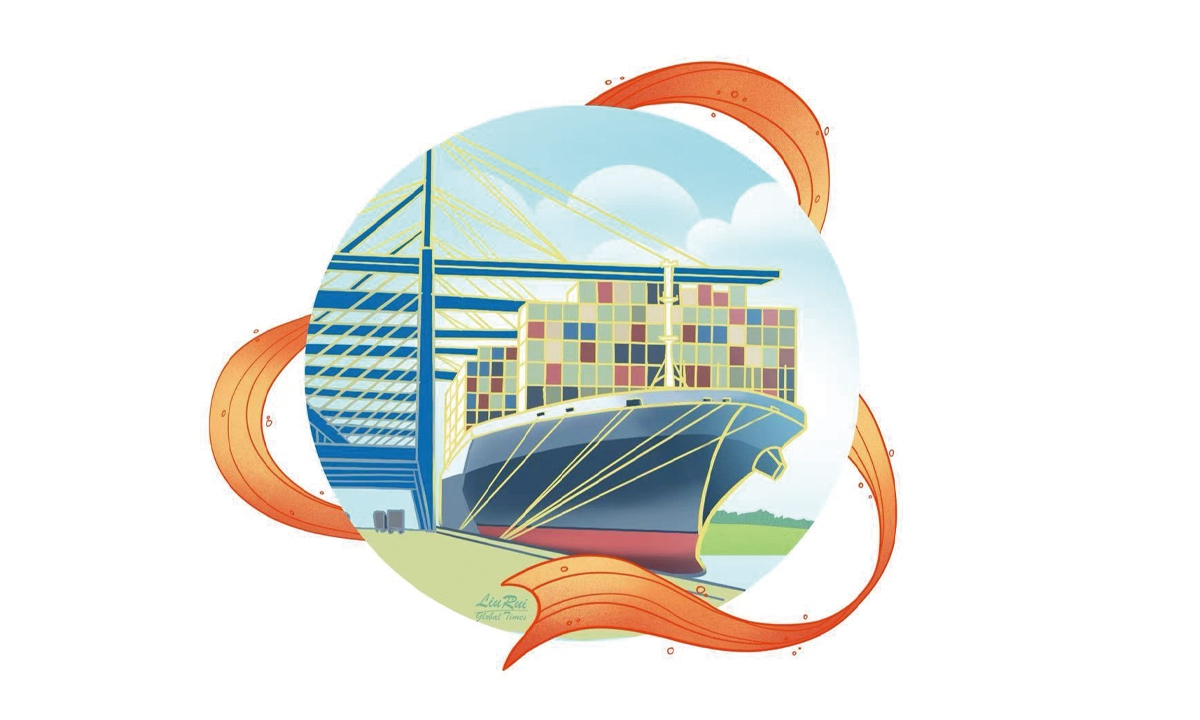
Illustration: Liu Rui/GT
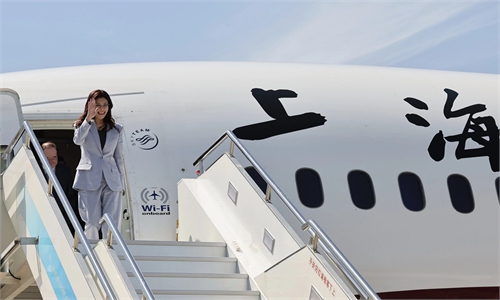
The "2026 Journey of Peace" by Cheng Li-wun, chairperson of the Chinese Kuomintang (KMT) party, is underway with "development" emerging alongside "peace" as a key theme shaping cross-Straits consensus.
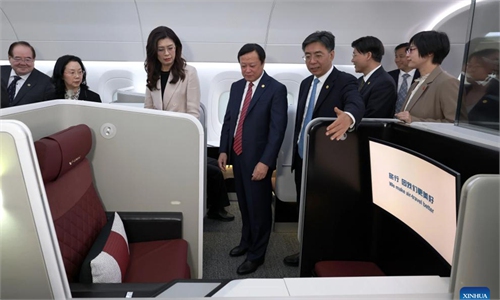
According to reports, Cheng and her delegation toured Yangshan Port in Shanghai on Thursday morning. As a key starting point for direct cross-Straits maritime routes, Yangshan Port has long played an important role in exchanges between the two sides.
This explains why it has consistently featured on the itineraries of visiting Taiwan political figures.
Yangshan Port also serves as a vivid showcase of China's modernization advancing in a stable and peaceful environment. Over the years, the port has undergone the transformation to world's largest single automated container port, with container throughput surpassing 28.7 million TEUs in 2025, which underscores the cumulative progress of China's successive five-year plans in advancing high-quality development.
For this reason, Yangshan Port has repeatedly served as a window through which Taiwan political figures observe the mainland's institutional strengths and development resilience. Former KMT chairmen Lien Chan and Ma Ying-jeou both expressed admiration for its progress, while Cheng, after her tour, remarked with emotion that "Peace is the most powerful force. Given enough time, peace can make anything possible."
For Taiwan, if it seizes the opportunity, such a development prospect is not far off. In recent years, as the Chinese mainland has made breakthroughs in advanced manufacturing, artificial intelligence, and new energy, Taiwan's interest in its development path has notably grown. The release of the 15th Five-Year Plan (2026-30) sparked widespread discussion across the island. Taiwan media outlets such as Commercial Times have focused on the plan's emphasis on high-quality development and technological self-reliance, exploring the new opportunities it could bring to Taiwan's electronics, semiconductor, machinery, and AI industries. Against this backdrop, during Cheng's first stop in Nanjing, the KMT put forward "participating in the 15th Five-Year Plan and deepening mutually beneficial economic cooperation" as a key cross-Straits prospect.
In contrast, the Democratic Progressive Party (DPP) authorities' push for "decoupling" from the mainland is increasingly showing its costs. Zheng Jian, a professor at the Taiwan Research Institute of Xiamen University, told the Global Times that the DPP authorities' attempts to court the US in pursuit of a "pro-independence" agenda and so-called "security guarantees" by urging TSMC to ramp up investment there and proposing expanding purchases of US goods have come at the expense of Taiwan's core economic interests, eroding its industrial advantages and accelerating hollowing-out, with the consequences increasingly felt by the public.
In fact, Taiwan is not an outsider to the 15th Five-Year Plan, and the Chinese mainland has repeatedly signaled openness to sincere cooperation, with specific provisions in the Plan encouraging Taiwan businesses and individuals to integrate into the country's overall development framework and share in modernization gains.
As Taiwan's United Daily News has noted, after the plan was finalized, State Council Taiwan Affairs Office reaffirmed the willingness to share development opportunities with the Taiwan region. By contrast, the US - favored by the DPP authorities under Lai Ching-te - has been seen as seeking to draw away Taiwan's semiconductor industry, potentially undermining its economic foundation. Which path is more stable for Taiwan - doesn't the answer speak for itself?
"The alignment with a US-led 'America First' economic system could only lead to unequal and extractive economic relations. In contrast, cross-Straits cooperation is based on complementary advantages and mutual benefit. The choice is not difficult," Zheng said. Development remains the most fundamental aspiration and the most reliable source of security for the public; tangible economic cooperation outcomes are far more convincing than any divisive narratives or manipulations by separatist forces.
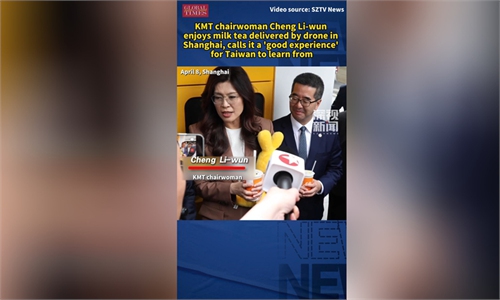
A telling moment during Cheng's visit came when she experienced drone delivery at Meituan's Shanghai headquarters: mainland-developed drone delivering drinks from a Taiwan brand. The scene offered a vivid glimpse of how the cross-Straits integrated development can translate into shared gains in modernization.
Nearly a decade ago, ferries departing from Yangshan Port crossed the Taiwan Straits to the island, marking a milestone in cross-Straits exchanges. Today, as a symbol of China's modernization, Yangshan Port once again enters Taiwan's public imagination, offering a glimpse of the opportunities embedded in the 15th Five-Year Plan and rekindling interest in engaging with and benefiting from this broader development trajectory.
RELATED ARTICLES