Mainland unveils package of 10 measures to boost cross-Straits exchanges, cooperation as KMT’s Cheng wraps up visit
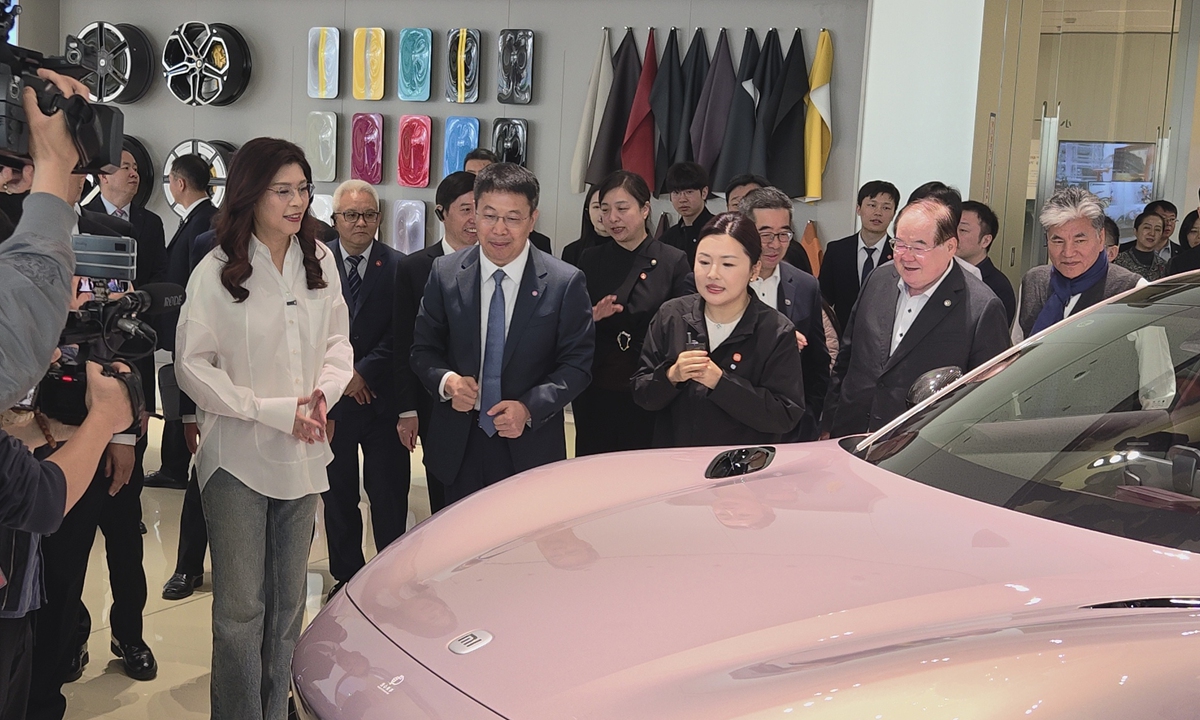
Kuomintang Chairwoman Cheng Li-wun visits a Xiaomi Auto's facilities in Beijing on April 12, 2026 before returning to Taipei. Photo: VCG
Authorities on the Chinese mainland unveiled a package of 10 policies and measures to boost exchanges and cooperation across the Taiwan Straits, including pushing for resuming regular direct flights and facilitating the entry of Taiwan's agricultural and fishery products. The announcement came as Kuomintang Chairwoman Cheng Li-wun concluded a six-day visit to mainland and returned to the island of Taiwan on Sunday.
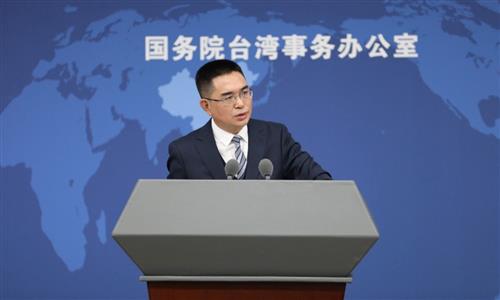
The package, unveiled by the Taiwan Work Office of the Communist Party of China (CPC) Central Committee on Sunday, aims to advance the peaceful development of cross-Straits relations and enhance the kinship and well-being of compatriots across the Straits, the office said, according to the Xinhua News Agency.
Mainland experts described the measures as among the most substantive in recent years for advancing cross-Straits engagement, saying they build on the momentum of Cheng's visit and are designed to deliver tangible benefits through expanded exchanges and closer cooperation on both sides.
Shared Gains
Among the 10 measures, the mainland will fast-track the full resumption of regular direct flights across the Taiwan Straits, including flights to and from mainland cities of Urumqi, Xi'an, Harbin, Kunming and Lanzhou.
Kinmen will be supported to use the new airport built in its adjacent city of Xiamen, Fujian Province.
Zhang Wensheng, deputy dean and a professor at the Taiwan Research Institute at Xiamen University in Fujian Province, noted that the particular measure regarding direct flights would resonate strongly with the Taiwan public. Previously, the Chinese mainland announced in February the resumption of tourism by Shanghai residents to Kinmen and Matsu islands to normalize cross-Straits exchanges and to respond to the strong expectations of Taiwan residents and the tourism industry.
Regarding the policies that were unveiled on Sunday, Taiwan's United Daily News (UDN) quoted a travel industry insider in the region as saying it is hoped that Taiwan authorities will respond positively to the mainland's signals and goodwill, and take concrete actions that benefit the Taiwan people rather than engaging in constant political struggles.
"The Taiwan authorities should seize the moment this time to build on this positive momentum, so that people in Taiwan and the local tourism industry can benefit from the policies," Zhang said.
According to the office cited by Xinhua, efforts will also be made to explore the establishment of a regular communication mechanism between the CPC and the KMT, and an institutionalized platform will be set up to promote two-way exchanges between young people on both sides of the Taiwan Straits.
Such institutionalized and regularized exchanges between the two sides can resolve many long-standing issues and potential risks in cross-Straits relations, serving as a crucial measure to stabilize the Taiwan Straits and uphold peace across it, said Li Zhenguang, director at the Institute of Taiwan Studies at Beijing Union University.
"Heartfelt communication between young people from both sides could also mark a key step in unlocking vital links of cross-Straits exchanges in the future," he added.
In addition, a communication mechanism will be set up on the common political foundation of adhering to the 1992 Consensus and opposing "Taiwan independence" to facilitate the entry of Taiwan's agricultural and fishery products that meet the quarantine standards into the mainland, per Xinhua.
If the mainland allows Taiwan's deep-sea fishing vessels to dock, provides wharves and berths for landing catches and facilitates their sales, it will significantly cut operating costs and generate strong demand for high-value fish such as tuna, squid and saury, Taiwan legislator and KMT Kaohsiung mayoral candidate Ko Chih-en said in response to the new measures, Taiwan-based media outlet Economic Daily News reported on Sunday.
Ko said that if the market for agricultural products reopens, it would create a stable export channel for Kaohsiung's high-quality produce such as pineapples and wax apples, helping farmers increase their income, the report said.
Yet a certain DPP member deliberately hyped up criticism against these favorable measures. Legislator Lin Chun-hsien issued a strong warning, per media outlet SETN, urging the public not to mistake the incentives for genuine goodwill. He said any economic benefits would ultimately be contingent on conditions set by the mainland.
"The mainland's stance is aboveboard and unambiguous, grounded in the one-China principle and committed to China's complete reunification," Zhang said. Maliciously distorting the mainland's policies that benefit Taiwan and its people will only undermine cross-Straits relations and harm the vital interests of the Taiwan public, Zhang added.
Li noted that precisely because these measures boost cross-Straits exchanges and benefit people on both sides, the DPP authorities feel threatened. "They worry their misleading narrative toward the Taiwan public will collapse amid real cross-Straits interactions, so they have resorted to wantonly smearing and attacking the policies," the expert said.
Tangible results
On Sunday, KMT Chairwoman Cheng and her delegation returned to Taipei after concluding the mainland visit. At the airport, Cheng delivered a speech, where she appreciated the mainland's 10 measures for Taiwan, saying they would benefit multiple sectors including aquaculture and tourism, and allow Taiwan people to enjoy the dividend of cross-Straits peace and development.
Before departing from Beijing, Cheng on Sunday morning made a more-than-an-hour tour to Xiaomi Auto's facilities, where she listened to introduction to the Xiaomi YU7 Max SUV and tried it in the driver's seat. When reporters on the scene asked whether she would consider bringing one vehicle back to the Taiwan region, she replied, "Of course I'd love to take one home," Taiwan's TVBS reported.
Cheng added that there are many Xiaomi smart home appliances and products in her home, it reported.
During the mainland visit, Cheng was also gifted a robot hand at the Zhongguancun Science Park. Being advised to bring it back as a present for her husband, Cheng smiled and said he is left-handed, per video clips released by Zhi News affiliated with Shenzhen Satellite TV.
Cheng has mentioned multiple times the potential for cross-Straits technological cooperation, learning from mainland innovation experience and creating opportunities for Taiwan youth, per the outlet.
From showing strong interest in an "intelligent bionic hand" and viewing student-developed innovations including robotic dogs and robotic arm in Beijing, to experiencing drone-delivered milk tea from Meituan in Shanghai, the delegation has witnessed firsthand the remarkable progress the mainland has made, Li Zhenguang said.
"Beyond the political foundation of upholding the 1992 Consensus and opposing 'Taiwan independence,' the two sides have reached a clear agreement on pursuing peace and stability across the Taiwan Straits and promoting cross-Straits exchanges and cooperation, and are working jointly toward this goal," Li added.
"The mainland extends goodwill to the Taiwan region and safeguards peace across the Taiwan Straits, laying clear an option for the Taiwan people. Only by adhering to the 1992 Consensus and recognizing their Chinese identity can there be a way forward," Zhang added.
RELATED ARTICLES