Illustration: Chen Xia/GT
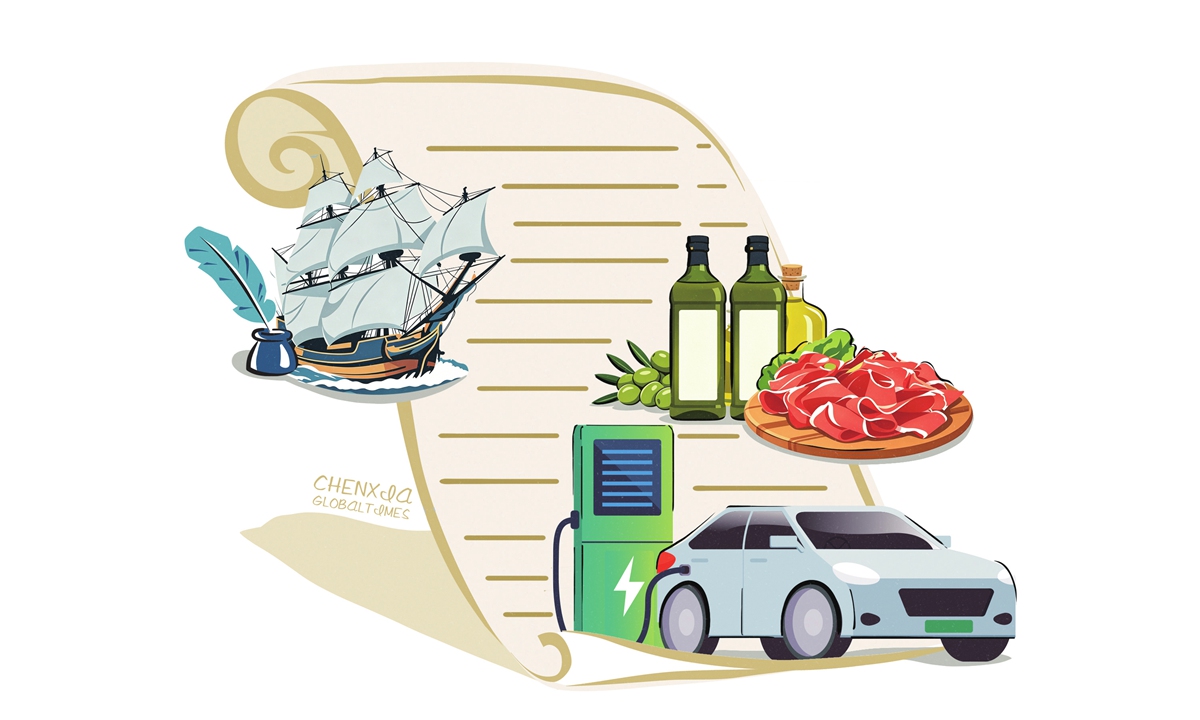
Today, when it comes to Spain, many Chinese history textbooks mention the Manila galleons — the silver and silk that crisscrossed the Pacific centuries ago. However, many later scholars viewed this only as part of the material exchange between China and Europe, primarily involving trade.The people who truly forged a profound intellectual and spiritual connection between China and Spain — and by extension, Europe — were the missionaries.
If we open the voluminous history of China-Europe relations, Spanish missionaries emerge as some of the first explorers. Centuries ago, when Spaniards like Diego de Pantoja crossed the oceans to China, they did not merely present European star charts and clocks to the Ming court. Crucially, they transmitted a real, richly detailed picture of China back to Europe. Through their letters and translations, European thinkers constructed their early understanding of the Middle Kingdom.
When Spanish explorer and sinologist Juan González de Mendoza published his Historia de las cosas más notables, ritos y costumbres del gran reino de la China in 1585, it caused a sensation across the continent. From that era onwards, Europe was not merely "looking" at China; it was using this distant mirror to reflect upon and critique its own society. It was precisely at that moment when the mutual learning and influence between Europe and China began.
Spain has been a vital bridge in this great cultural encounter from the very beginning.
Madrid's enduring spirit of connection is evident even today. This was immediately apparent in the prevalence of Chinese electric vehicles like BYD and Lynk & Co, which have become popular among locals. MINISO, the affordable lifestyle brand, opened its largest European store in Madrid in late 2024.
European and Chinese experts habitually define today's bilateral relationship in terms of "trade volumes" or "economic complementarity." Spanish olive oil, Iberico ham and premium agricultural products now grace Chinese dining tables, while Chinese solar panels and EVs fuel Europe's green transition. Yet, much like the letters and treatises of centuries past, today's commerce — the cars and the ham — are simply new vehicles for exchange. It bridges geographical divides, allowing two cultures to continue perceiving each other in daily life.
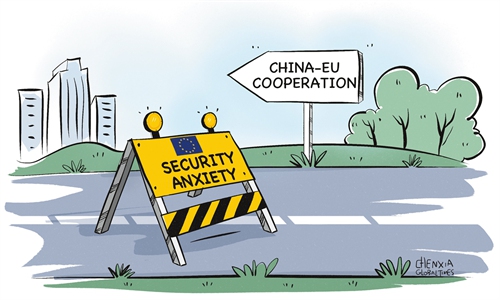
Today, amid China's rise and the challenges it poses, anxious voices in Europe frequently debate "de-risking" and geopolitical maneuvering. Against this backdrop, Prime Minister Sánchez's frequent visits to Beijing, alongside Spain's new Asia-Pacific strategy emphasizing enhanced dialogue with China, are sometimes misconstrued as maverick behavior.
But this is precisely what I want to convey to the European friends: Spain's approach is by no means a departure from Europe, nor is it an attempt to prove that Madrid has a "better" relationship with Beijing than its neighbors.
On the contrary, Spain's pragmatism and openness reflect a positive, long-standing current in China-Europe relations that is currently drowned out by political noise — the willingness to acknowledge the other's complexity, to resist the urge to disengage, and to seek consensus and resonance through interaction.
Spain's choice to maintain frequent high-level contact and pragmatic cooperation with China is, of course, driven by more than short-term commercial interests, as important as they are. It stems from a deeper historical understanding: China is a vast, complex civilizational entity that warrants serious attention and continuous effort to comprehend. This recognition is deeply and widely embedded across Europe, though it has been obscured in recent years by the din of great power rivalry.
Similarly, the Chinese public maintains a profound interest in European culture, technology and history, and learning in these areas remains an important part of China's basic education. Many Chinese enterprises continue to persistently learn from European technologies. Ren Zhengfei, a representative figure of China's high-tech enterprises and CEO of Huawei, has repeatedly emphasized the need to focus on learning basic sciences, mathematical research, and rigorous rules and standards from Europe. Europe has also become a key destination for Chinese tourists traveling abroad.
When charting the future of China-Europe relations, perhaps we should look beyond the debating tables of Brussels and peer into "the Spanish mirror."
From the Oriental travelogues penned by missionaries centuries ago to the electric cars gliding through Madrid today, the core of this history remains unchanged. The true strength of the relationship between Europe and China has always stemmed from a curious, egalitarian "mutual seeing." Its deepest foundation is built upon centuries of curiosity, observation and an enduring — if occasionally slow and tortuous — effort to understand one another.
RELATED ARTICLES