Ancient TCM is adapting to rhythm of modern life through technology, new platforms
By and Published: Apr 13, 2026 09:34 PM
Editor's Note:
Traditional Chinese medicine (TCM), a treasure carrying the Chinese nation's health wisdom for thousands of years, is now reaching 196 countries and regions at an astonishing pace. It has become an important pillar of the Healthy China Initiative and a bridge for exchanges between Chinese and foreign civilizations.
Chinese President Xi Jinping stressed unswervingly following the path of health development with Chinese characteristics to ensure decisive progress in advancing the Healthy China Initiative during the 15th Five-Year Plan period (2026-30) at the 2026 national "two sessions," Xinhua reported. Previously, the Chinese president has emphasized the importance of inheriting, developing and utilizing this valuable legacy to promote TCM to the rest of the world. The Healthy China 2030 blueprint outline explicitly calls for fully leveraging the unique strengths of TCM.
Under such guidance, TCM has not only built a full-chain service system in China covering prevention treatment and rehabilitation, but is also breaking down prejudice through scientific evidence, rejuvenating itself with technological empowerment, and winning over young people with cultural appeal. A question is often raised around the world - how has this "ancient practice" become a "new favorite" in global health? To explore this, the Global Times is launching a series titled "Ancient ways, Modern cures," which examines from four dimensions why TCM is gaining increasing appeal worldwide. This article explores the fourth dimension.
Li Chen never expected that when she went to the hospital for shoulder pain, the "prescription" she brought home would not be pills.
After suffering from shoulder discomfort for more than 20 days, the Beijing-based office worker recently visited the orthopedics department of a major general hospital in Beijing's Chaoyang district. She had assumed the doctor would prescribe painkillers, topical patches or perhaps recommend further physiotherapy. Instead, after a brief consultation, the doctor asked her to take out her phone and follow a content creator on a short-video platform - someone who, as Li described it, looked "like he was doing aerobics."
The creator posts daily videos demonstrating Wuqinxi, a traditional Chinese exercise that imitates the movements of five animals, and other traditional Chinese therapeutic exercises, and hosts livestream sessions after dinner, guiding tens of thousands of viewers through the routines.
"This kind of exercise works better than any medication," Li recalled the doctor as saying in an interview with the Global Times.
At first glance, the suggestion may sound unusual, even reminiscent of old-fashioned Chinese health practices. Yet on closer look, it is not entirely detached from today's medical context. Wuqinxi, or the "Five-Animal Exercises," was developed by the physician Hua Tuo during the Eastern Han Dynasty (25-220 AD), based on traditional Chinese medicine principles and inspired by the movements of animals such as the tiger, deer, bear, monkey and bird, the Xinhua News Agency introduced in its report.
More than 2,000 years later, this ancient form of exercise does not remain confined to historical texts or folklore. Instead, through short videos, livestreaming and social media, it has re-entered people's everyday lives in new ways.
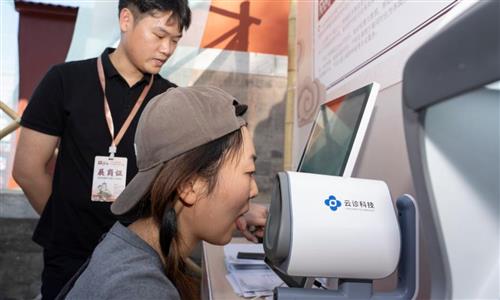
In many ways, this reflects the current state of traditional Chinese medicine (TCM). While it still carries the imprint of ancient formulas, lineage-based transmission and time-honored practices, it is also continuously seeking new ways to fit into modern society, modern hospitals and modern communication channels. From tuina (Chinese therapeutic massage) and acupuncture in outpatient clinics, to livestreamed wellness routines on screens, to techniques being digitized and standardized in laboratories, TCM is no longer defined solely by its "age."
The term "old TCM doctor" is often used, as if "old" is both its credential and its destiny. But today, is TCM really just "old"? Or rather, how is this tradition - often labeled as antiquated - continuing to find its place in modern life and within contemporary healthcare systems?
Never obsolete
In a bright laboratory, Liao, who is in his 40s, reclines face down while a minimalist tuina robot follows a preset program, delivering precise tuina strokes to his neck and shoulders. Minutes later he sits up, moves his shoulder, and lets out a relaxed smile.
"The experience exceeded my expectations," Liao said. "It doesn't quite have the feel of a human therapist's hands, but it's very good - the pressure and the positioning were spot on."
The robot is an innovative project led by Fang Min, a professor at Shanghai University of Traditional Chinese Medicine and director of the Tuina Research Institute at the Shanghai Academy of Traditional Chinese Medicine. Fang, the fifth-generation inheritor of the nationally recognized intangible cultural heritage item "Ding's rolling manipulation," has devoted nearly 40 years to the practice. He is highly skilled in this therapeutic tuina technique, which was first developed by Ding Fengshan during the Qing Dynasty (1644-1911).
Now, Fang and his team are pairing modern technology with TCM, giving this age-old treasure a new lease on life in the digital era.
"Developing a tuina robot is one of our key focuses," Fang told the Global Times. In collaboration with technology companies and universities, his team has compiled a database of technique data from more than 1,000 tuina experts. By combining the data with AI tech and biomechanics, the team has trained the robot to emulate expert hand techniques and perform therapeutic tuina.
Fang, who once served as head of a comprehensive hospital in Shanghai, was able to observe the role of TCM in contemporary clinical practice from a broad, institutional perspective. He found that non-pharmacological therapies, such as tuina, are widely used in clinical settings, especially for patients with degenerative musculoskeletal changes that have not yet reached the threshold for surgical intervention.
"For conditions like cervical spondylosis, lumbar disc herniation and knee osteoarthritis, most patients are in considerable discomfort but are not yet at the point of needing surgery," Fang said. "In those cases, tuina can significantly relieve pain and improve functional impairment."
Generally speaking, TCM and certain modern medical approaches - such as surgery and pharmaceuticals - are not substitutes but complements, Fang said. In a modern hospital, when treatments are applied according to their indications, different modalities can work together to improve clinical outcomes, he added.
"TCM has been handed down through the centuries and as it has evolved it has only become more vital," he told the Global Times.
Pass on the wisdom
While innovations like tuina robots represent one path forward, a broader shift is also underway -TCM is increasingly being interpreted, taught and practiced within modern medical systems.
These changes are not confined to laboratories or universities in big cities like Shanghai. They are also finding expression in grass-roots practice, where traditional knowledge continues to be preserved and passed on in new ways.
In Juye County, East China's Shandong Province, local doctor Shan Changping has long served nearby residents from a small clinic. He began his career as a "barefoot doctor" - a term referring to rural healthcare workers who once provided basic medical services with limited formal training - and later taught himself TCM through years of practice.
During peak seasons of respiratory illnesses in spring, Shan's clinic often sees a steady stream of patients seeking relief from symptoms such as cough and fatigue. Drawing on decades of experience, he emphasizes a holistic approach to care, including rest, diet and emotional balance.
Now, that experience is being carried forward in a different way. Shan's grandson, Shan Zhengxi, received formal medical training at a medical university in southern China and is preparing to carry on the family practice. Compared with his grandfather's largely self-taught path, the young doctor represents a younger generation of practitioners trained within structured academic systems.
"He will do this better than I did. He has formal education and understands medical science. Knowing that someone like him will carry on this clinic gives me peace of mind," Shan Changping told the Global Times, glancing at his grandson as he prepared herbs in front of a densely packed wall of traditional medicine drawers.
The cultivation of TCM practitioners has long relied on a combination of inheritance and mentorship. In recent years it has increasingly been incorporated into more structured education systems.
According to data released by the Ministry of Education, in 2021, 17 out of the country's 25 universities of traditional Chinese medicine had established nearly 30 pilot or reform classes, combining institutional education with apprenticeship-style learning. These programs have explored diversified training models, such as integrating classroom study, clinical practice and family-based learning, with an emphasis on early exposure to clinical work, extensive practice and repeated training, the China Education Online reported.
Heritage to the world
In recent years, Chinese authorities have stepped up efforts to support both the inheritance and innovation of TCM, helping build stronger talent pipelines while bringing greater regulatory clarity to the sector. Rules on service pricing and technical standards, Fang noted, have also helped these time-honored practices adapt to modernization with greater stability and resilience.
At the same time, China has been working to make TCM more accessible and understood to the outside world through standardization. From technical guidelines and practitioner training to more regulated service systems, efforts are underway to make traditional therapies easier to teach, evaluate and apply across different contexts. For a field long rooted in individual experience and lineage-based transmission, such standardization has become an important part of its modernization.
That support has extended beyond hospitals and classrooms. The item "Acupuncture and moxibustion of traditional Chinese medicine" was inscribed on UNESCO's Representative List of the Intangible Cultural Heritage of Humanity in 2010, marking an important step in the international recognition of TCM as both a medical tradition and a cultural legacy, according to the People's Daily.
These changes are also supporting TCM's growing global presence. As acupuncture, tuina, herbal therapies and health-preserving practices gain wider visibility overseas, TCM is no longer reaching foreign audiences only as a symbol of traditional Chinese culture, but increasingly as a practical component of healthcare, wellness and rehabilitation. More international students are coming to China to study it systematically, while overseas practitioners and social media creators are introducing it to broader audiences in their own languages.
"I believe that, with the joint efforts of the state and society, this ancient wisdom will shine even more brilliantly in modern life," Fang told the Global Times.
Traditional Chinese medicine (TCM), a treasure carrying the Chinese nation's health wisdom for thousands of years, is now reaching 196 countries and regions at an astonishing pace. It has become an important pillar of the Healthy China Initiative and a bridge for exchanges between Chinese and foreign civilizations.
Chinese President Xi Jinping stressed unswervingly following the path of health development with Chinese characteristics to ensure decisive progress in advancing the Healthy China Initiative during the 15th Five-Year Plan period (2026-30) at the 2026 national "two sessions," Xinhua reported. Previously, the Chinese president has emphasized the importance of inheriting, developing and utilizing this valuable legacy to promote TCM to the rest of the world. The Healthy China 2030 blueprint outline explicitly calls for fully leveraging the unique strengths of TCM.
Under such guidance, TCM has not only built a full-chain service system in China covering prevention treatment and rehabilitation, but is also breaking down prejudice through scientific evidence, rejuvenating itself with technological empowerment, and winning over young people with cultural appeal. A question is often raised around the world - how has this "ancient practice" become a "new favorite" in global health? To explore this, the Global Times is launching a series titled "Ancient ways, Modern cures," which examines from four dimensions why TCM is gaining increasing appeal worldwide. This article explores the fourth dimension.
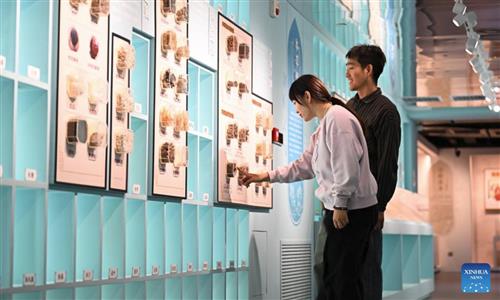
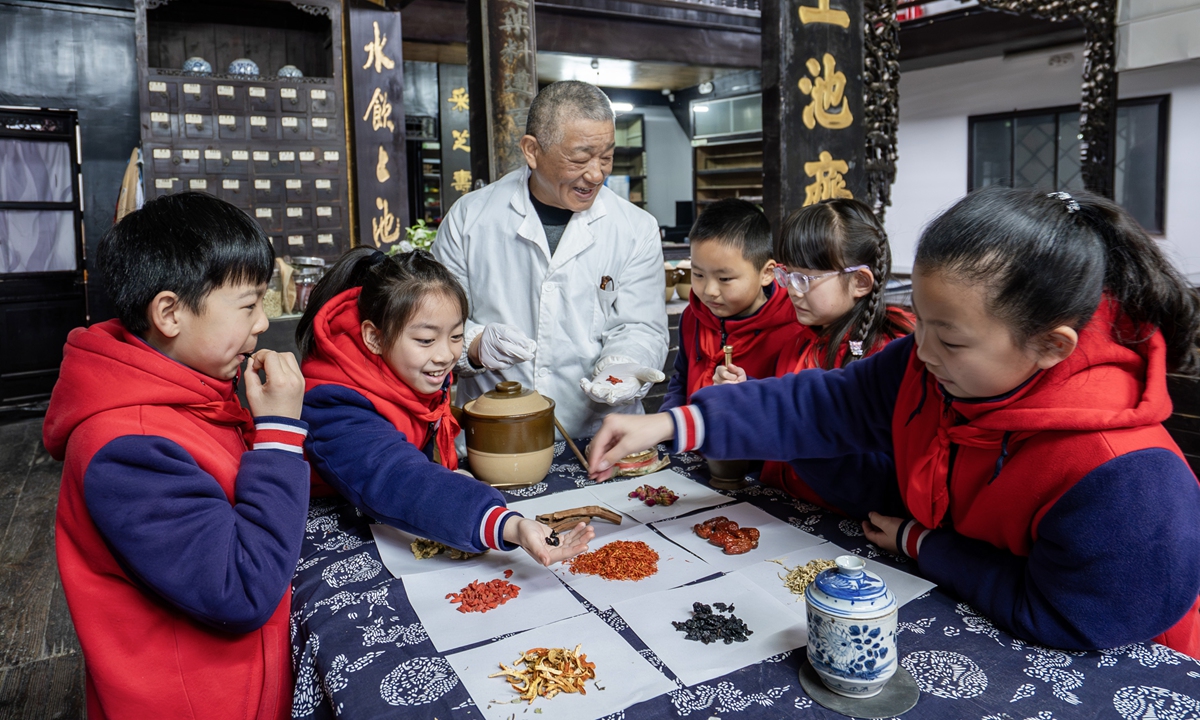
Primary school students learn about Chinese herbal medicine under the guidance of a pharmacist at a traditional Chinese medicine clinic in Xinghua, East China's Jiangsu Province, on March 17, 2026. Photo: IC
Li Chen never expected that when she went to the hospital for shoulder pain, the "prescription" she brought home would not be pills.
After suffering from shoulder discomfort for more than 20 days, the Beijing-based office worker recently visited the orthopedics department of a major general hospital in Beijing's Chaoyang district. She had assumed the doctor would prescribe painkillers, topical patches or perhaps recommend further physiotherapy. Instead, after a brief consultation, the doctor asked her to take out her phone and follow a content creator on a short-video platform - someone who, as Li described it, looked "like he was doing aerobics."
The creator posts daily videos demonstrating Wuqinxi, a traditional Chinese exercise that imitates the movements of five animals, and other traditional Chinese therapeutic exercises, and hosts livestream sessions after dinner, guiding tens of thousands of viewers through the routines.
"This kind of exercise works better than any medication," Li recalled the doctor as saying in an interview with the Global Times.
At first glance, the suggestion may sound unusual, even reminiscent of old-fashioned Chinese health practices. Yet on closer look, it is not entirely detached from today's medical context. Wuqinxi, or the "Five-Animal Exercises," was developed by the physician Hua Tuo during the Eastern Han Dynasty (25-220 AD), based on traditional Chinese medicine principles and inspired by the movements of animals such as the tiger, deer, bear, monkey and bird, the Xinhua News Agency introduced in its report.
More than 2,000 years later, this ancient form of exercise does not remain confined to historical texts or folklore. Instead, through short videos, livestreaming and social media, it has re-entered people's everyday lives in new ways.
In many ways, this reflects the current state of traditional Chinese medicine (TCM). While it still carries the imprint of ancient formulas, lineage-based transmission and time-honored practices, it is also continuously seeking new ways to fit into modern society, modern hospitals and modern communication channels. From tuina (Chinese therapeutic massage) and acupuncture in outpatient clinics, to livestreamed wellness routines on screens, to techniques being digitized and standardized in laboratories, TCM is no longer defined solely by its "age."
The term "old TCM doctor" is often used, as if "old" is both its credential and its destiny. But today, is TCM really just "old"? Or rather, how is this tradition - often labeled as antiquated - continuing to find its place in modern life and within contemporary healthcare systems?
Never obsolete
In a bright laboratory, Liao, who is in his 40s, reclines face down while a minimalist tuina robot follows a preset program, delivering precise tuina strokes to his neck and shoulders. Minutes later he sits up, moves his shoulder, and lets out a relaxed smile.
"The experience exceeded my expectations," Liao said. "It doesn't quite have the feel of a human therapist's hands, but it's very good - the pressure and the positioning were spot on."
The robot is an innovative project led by Fang Min, a professor at Shanghai University of Traditional Chinese Medicine and director of the Tuina Research Institute at the Shanghai Academy of Traditional Chinese Medicine. Fang, the fifth-generation inheritor of the nationally recognized intangible cultural heritage item "Ding's rolling manipulation," has devoted nearly 40 years to the practice. He is highly skilled in this therapeutic tuina technique, which was first developed by Ding Fengshan during the Qing Dynasty (1644-1911).
Now, Fang and his team are pairing modern technology with TCM, giving this age-old treasure a new lease on life in the digital era.
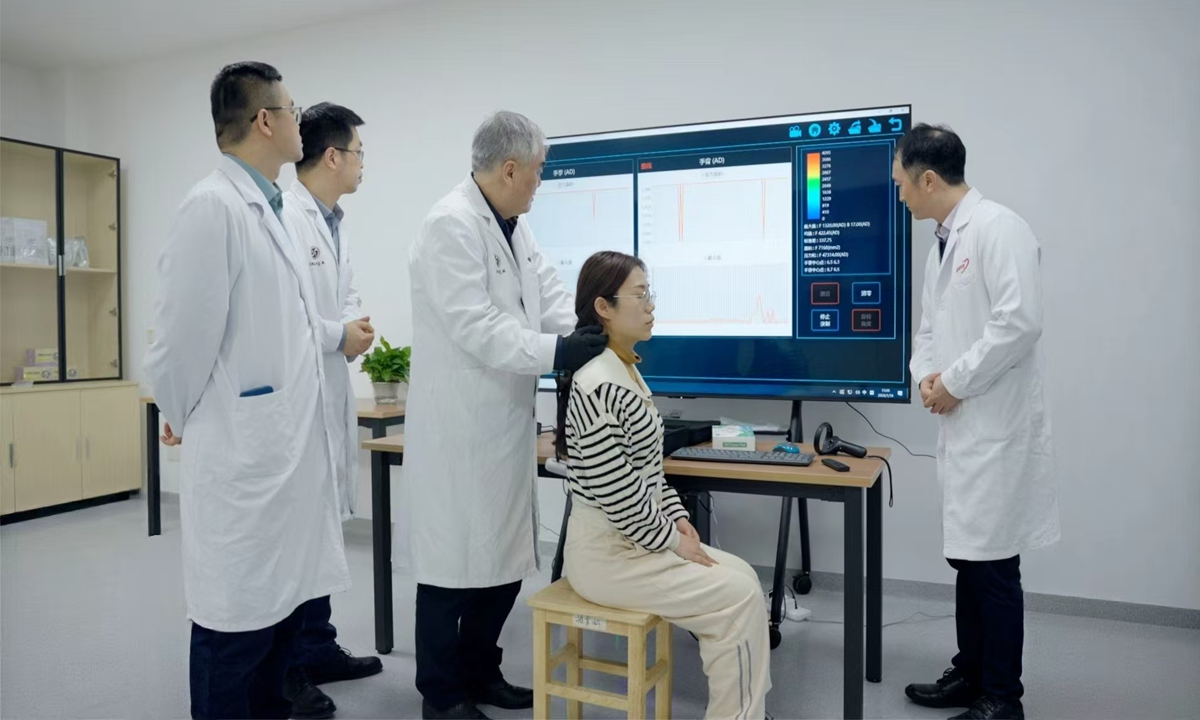
"Developing a tuina robot is one of our key focuses," Fang told the Global Times. In collaboration with technology companies and universities, his team has compiled a database of technique data from more than 1,000 tuina experts. By combining the data with AI tech and biomechanics, the team has trained the robot to emulate expert hand techniques and perform therapeutic tuina.
Fang Min (third from the left) pilots an AI equipment to perform tuina on a patient. Photo: Courtesy of Fang
In October 2025, the project secured support from China's Ministry of Science and Technology and the National Health Commission as part of a major research initiative, Fang said. "We have completed version 1.0 of the tuina robot; next we will develop version 2.0, with a focus on miniaturization and home use."Fang, who once served as head of a comprehensive hospital in Shanghai, was able to observe the role of TCM in contemporary clinical practice from a broad, institutional perspective. He found that non-pharmacological therapies, such as tuina, are widely used in clinical settings, especially for patients with degenerative musculoskeletal changes that have not yet reached the threshold for surgical intervention.
"For conditions like cervical spondylosis, lumbar disc herniation and knee osteoarthritis, most patients are in considerable discomfort but are not yet at the point of needing surgery," Fang said. "In those cases, tuina can significantly relieve pain and improve functional impairment."
Generally speaking, TCM and certain modern medical approaches - such as surgery and pharmaceuticals - are not substitutes but complements, Fang said. In a modern hospital, when treatments are applied according to their indications, different modalities can work together to improve clinical outcomes, he added.
"TCM has been handed down through the centuries and as it has evolved it has only become more vital," he told the Global Times.
Pass on the wisdom
While innovations like tuina robots represent one path forward, a broader shift is also underway -TCM is increasingly being interpreted, taught and practiced within modern medical systems.
These changes are not confined to laboratories or universities in big cities like Shanghai. They are also finding expression in grass-roots practice, where traditional knowledge continues to be preserved and passed on in new ways.
In Juye County, East China's Shandong Province, local doctor Shan Changping has long served nearby residents from a small clinic. He began his career as a "barefoot doctor" - a term referring to rural healthcare workers who once provided basic medical services with limited formal training - and later taught himself TCM through years of practice.
During peak seasons of respiratory illnesses in spring, Shan's clinic often sees a steady stream of patients seeking relief from symptoms such as cough and fatigue. Drawing on decades of experience, he emphasizes a holistic approach to care, including rest, diet and emotional balance.
Now, that experience is being carried forward in a different way. Shan's grandson, Shan Zhengxi, received formal medical training at a medical university in southern China and is preparing to carry on the family practice. Compared with his grandfather's largely self-taught path, the young doctor represents a younger generation of practitioners trained within structured academic systems.
"He will do this better than I did. He has formal education and understands medical science. Knowing that someone like him will carry on this clinic gives me peace of mind," Shan Changping told the Global Times, glancing at his grandson as he prepared herbs in front of a densely packed wall of traditional medicine drawers.
The cultivation of TCM practitioners has long relied on a combination of inheritance and mentorship. In recent years it has increasingly been incorporated into more structured education systems.
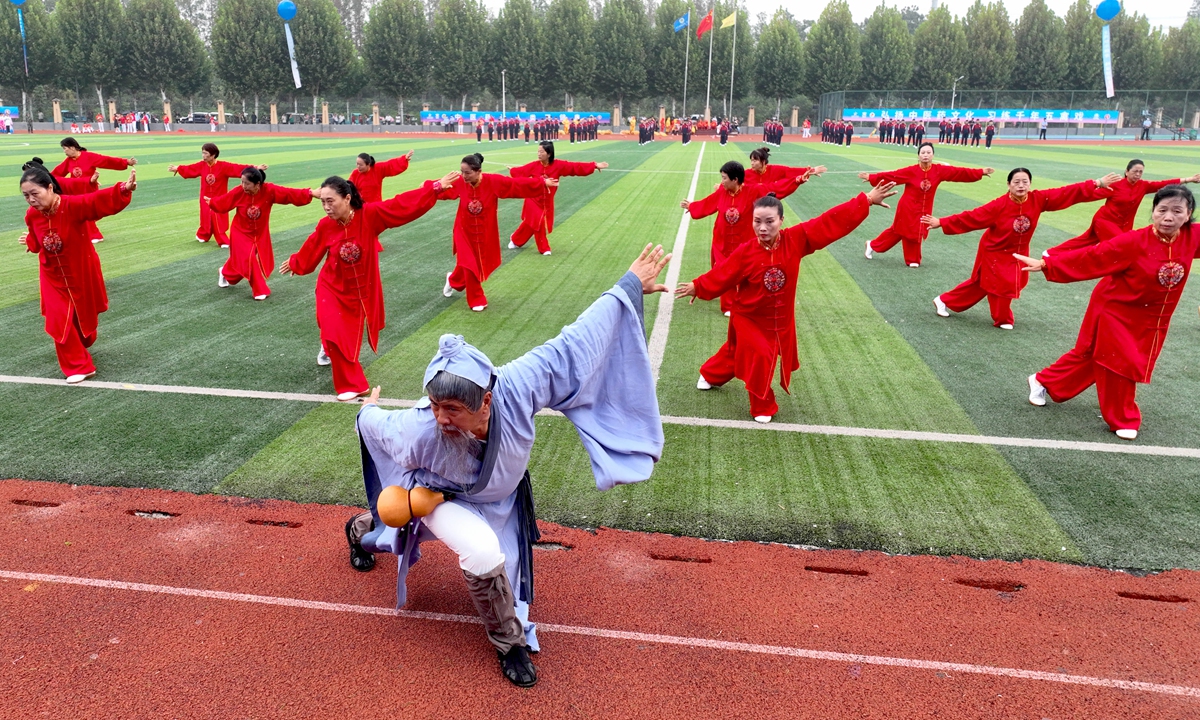
People practice Wuqinxi in a school in Bozhou, East China's Anhui Province. Photo: IC
While experience remains central to TCM, it no longer follows that only age can produce capable practitioners. Young doctors can also sharpen their clinical skills through intensive study of classical texts, repeated clinical practice and the support of modern medical science and technology, Cheng Chun, former Party committee secretary of the Nanjing University of Chinese Medicine, was quoted by Xinhua as saying.According to data released by the Ministry of Education, in 2021, 17 out of the country's 25 universities of traditional Chinese medicine had established nearly 30 pilot or reform classes, combining institutional education with apprenticeship-style learning. These programs have explored diversified training models, such as integrating classroom study, clinical practice and family-based learning, with an emphasis on early exposure to clinical work, extensive practice and repeated training, the China Education Online reported.
Heritage to the world
In recent years, Chinese authorities have stepped up efforts to support both the inheritance and innovation of TCM, helping build stronger talent pipelines while bringing greater regulatory clarity to the sector. Rules on service pricing and technical standards, Fang noted, have also helped these time-honored practices adapt to modernization with greater stability and resilience.
At the same time, China has been working to make TCM more accessible and understood to the outside world through standardization. From technical guidelines and practitioner training to more regulated service systems, efforts are underway to make traditional therapies easier to teach, evaluate and apply across different contexts. For a field long rooted in individual experience and lineage-based transmission, such standardization has become an important part of its modernization.
That support has extended beyond hospitals and classrooms. The item "Acupuncture and moxibustion of traditional Chinese medicine" was inscribed on UNESCO's Representative List of the Intangible Cultural Heritage of Humanity in 2010, marking an important step in the international recognition of TCM as both a medical tradition and a cultural legacy, according to the People's Daily.
These changes are also supporting TCM's growing global presence. As acupuncture, tuina, herbal therapies and health-preserving practices gain wider visibility overseas, TCM is no longer reaching foreign audiences only as a symbol of traditional Chinese culture, but increasingly as a practical component of healthcare, wellness and rehabilitation. More international students are coming to China to study it systematically, while overseas practitioners and social media creators are introducing it to broader audiences in their own languages.
"I believe that, with the joint efforts of the state and society, this ancient wisdom will shine even more brilliantly in modern life," Fang told the Global Times.
RELATED ARTICLES