Flu test positivity in China climbs for third straight week, experts call for precautions
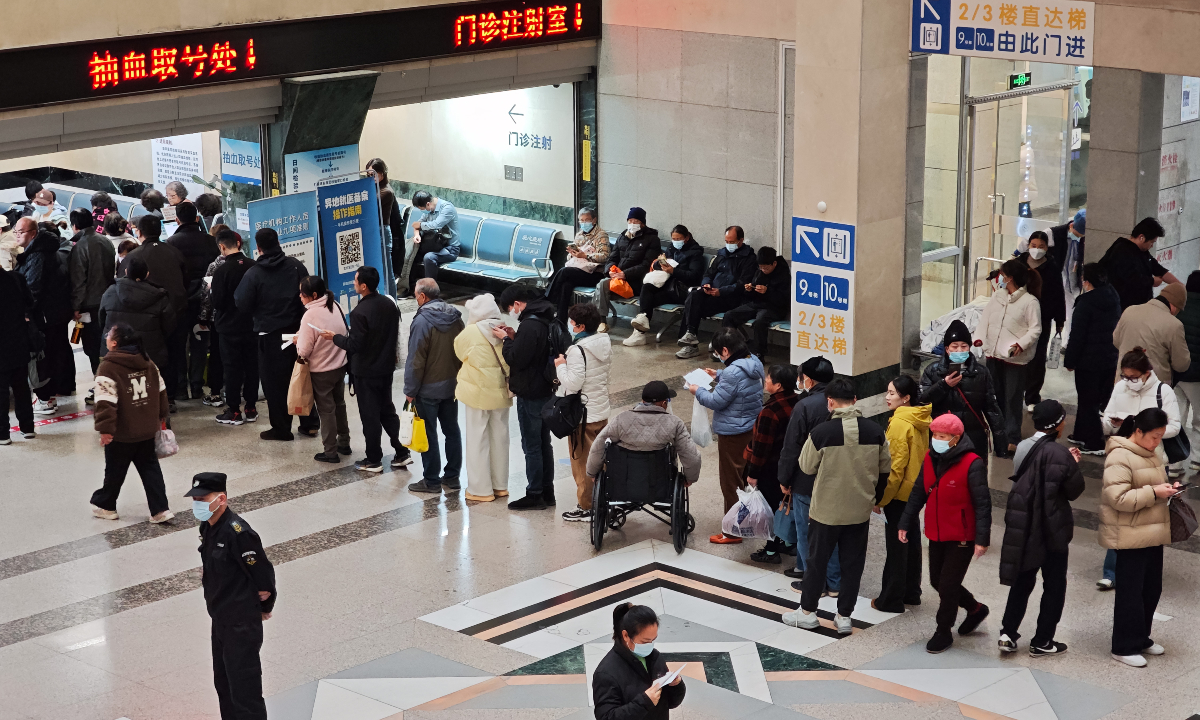
Patients line up for registration and payment at an outpatient hall of a hospital in Shanghai on December 22, 2025. Photo: IC
With the positivity rate of influenza tests rising for three weeks in nationwide sentinel surveillance data released by the Chinese Center for Disease Control and Prevention (CDC), medical experts have urged high-risk groups to take precautions. They warned that recent cooling and sharp temperature swings across in China may heighten the risk of infection.
From March 30 to April 5, the proportion of influenza-like illness cases reported by sentinel hospitals nationwide among total outpatient and emergency visits stood at 3.5 percent, according to a report from the Chinese CDC.
The center said that respiratory infectious disease activity has fluctuated recently, with influenza activity trending upward nationwide. Rhinovirus, respiratory syncytial virus, and parainfluenza virus have also shown a certain level of activity.
Among these, the national positivity rate of influenza virus tests has risen, mainly driven by the spread of influenza B. The positivity rate is higher in northern provinces than in southern provinces, and higher in the 5 to 14 age group than in other age groups, the data show.
Li Tongzeng, a chief physician with the infectious diseases department of Beijing You’an Hospital, said influenza is a highly prevalent infectious disease in winter and spring, with the epidemic season typically lasting from November to February or March.
Influenza viruses can be classified into four types including A, B, C and D. In late March and early April this year, influenza activity showed an upward trend again, with the dominant circulating strain shifting from influenza A to influenza B, Li told the Global Times on Tuesday.
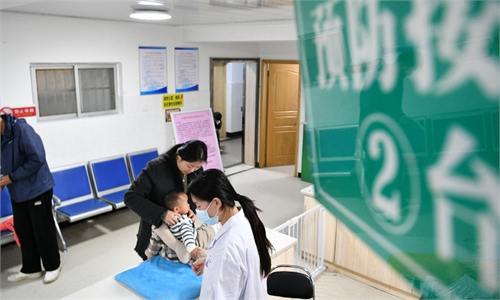
A medical employee surnamed Sun at the Balizhuang second community health service center in Beijing’s Chaoyang district told the Global Times on Tuesday that in the past two to three weeks, influenza cases accounted for about one in 10 cases of the common cold seen at the center. Most pediatric flu cases are influenza B. The patients are mainly primary and middle school students, with generally mild symptoms including fever, cough, runny nose and sore throat.
“Their symptoms are not very severe. Influenza symptoms are generally similar to the common cold, but fever tends to be higher than in a typical one, sometimes presenting as a high fever,” Sun said, noting that most infected children had already been vaccinated.
In Shanghai’s Pujiang community health service center in Minhang district has seen a total of 32 patients at the center’s fever clinic over the past two to three weeks, averaging about one patient per day. Among these patients with fever, three were influenza cases, Gao Jing, a deputy director of the center, told the Global Times on Tuesday.
In Guangzhou, South China’s Guangdong Province, an employee surnamed Yan at the Hualejie community health service center in Yuexiu district, told the Global Times on Tuesday that influenza cases at its fever clinic remain low, with a 5-year-old child seen on Monday for fever and runny nose. Pediatric cases are typically referred to higher-level hospitals.
According to Li, the last major prevalence of influenza B dates back to late 2023 and January 2024. Since more than two years have passed, the Chinese people’s immunity to influenza B has declined significantly, which has led to the increase in infections. In addition, from late March to early April, both northern and southern regions experienced noticeable cooling and large temperature fluctuations, which also increased the risk of infection.
Influenza B shows symptoms similar to influenza A, such as sudden fever, cough, sore throat, and aches, usually milder compared with influenza A, but still requiring caution, Li said.
Li estimated that overall incidence is expected to drop in one to two weeks, urging high-risk groups to take precautions, including mask use in crowded indoor spaces and practicing strict hand hygiene.
RELATED ARTICLES