US reportedly hints Iran conflict ‘close to over’; remark reflects US Hormuz blockade unsustainable and mounting domestic pressure: Chinese expert
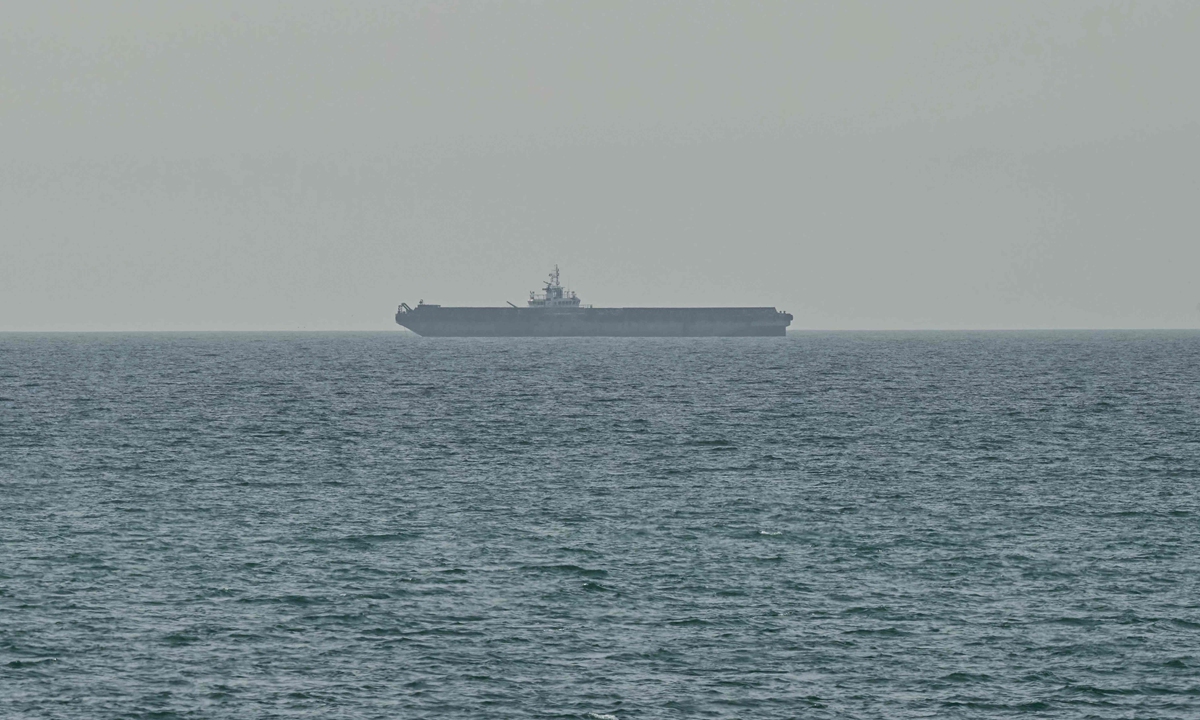
A ship is seen off the coast of Ras al-Khaimah, United Arab Emirates, the day after the failure of US-Iran peace talks on April 13, 2026. Photo: VCG
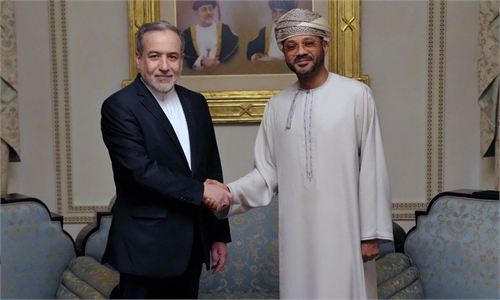
Chinese Foreign Minister Wang Yi said Wednesday that China supports maintaining the momentum of the ceasefire and peace talks, which serves the fundamental interests of the Iranian people and reflects the shared expectations of countries in the region and the international community, Xinhua reported.
Wang, also a member of the Political Bureau of the Communist Party of China Central Committee, made the remarks when speaking to Iranian Foreign Minister Seyed Abbas Araghchi over phone.
China welcomes all efforts conducive to ending the conflict, and commends Pakistan for brokering the US-Iran temporary ceasefire and a just and balanced mediation role. The pressing priority is to prevent by all means a relapse in fighting, maintain the momentum for ceasefire that did not come easy, and stay committed to political and diplomatic means in resolving disputes, Chinese Foreign Ministry spokesperson Guo Jiakun said on Wednesday, in response to media reports that the US said talks with Iran could resume in Pakistan over the next two days.
US President Donald Trump hinted that the conflict in the Middle East against Iran is close to being over and the next possible negotiation with Iran could be happening in Islamabad in the next two days, according to US media outlets.
"I think it's close to over," the US President said in an interview with Fox Business on Tuesday. The remarks came as US-Iran talks are reportedly expected to restart following stalled weekend negotiations in Pakistan.
US President told the New York Post in an initial phone interview on Tuesday that additional US-Iran peace talks "could be happening over the next two days" in Islamabad, adding that "we're more inclined to go there."
US and Iranian officials have reached an "in principle agreement" to extend the ceasefire to allow more time for diplomatic efforts, Xinhua reported on Wednesday, citing US media.
The quick shift from blockading the Strait of Hormuz to signals that talks may resume suggests the US move is aimed at pressuring Iran but also creating leverage for the next stage of negotiations, while also reflecting mounting domestic pressure in the US, Liu Zhongmin, a professor at the Middle East Studies Institute of Shanghai International Studies University, told the Global Times on Wednesday.
According to the Washington Post on Wednesday, the Pentagon is sending thousands of additional troops into the Middle East in the coming days. The forces moving into the region include about 6,000 troops aboard the aircraft carrier USS George H.W. Bush and several warships escorting it, per the report.
Iran's foreign ministry spokesperson Esmaeil Baghaei said on Wednesday that message exchanges between Iran and the US via Pakistan are ongoing, Iran International reported. He added that speculation in Western media "cannot be confirmed" and said Iran's right to peaceful nuclear energy under the non-proliferation treaty "is inherent and cannot be taken away."
After the collapse of last weekend's negotiations, Washington imposed a blockade on Iranian ports. US Vice President JD Vance said mistrust between the US and Iran cannot be resolved overnight, but also noted that Iranian negotiators want a deal and that he felt "very good about where we are," Reuters reported.
CNN reported that Vance is expected to lead a potential second round of talks with Iranian officials, alongside other senior US figures involved in earlier diplomatic efforts.
Liu noted that the blockade of the US failed to force Iran to yield and instead triggered dissatisfaction among US allies, particularly Saudi Arabia, while NATO members including the UK signaled that it will not join US blockade of Strait of Hormuz.
Given the economic strain, the blockade appears increasingly unsustainable, suggesting a shift back to negotiations, Liu said.
European countries including France, the UK and Germany are reportedly drafting a postwar plan to free up shipping through the Strait of Hormuz, including deploying mine-clearing and other naval vessels, which could exclude the US, the Wall Street Journal reported on Tuesday.
On Tuesday night, Iranian President Masoud Pezeshkian praised positions taken by Spain, China, Russia, Turkey, Italy and Egypt for their "essence of civilization at critical historical junctures," and opposing what he described as "warmongering," according to his official X account.
RELATED ARTICLES