Jensen Huang calls for greater US-China AI co-op; Chinese expert says it highlights growing divide between US business demand for pragmatic engagement and Washington's restrictive approach
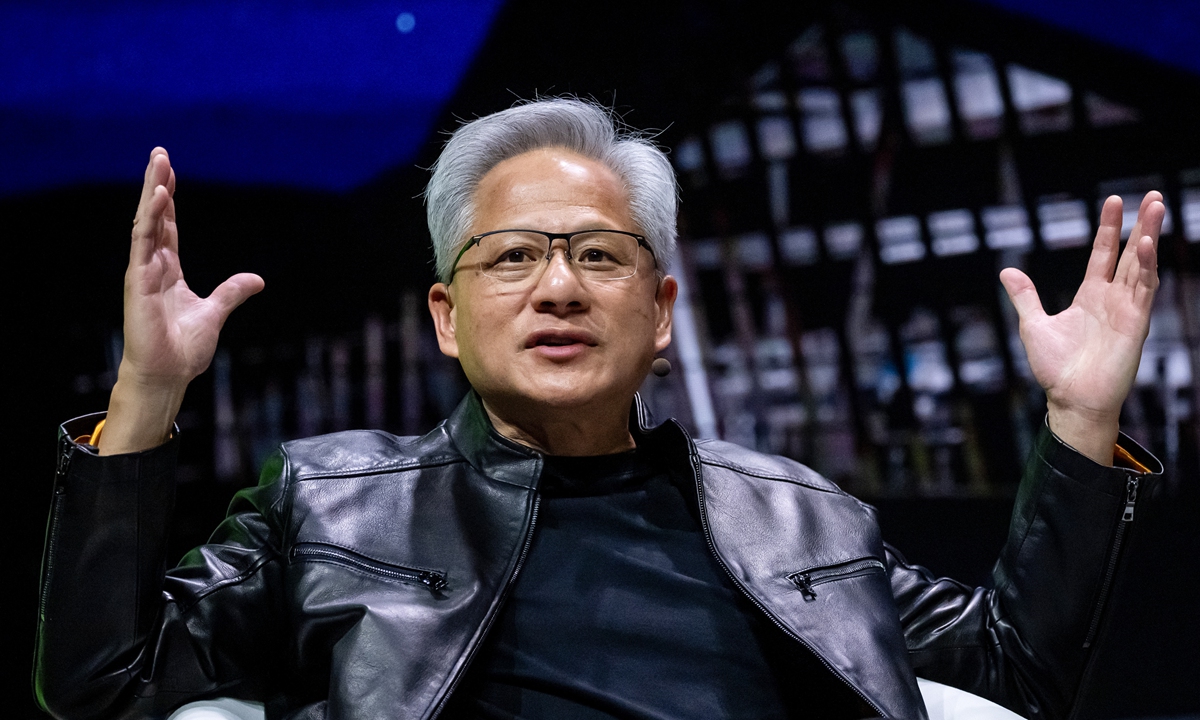
Jensen Huang, chief executive officer of Nvidia Corp., speaks during the Nvidia GTC conference in San Jose, California, US, on March 18, 2026. Photo: VCG
Nvidia Corp. Chief Executive Officer Jensen Huang said that Anthropic PBC's Mythos breakthrough shows that the US should seek greater cooperation with China so artificial intelligence researchers in the world's two largest economies can agree on how to safely use the increasingly powerful technology, according to a Reuters Thursday report.
Against the backdrop of China's rapidly developing AI sector, Huang's call for cooperation — and the unease underlying it — highlights a growing divide between the US business community's interest in pragmatic engagement and Washington's increasingly restrictive approach, a Chinese expert said.
Huang made the remarks in an interview Wednesday on the technology-focused Dwarkesh Podcast, Reuters reported. He expressed concern that US-China tensions over trade and security issues have impeded coordination on crucial research.
"This is an area that is glaringly missing because of our current attitude about China as an adversary," he said. "It is essential that our AI researchers and their AI researchers are actually talking," per Reuters.
Although Huang said in the interview that he wants the US to win [in the AI race], he believed dialogue and having a research dialogue is probably the safest thing to do, stressing that it is essential that we try to both agree on what not to use the AI for.
"Cooperation is also a position that China endorses. The advancement of AI ought to be a global undertaking, and only through deeper collaboration can the technology be better developed worldwide and bring benefits to all. Yet judging by Washington's approach, its animosity toward China in the AI sector, combined with persistent wariness over China's economic and technological ascent, has remained remarkably consistent," He Weiwen, a senior fellow at the Center for China and Globalization, told the Global Times on Thursday.
With AI advancing rapidly, the development of supporting safety frameworks and rules has failed to keep pace — a concern Huang has highlighted and one countries should address through joint efforts. Industry observers said Washington's continued mix of containment and conditional engagement, in what they described as a spoiler-like approach, means Huang's concerns are almost certain to persist.
Despite approved under security review, Nvidia's H200 chip sales to China have been stalled by a US national security review, with no shipments delivered as of late February, according to Reuters.
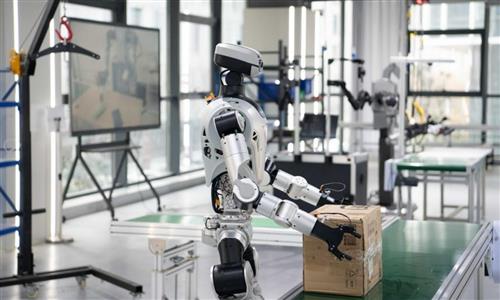
In addition, the US AI and robotics firms have recently reportedly pushed lawmakers to take action against Chinese robot manufacturers — singling out Unitree Robotics — using excuse of rising competition and so-called national security concerns, according to media reports and a congressional hearing record released on mid-March.
On Thursday, a hearing titled "China's campaign to steal America's AI edge" is set to take place, though the House Select Committee on the Chinese Communist Party has yet to disclose further details.
He Weiwen on Thursday criticized the US' longstanding hostility as running counter to the needs of technological and industrial development. Amid divisions within the US, He said Chinese companies should stay clear-eyed and firm, pursuing a two-pronged approach: resolutely opposing Washington's containment and suppression of China, while actively engaging with those in the US who still support cooperation and dialogue.
When asked whether US export controls have constrained China, Huang said on Wednesday that the Chinese market isn't bound by a lack of computing power due to the country's abundant energy resources, skill in making "mainstream" chips and the ability to bundle more processors together, according to the Reuters.
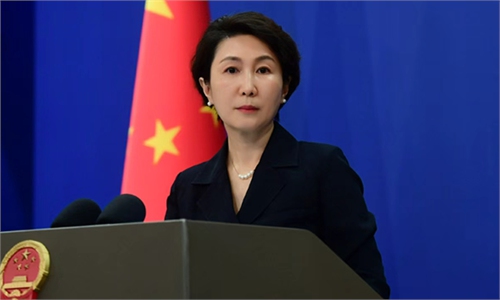
On January 14, Chinese Foreign Ministry spokesperson Mao Ning said clearly that while boosting its own development through innovation, China always shares innovation outcomes with the rest of the world and is committed to bringing the benefit of science and technology to the whole humanity.
"We've also launched the Global AI Governance Initiative, which advocates fostering an open, fair and non-discriminatory international environment for innovation. China will continue to act in the spirit of openness and cooperation, oppose technological barriers, narrow the sci-tech gap, and promote the sharing of innovation outcomes by all for global development and prosperity," according to Mao.
On the US suppression of China's tech sector and its "overstretching the concept of national security," FM has also made clear that such practices will only backfire and undermine the US' own innovative dynamism.
RELATED ARTICLES