Illustration: Chen Xia/GT
The war in Iran presents a stark contrast in global leadership, exposing the hegemonic mentality and behavior of the US against the evolving visions and propositions of China. At the center of this contrast are China's Global Security Initiative and Global Governance Initiative, frameworks that will reshape international order around sovereignty, non-interference and collective security. This is no longer theoretical. It is playing out in real time.The Middle East is once again engulfed in conflict, with devastating consequences. The war in Iran has unleashed destruction that extends far beyond the battlefield. Civilian lives have been lost and many more disrupted, regional tensions have been inflamed, and global stability has been placed at risk.
Even though the US announced a two-week ceasefire, the effects of the conflict are already being felt across the world. Markets have reacted, supply chains have been disrupted and tensions remain high. This fully demonstrates that Washington's disruptive global approach can never be compared with China's responsible posture on world affairs, which has consistently stressed the need for peace, restraint and non-interference.
For decades, the US has operated from a position of dominance, asserting its influence through military intervention and coercive diplomacy. It believes that power must be enforced, that order must be imposed and that security can be achieved through force.
But the cost of that approach is now evident. The killing of Iran's Supreme Leader Ayatollah Ali Khamenei and the subsequent escalation have pushed the region to the brink, with consequences that threaten global economic and political stability. What began as a show of force has evolved into a dangerous cycle of retaliation.
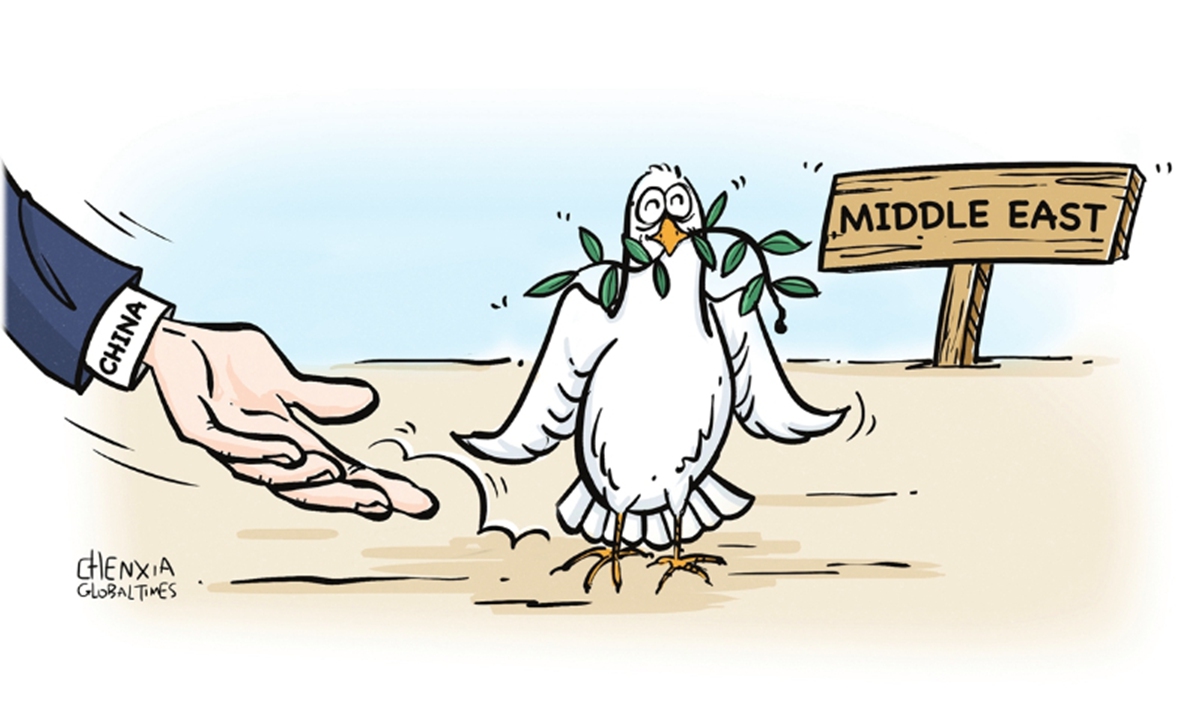
In contrast, China has taken a markedly different path. From the onset of the crisis, Beijing has been consistent in its position. It condemned the killing of Iran's leadership, and has emphasized that dialogue is the only viable solution.
More importantly, China has backed its position with action. Chinese Foreign Minister Wang Yi has engaged extensively with key stakeholders, holding multiple calls with Iran, Israel, Russia and Gulf states. China's special envoy has traveled to the region in a clear demonstration of its commitment to mediation. Together with Pakistan, China has advanced a five-point initiative calling for an immediate ceasefire and a return to negotiations.
This is diplomacy in practice. While one approach relies on pressure, threats and military action, the other is grounded in engagement, dialogue and respect for sovereignty. While China has been calling for restraint, the rhetoric from Washington has taken a different tone - public threats, escalatory language and a posture that signals not mediation, but domination. This is not leadership. It is aggression.
The use of force does not resolve conflicts. It deepens them. It destabilizes regions and leaves long-term consequences that outlast any short-term gains. The war in Iran is a case in point. It raises serious questions about whether diplomacy was truly exhausted, or simply abandoned.
At a time when the world faces interconnected challenges, the need for a new approach to global governance has never been more urgent.
China's Global Security Initiative and Global Governance Initiative represent an attempt to respond to that need. They emphasize dialogue, mutual respect and shared responsibility. They recognize that no single country can dictate the terms of global order without consequences.
This is not about choosing sides. It is about choosing a direction that moves away from unilateral action and toward collective solutions, values stability over supremacy and recognizes that peace cannot be imposed through force.
The world is at a crossroads. It can either continue down a path defined by confrontation and coercion, or embrace a framework that prioritizes dialogue, cooperation and respect for sovereignty. The difference between these two paths is not abstract. It is measured in lives saved or lost, in regions stabilized or destabilized.
In a world moving toward peace or drifting further into conflict, the choice should not be difficult because, in the end, true global leadership is not about who has the power to wage war. It is about who has the wisdom to prevent or end it.
The author is a scholar in international relations based in Nairobi, Kenya. opinion@globaltimes.com.cn
RELATED ARTICLES