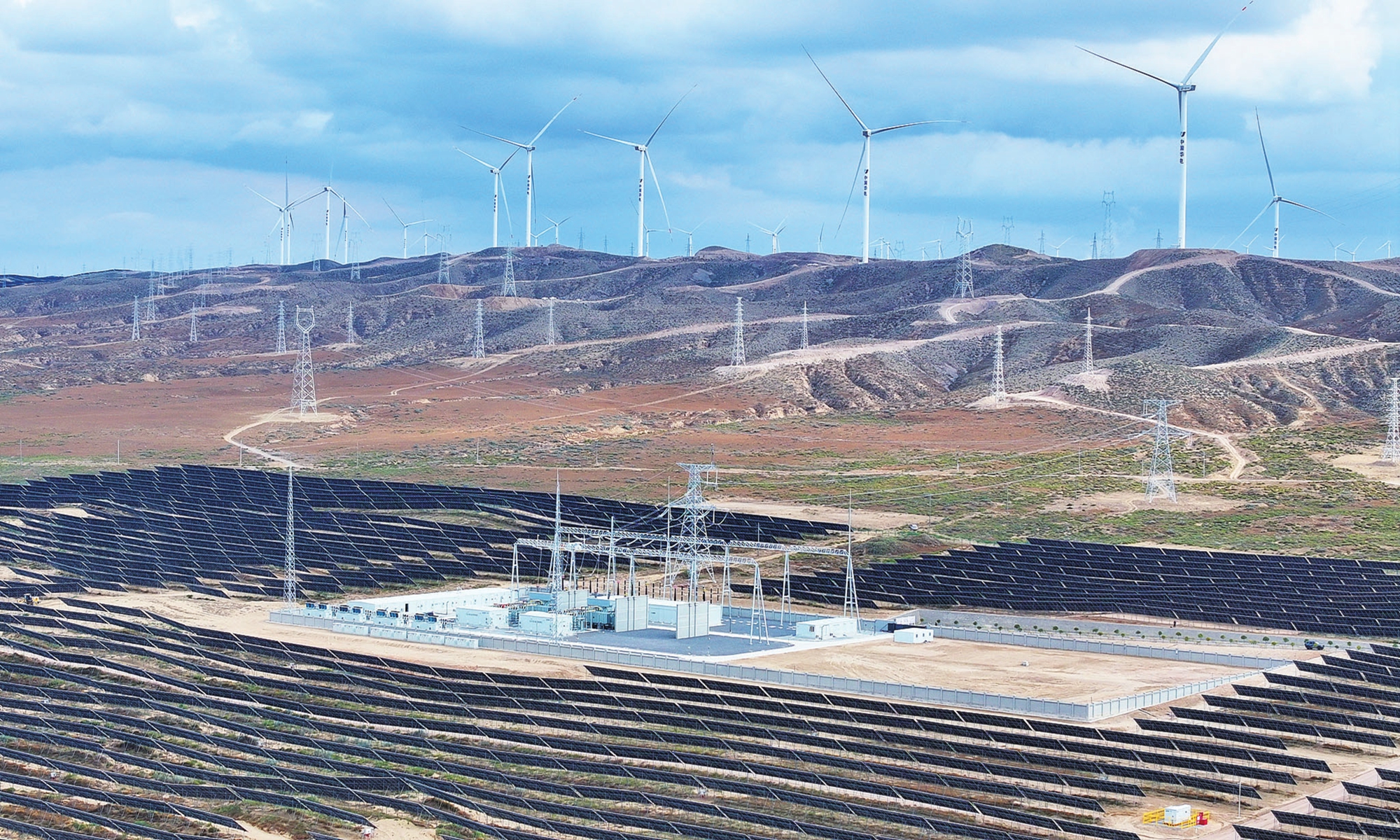
An aerial view shows photovoltaic panels and wind turbines complementing each other at a clean energy power station on October 27, 2025, in Yinchuan, Northwest China's Ningxia Hui Autonomous Region. Photo: VCG
China's economic performance in the first quarter of 2026, the inaugural year of the 15th Five-Year Plan (2026-30) period, was impressive. Looking ahead to the full-year performance, the country targets an economic growth of 4.5 percent to 5 percent this year and will strive for better in practice, which is achievable given its resilience in multiple aspects, including on the demand and supply sides.Between January and March, China's economy expanded by 5 percent year-on-year, up from 4.5 percent in the final three months of 2025 and falling into the country's GDP target range for 2026.
It's a positive factor that despite rising geopolitical uncertainties, China's foreign trade expanded by 15 percent year-on-year in the first quarter, with exports growing by 11.9 percent to 6.85 trillion yuan ($1 trillion) while imports were up by 19.6 percent to 4.99 trillion yuan. The purchasing managers' index for China's manufacturing sector rebounded into expansion territory to reach 50.4 in March, up 1.4 from February.
The economy has demonstrated extraordinary vitality and resilience. For the full year of 2026, China's GDP growth target is achievable given its resilience in multiple aspects. Internally, its efforts to boost domestic demand will be sustained, while on the export front, the search for new markets will be pursued amid an increasingly complex external environment.
It is believed that with China's scientific implementation of its 15th Five-Year Plan, the country's development of new quality productive forces will continue to accelerate, which will bring more opportunities to the world.
While some countries impose tariffs and isolate themselves, China keeps engaging the world. During the past five years, China adopted measures to further open up to the rest of the world. Its economic opening-up has fueled not only domestic prosperity but also global development, with initiatives such as the Forum on China-Africa Cooperation and the Belt and Road Initiative (BRI) having helped transform infrastructure, industry, and human capacity in many partner countries. Regarding the BRI, more than 150 partner countries have participated in the initiative, creating considerable benefits. It helps tackle issues of connectivity comprehensively - railways, roads, ports, and more.
Meanwhile, China's opening-up measures such as the zero-tariff policies have made it possible for the least developed countries (LDCs) to access China's market, enhance their production and productivity of export commodities, and hence help maintain their trade balance with China.
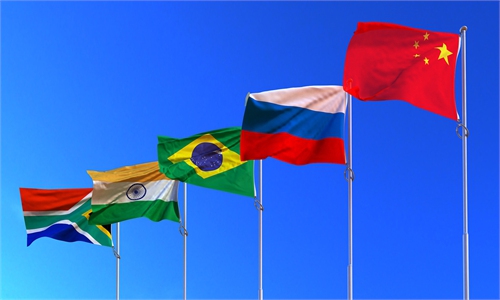
The active participation of LDCs in China's cooperation platforms has not only stimulated and boosted their social and economic development but has also laid a solid foundation for the industrialization of those countries. That is a pathway for catching up with other developing or developed countries, given that the BRICS' focus on connectivity and long-term infrastructure development is aligned well with priorities of those countries.
The external environment during the 15th Five-Year Plan period will present a mixture of challenges and opportunities. One of the immediate challenges is the current Middle East crisis, which manifests first and foremost as a supply chain and energy shock. The crisis will impact negatively on most economies in the world, causing them to focus more on developing green renewable energy and heed the need to diversify their source of supplies.
With the rapidly changing geopolitical environment, the Global South is winning a broader and deeper place in the world. The good news is that China is a major driver and key supplier of the global economy. Ultimately, the benefits will accrue to the Global South countries, which will help forge a multipolar and equitable world order.
China has become an essential partner for many countries looking to develop green economies. The Global South countries, which are rich in natural resources and in need of sustainable energy solutions, offer significant opportunities for investment.
The article is compiled based on an interview with Humphrey Moshi, a professor of economics and director of the Center for Chinese Studies at the University of Dar es Salaam in Tanzania. bizopinion@globaltimes.com.cn
RELATED ARTICLES