China’s top economic planner outlines policy priorities to boost economic resilience after nation secures solid Q1 growth
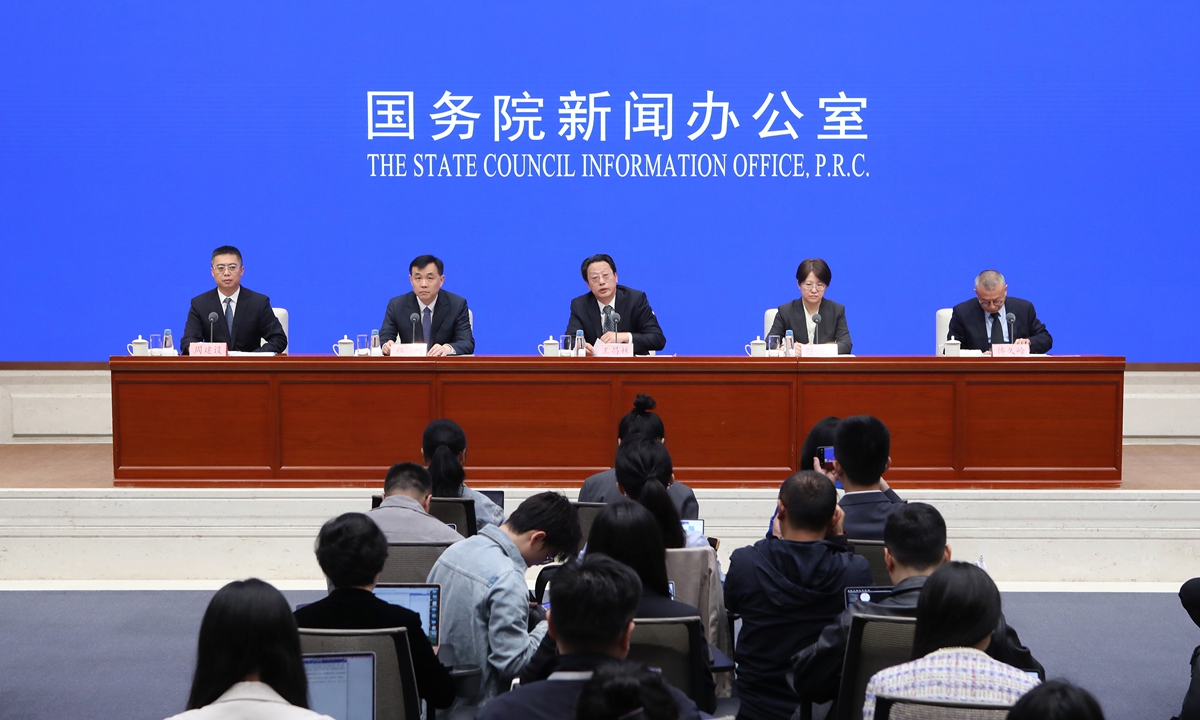
A press conference on promoting the high-quality economic and social development during the 15th Five-Year Plan period (2026-30) is held on April 17, 2026. Photo: VCG
A day after China reported first-quarter GDP growth of 5 percent, also the first quarter economic performance report during the 15th Five-Year Plan period (2026-30), beating expectations and making global headlines, its top economic planner held a follow-up press conference to offer more insights into high-quality development in this period. On Friday, the National Development and Reform Commission (NDRC) fielded ten questions, ranging from macroeconomy to energy, investment and consumption.
This reflects the high attention both domestically and internationally on China's economy, particularly the key question: Why has China's economy expanded more than expected in the first three months of the year despite mounting headwinds?
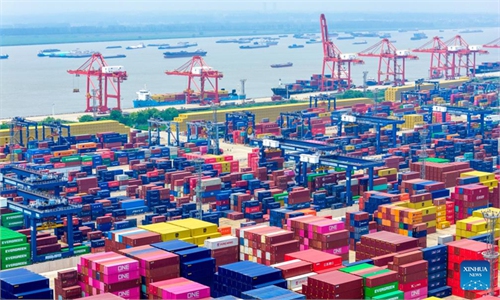
During the press conference on promoting high-quality economic and social development during the 15th Five-Year Plan period, the NDRC gave the answer: China boasts a highly complete industrial system, with an enormous domestic market, and the economy itself enjoys strong resilience and shock resistance. These factors provide a solid foundation for promoting economic stabilization and recovery, fully demonstrating the strengths of the socialist system with Chinese characteristics, it said.
Chinese observers noted that the bright economic performance in the first quarter was no easy feat, and was accomplished under a complex situation marked by heightened external shocks and challenges, coupled with overlapping domestic difficulties. The International Monetary Fund (IMF) also noted that China's good performance will have positive spillover effects for the Asian region, as well as the rest of the world.
Growth against headwinds
Regarding the current economic situation and the upcoming macro-policy orientation, Wang Changlin, deputy head of the NDRC, said that in recent years, China has focused on strengthening the construction of its energy and resource production and reserve systems, vigorously promoted the comprehensive green transformation of economic and social development, and continuously enhanced the security and resilience of its industrial and supply chains. These efforts have laid a solid foundation for resisting global energy supply shocks.
"Since the beginning of this year, the country has proactively responded to changes in the external environment in light of prevailing conditions and circumstances. It has made every effort to ensure stable oil and gas supply by maintaining domestic production, diversifying import sources, and implementing temporary price adjustments, thereby effectively safeguarding steady economic performance and meeting public livelihood needs," Wang noted.
Meanwhile, to address the downward pressure on the economy since the second half of last year, the government has moved swiftly to ensure that policies take effect early and are front-loaded, with efforts including accelerating the implementation of a batch of major projects, carrying out special initiatives to stimulate consumption, and speeding up the development of emerging and future industries, the NDRC official added.
Li Yong, an executive council member of the China Society for WTO Studies, told the Global Times on Friday that in recent years, China's macroeconomic management has continued to gather strength, forming more mature strategic plans in areas such as industrial layout and the development of the domestic market.
Since the second half of last year, policies aimed at promoting investment, boosting consumption, and advancing the development of the services sector have been introduced. These measures demonstrate a targeted and precise approach to policymaking, while also emphasizing the need to address weaknesses and achieve balanced and coordinated development. As a result, the economy has got off to a relatively balanced and steady start this year, Li noted.
During the Friday conference, the NDRC, in accordance with the outline of the 15th Five-Year Plan, laid out the key priorities of the next five years. China's new energy system came under the spotlight, as a Bloomberg reporter asked about the nation's non-fossil fuel development.
Wang said that in response to the impact of changes in the international situation on China's oil and gas imports, the country has adopted comprehensive measures to effectively ensure sufficient domestic oil supply and stable market operations. This fully demonstrates the achievements made in building China's new-energy system, he noted.
Compared with the traditional energy system, China's new-energy system is one in which non-fossil energy serves as the primary source of supply, fossil energy provides a bottom-line guarantee, the new-type power system acts as the key pillar, and green, smart, and efficient consumption serves as the guiding principle. "This represents the only viable path for China to achieve a green and low-carbon energy transition. It is also a strategic choice to safeguard national energy security," Wang said.
The NDRC official noted that the outline of the 15th Five-Year Plan has made systematic arrangements to enhance the national security system and capacity building, focusing on strategic supplies such as food and energy and adhering to the principle of self-reliance in meeting core oil and gas demand, so as to firmly keep the "rice bowl" of grain and energy in our own hands. The plan also requires the strengthening of risk prevention and control in weak links in emerging fields such as cyberspace, data, artificial intelligence, biology, ecology, nuclear energy, space, deep sea, polar regions, and low-altitude airspace.
Li Chang'an, a professor at the Academy of China Open Economy Studies at the University of International Business and Economics, told the Global Times that the first-quarter economic performance was hard-won, and effectively withstood external shocks and demonstrated strong resilience and confidence.
"Despite the overall positive performance, some weaknesses remain, including uncertainties in foreign trade and investment," Li Chang'an said, noting that the Friday conference has clarified the key efforts for the country, ranging from consolidating the real economy and expanding domestic consumption to balancing security and development.
'Positive spillover effect'
After China released its economic growth figures on Thursday, major international media outlets such as Reuters, Bloomberg, and The Wall Street Journal quickly followed up with in-depth coverage.
Also on Friday, Reuters published an article about the impact of China's economic performance on subsequent market expectations. "China is expected to leave benchmark lending rates unchanged for an 11th consecutive month in April, a Reuters survey showed, as robust first-quarter growth and a pick-up in inflation have weakened the case for additional monetary stimulus," the report said.
Even before the GDP figures were released, it was evident that the world's No. 2 economy was weathering the Iran war better than others, the report noted.
IMF said on Thursday that although the conflict in the Middle East and the ensuing energy supply shock are raising inflation, it projected that Asia will remain the main driver of global growth, and China and India are expected to contribute 70 percent of the region's growth.
Kristalina Georgieva, managing director of IMF, said during a press briefing on the global policy agenda on Wednesday that "We do see resilience in the [Chinese] economy. China has great potential. As it moves to change its growth model from one that is mostly dependent on exports to one that is primarily oriented towards domestic consumption, moving from goods to services, that can give a big boost to China."
Of course, China's size means that when China does well, there are positive spillovers for the rest of the world, for the region, especially for Asia, but also for the rest of the world, Georgieva noted.
"Overall, the Chinese economy has shown positive changes, with notable improvements on both the supply and demand sides, better fulfilling its role as a stabilizer for the global economy. Going forward, we will accelerate the implementation of 109 major projects, continuously consolidate and expand the positive momentum of steady economic growth, in a bid to ensure the successful achievement of the main targets and tasks for economic and social development," Wang, the NDRC official, noted.
RELATED ARTICLES