IN-DEPTH / IN-DEPTH
Scholars' Perspectives: Understanding of governance performance is a fundamental issue related to CPC's governance philosophy
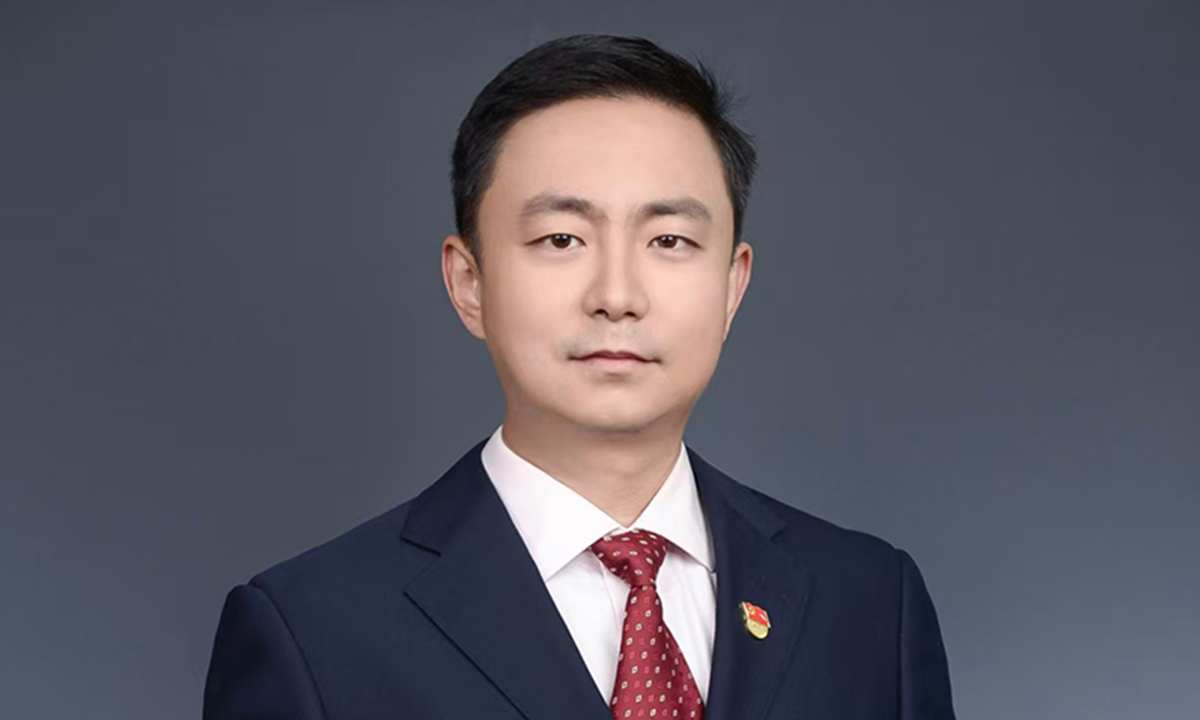
Wu Tao, Director and Professor of Research Center for Grassroots Party Building, China Executive Leadership Academy Pudong (CELAP), also expert entitled to Special Government Allowance of the State Council
Editor's Note:
"A correct understanding of governance performance requires us to proceed from reality, respect objective laws, and through sound decision-making and hard work, create achievements that withstand the test of practice and history, truly benefit the people, and earn public recognition," President Xi Jinping, also general secretary of the Communist Party of China (CPC) Central Committee and chairman of the Central Military Commission, stressed at the opening of a study session for principal officials at the provincial and ministerial levels in January 2026.
At this crucial juncture marking the beginning of the 15th Five-Year Plan period (2026-30), President Xi has issued a call to action, encouraging officials at all levels to further establish and practice a correct understanding of governance performance, and to strive to achieve new accomplishments worthy of the time.
Since the 18th National Congress of the Communist Party of China (CPC), President Xi has made a series of remarks on the important issue of establishing and practicing a correct understanding of governance performance on various occasions. In the article "Continue the Great Historic Struggle" included in Volume III of Xi Jinping: The Governance of China, President Xi stressed that CPC Central Committee members and principal officials at the provincial and ministerial levels "must develop a stronger sense of responsibility, adopt a correct view of their achievements, seek truth, and be down to earth. They should work tenaciously to be truly responsible to history and the people."
An article by President Xi on establishing and practicing a correct understanding of governance performance, which was published in the Qiushi Journal on April 1, stressed that the view on governance performance is a fundamental issue. The article calls for efforts to proceed from reality, act in accordance with the laws, and deliver results that can stand the test of practice and history, truly benefit the people, and earn public recognition through sound decision-making and solid work.
In the 23rd installment of the special series "Decoding the Book Xi Jinping: The Governance of China," the Global Times, along with the People's Daily Overseas Edition, continues to invite Chinese and foreign scholars, translators of Xi's works, practitioners with firsthand experience, and international readers to explore the profound ideological essence, practical value, and global significance of establishing and practicing a correct understanding of governance performance.
In the 21st article of the "Scholars' Perspectives" column, Wu Tao, Director and Professor of Research Center for Grassroots Party Building, China Executive Leadership Academy Pudong (CELAP), also expert entitled to Special Government Allowance of the State Council, elaborates on the importance of establishing and practicing a correct understanding of governance performance.
Global Times: In the inaugural year of the 15th Five-Year Plan period (2026-30), the Central Committee of the CPC has decided to launch a Party-wide campaign on establishing and practicing a correct understanding of governance performance. Xi Jinping, general secretary of the CPC Central Committee, noted that "the understanding of governance performance is a fundamental issue, as it bears on building the Party for the public good and exercising power for the people." Could you elaborate, based on the historical experience of the CPC as a long-term governing party, on why the understanding of governance performance is a fundamental issue?
Wu Tao: A correct understanding of governance performance answers a fundamental question: For whom do we wield the power in our hands? To whom are we accountable for the performance we deliver? Different answers to this question determine a political party's nature, mission, and ultimate fate. Once the frame of reference for the understanding of governance performance is distorted, the ruling party's very lifeline will be shaken. The origin of this frame of reference is always the people.
The people are the foundation of our Party's governance, and the people's stance is the fundamental political stance of the CPC. All our work must take as its fundamental criterion whether the people approve, are pleased, and are satisfied. The power in the hands of Party members and officials is bestowed by the people, and must only be used to seek benefits for the people.
The question of "for whom" constitutes the starting point and ultimate goal of the outlook on governance performance. A wrong starting point leads to acting counterproductively; a deviated goal will eventually result in failure. This answer can only be the people.
Over a century of Party history records the struggle in which the CPC has continuously refined and practiced the fundamental understanding of governance performance - to serve the people.
Looking back on the Party's history, a clear main thread emerges: Whenever the understanding on governance performance is correct and closely tied to the interests of the people, our cause flourishes and prevails against all odds. Whenever the understanding deviates and becomes divorced from the people, our cause suffers setbacks and even faces peril.
GT: General Secretary Xi proposed that a correct understanding of governance performance "reflects not only in immediate, tangible results, but also in laying solid foundations, building long-term momentum, and creating lasting benefits." He urged officials to value not only visible achievements, but also the less visible work that lays the groundwork for future development. In Volume I of Xi Jinping: The Governance of China, General Secretary Xi noted that "pursuing success beyond personal credit." How to understand the relations between the "visible" achievements and "less visible" work?
Wu: General Secretary Xi's remarks profoundly clarified that "visible" achievements and "less visible" work are two sides of the same coin. To accurately understand and properly handle the relationship between the "visible" and tangible achievements and the "less visible" or "underlying" efforts is an essential requirement for fostering and practicing a correct understanding of governance performance.
We must first make it clear that the "visible" and "less visible" are not diametrically opposed or mutually exclusive. Instead, they are dialectically unified and mutually reinforcing.
Visible achievements generally refer to results that are visible, tangible, and quick to take effect. Examples include a newly built highway, a newly constructed school, a successfully introduced investment project, and relief funds distributed in a timely manner. These are all concrete initiatives that improve people's lives, and they are the direct source of the people's sense of gain, happiness, and security.
We must not deny or overlook the importance of visible achievements simply because we emphasize underlying efforts. When the CPC members carry out revolution and development, our goal is to improve the people's lives day by day - and such improvement must be reflected in specific, perceptible changes.
Less visible, underlying efforts refer to work that lays foundations, benefits the long term, and strengthens future potential. Examples include optimizing the business environment, fostering an innovation ecosystem, protecting watersheds, investing in basic education, building a social credit system, or resolving historical disputes.
Such work often requires significant input, has long cycles, and produces slow results that may not be easily quantified in the short term, and may even appear to be "thankless tasks." Yet these efforts are key to determining a region or a nation's development potential and competitiveness in long term.
Visible achievements are the "flowers" of underlying efforts, while underlying efforts are the "roots and veins" of visible achievements. Without deep roots, even the most beautiful flowers are ephemeral and cannot withstand storms. Conversely, if one focuses only on foundations without flowering, the deep roots cannot translate their nutrients into tangible benefits for the people.
Regarding underlying efforts, we need the resolve to "do good deeds without asking about personal merit"; regarding visible achievements, we need the courage to "deliver immediate results and serve the present." True governance performance is a symphony of both - an integration of the state of "success does not have to be credited to me" and the responsibility of "ensuring that I contribute to the success."
Therefore, a correct understanding of governance performance requires both visible achievements and underlying efforts to be pursued robustly. Visible achievements address the immediate expectations of the people and enhance their sense of gain, while underlying efforts accumulate momentum for future development and leave valuable legacies for generations to come.
GT: In Volume III of Xi Jinping: The Governance of China, General Secretary Xi emphasized in "Say No to Form over Substance and Reject Bureaucratism" that we must never falter in correcting Four Malfeasances, nor should we ever stall in our drive to improve the conduct of Party members. He also pointed out, in his instructions on launching a Party-wide education campaign to establish and practice the correct understanding of governance performance, that deviations or misalignments in the understanding of governance performance could waste resources, cause form over substance, and give rise to unhealthy practices and corruption. In your view, what is the significance of establishing and practicing the correct understanding of governance performance for the improvement of conduct for members of a major ruling party?
Wu: General Secretary Xi has always attached great importance to the Party's work style construction, repeatedly emphasizing to never stall in the drive to improve the conduct of the Party members.
Work style is the "external expression" of one's understanding of governance performance, while the understanding is the "internal gene" of work style. The two are inseparable and closely linked. The type of understanding of governance performance held by an official will inevitably manifest in the work style.
An incorrect understanding of governance performance is the ideological root of the Four Malfeasances problems. One could say that almost all work style-related issues can trace their "pathology" to a distorted understanding of governance performance. Without addressing this issue at its root, work style construction easily falls into a cycle of "treating symptoms rather than causes," making fundamental improvement difficult.
Conversely, establishing and practicing the correct understanding of governance performance naturally cultivates a healthy and robust Party ethos.
Adopting the view of "serving the people" can fundamentally overcome bureaucratism. When an official truly prioritizes the people, they are naturally drawn to engage with the public, listen to their concerns, and learn about their living conditions. They regard letters and visits from the public as valuable "intelligence" and see public criticism and supervision as the best "motivation." In this way, the aloof "official" style loses all relevance.
Adopting the view of "seeking truth and be pragmatic" can fundamentally eliminate formalism. When officials pursue accomplishments that can withstand the test of history and the people, they disdain anything false or superficial. They devote their time and energy to understanding reality, proposing practical measures, taking effective action, and achieving tangible results. They recognize that any "numbers game" meant to deceive superiors or conceal reality will ultimately be exposed in practice.
Adopting the view that "pursuing success beyond personal credit" can effectively resist hedonism and extravagance. When an official embraces a mindset of "considering the interests of all rather than personal gain," the individual will view personal honor and gain with equanimity. Their focus is on undertaking meaningful work rather than indulging in pleasure. For them, hard work, integrity, and frugality are not external constraints but intrinsic aspirations.
Therefore, conducting Party-wide education in establishing and practicing the correct understanding of governance performance is a fundamental ideological and practical reform - a "purification of the source and reinforcement of the foundation" for Party work style. It identifies the principal contradiction in improving work style and the primary aspect of that contradiction, addressing "upstream" ideological issues to resolve "downstream" behavioral problems at their root.
RELATED ARTICLES