'China has developed into the indispensable nation for green transition in the world'
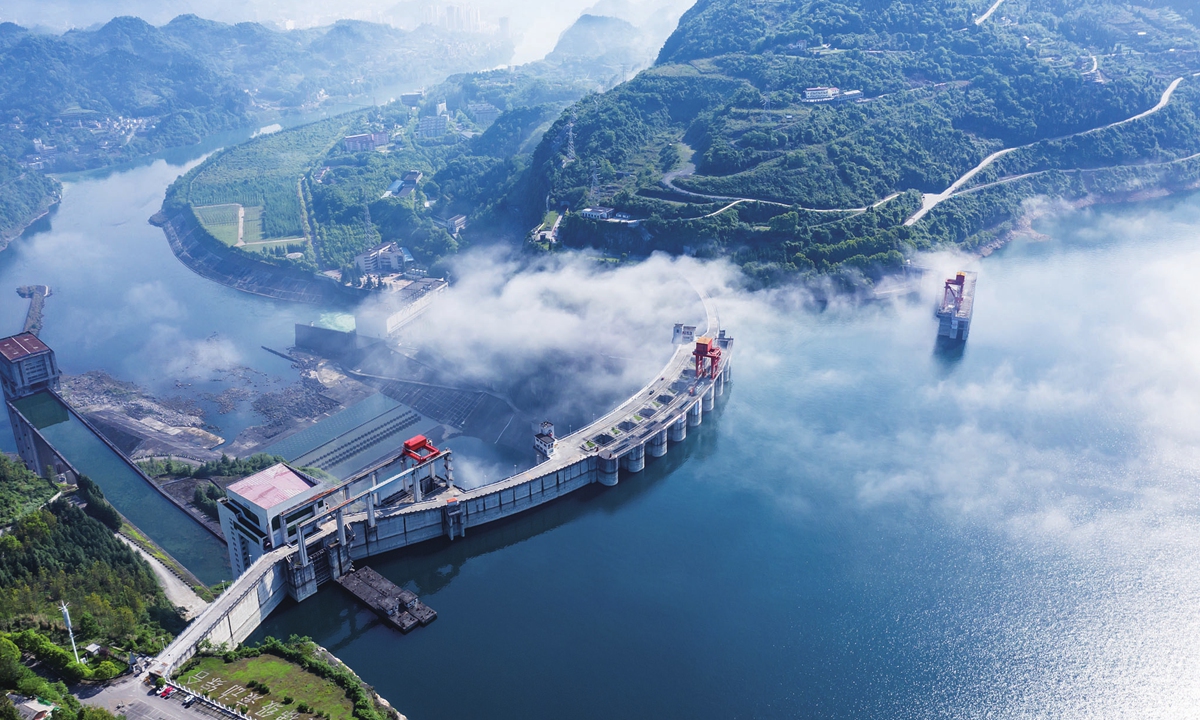
The power station in Changyang Tujia autonomous county, Yichang city, Hubei Province Photo: VCG
Editor's Note:
In an era marked by ecological challenges, development dilemmas and geopolitical dynamics are increasingly intertwined. Through a series of innovative practices, Chinese modernization offers a "green solution" to some of humanity's pressing questions of survival and development. Rooted in the wisdom of Chinese civilization and refined through Xi Jinping Thought on Ecological Civilization, this approach presents both a philosophical vision and a practical pathway toward sustainable development.
In this context, the Global Times (GT) launches the "China through a 'green' lens" series. It invites leading scholars and observers worldwide to decode the underlying logic behind China's green development and to better understand the global implications of China's green development philosophy.
In the third installment of the series, Erik Solheim (Solheim), chairman of Europe-Asia Center, and former under secretary-general of the United Nations and the executive director of United Nations Environment Programme, shared his insights with GT reporter Li Aixin.
GT: According to the 15th Five-Year Plan (2026-30), China will advance the goals of carbon peaking and carbon neutrality by coordinating actions to cut carbon, reduce pollution, expand green capacity and promote growth. From your observations, how has China been progressing in these areas?
Solheim: China has developed into the indispensable nation for green transition in the world.
Let's be honest. Ten years ago, China was very polluted and was not leading on the environment. Europe was leading at the time. But in 10 years, there has been a complete transformation. China's pollution has come down dramatically, both in the air and in water and soil.
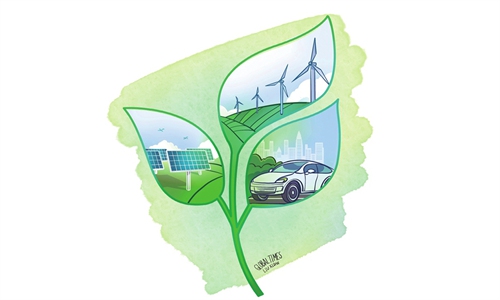
It has been a complete and thorough cleanup. China has developed the most advanced green industries in all sectors - solar, wind and electric batteries - where China now holds 60 percent or more of the global market.
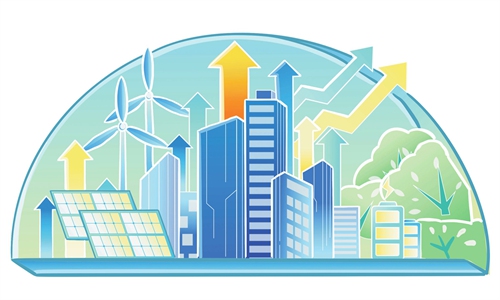
One of the core concepts in [the] new Five-Year Plan is "new quality productive forces." That means, in my understanding, mainly the digital and artificial intelligence revolution, as well as the green, renewable energy and electric vehicle revolution. So, China will have an enormous focus on this green transition in the years to come, which will help China, but also the entire world.
GT: "Lucid waters and lush mountains are invaluable assets" serves as a guiding principle for China's ecological civilization construction. How do you interpret this concept?
Solheim: This quote is from the speech of President Xi, then Party secretary of Zhejiang Province. He put forward the idea in Yucun village in Anji [county] in August 2005. At that time, China was very polluted. There was very little focus on the environment. The focus was on economic development and growth.
These words can be seen as the starting point of the change. And the core idea that there is no contradiction between the economy and the environment - Green is Gold - is more and more taking off in the entire world.
That's why we see so many other developing nations also moving in the same direction as China, because, for the first time, you can combine ecology and economy. There is no contradiction between them. "Lucid waters and lush mountains are invaluable assets" also in economic terms.
The overriding concept is that going green comes with enormous benefits for people.
Very often, environmentalists, particularly in the West, have portrayed "going green" as a pain. You need to suffer for the environment. You should just shower a few minutes a day because otherwise you use too much water; you should keep the air conditioner off, otherwise you will destroy nature. But that's a message of suffering or pain.
What we need is exactly the opposite - the enormous benefits of going green. You will get a much better nature, a much more beautiful China, but also a beautiful US and a beautiful Germany. You will have a much happier life. And that's people centered. That's the focus of China's ecological civilization: How [should] we make a society closer to nature, but also much better and much happier for human beings.
GT: During your visits to China, have any examples left a deeper impression on you by really bringing the idea of "lucid waters and lush mountains are invaluable assets" to life?
Solheim: There are so many exciting changes all over China. But if you want me to speak about one, maybe the most fantastic is in Zhejiang Province itself, where the rural revitalization and environmental improvement program has greatly restored and improved the condition of its waterways, canals, and rivers.
In the past, these were nicknamed "milky rivers" because of pollution, or "soya sauce rivers" because they were black and brown from pollution. Now, the same waterways, canals and rivers are completely clean. You can even swim in them. They are full of fish, frogs, butterflies and more.
This also helps Zhejiang Province in economic development because tourists want to come and see this, and people want to go and live there. It has a huge economic impact, added to the fantastic progress for the ecosystem.
GT: President Xi has stated that "new quality productive forces are green in nature." How do you understand this?
Solheim: It means the complete integration of economy and environment, which is the precondition for progress.
People want prosperity. They want a better life, they want better health, they want better education. The new thing which President Xi is emphasizing is that you can have a better life by doing it with solar energy, with wind energy, with electric cars, with hydropower.
This is completely new. Ten years ago, we couldn't do that because in the past, fossil fuel was the only option. But now we can go green and grow the economy at the same time.
GT: Do you think green energy has become a globally accessible "daily necessity"?
Solheim: Absolutely. Solar energy is now the cheapest anywhere in the world. If you switch from coal to solar, it's a cost saving.
And wherever you go, no nation can realistically go green without China, because China is the country that has brought these technologies to large-scale production and kept prices low, which is what makes them affordable. And we need more of this.
The world is going through great shifts, and the green transition is very closely related. Nations now go into solar energy, supercharged by the war in the Middle East, where everyone sees the need for energy independence. They need to be independent of the oil from the Strait of Hormuz, from the volatile global oil market.
How can they be independent? Turning to renewable energies. China pioneered this because China, at a very early stage, saw the benefits of energy independence. In China, the priority for solar and wind has been so high not only to combat climate change and to create jobs and prosperity, but also to make China less dependent on outside forces. That has made China much more resilient to the war in Iran than most other nations.
The global trade in batteries, for example, has grown strongly in the first three months of this year.
GT: When Western media outlets touch upon the trend, they tend to say China is the "winner" in the US-Israel-Iran war. Although China did not seek to win in conflicts, it is, just as you mentioned, better prepared.
Solheim: China is prepared for the situation much better than anyone else. I think the five or six largest solar companies in the world are Chinese. And there is no nation outside China and South Korea that is really making it in electric batteries.
We should completely move away from the win-lose mind-set and adopt a win-win approach. We can all be winners. In most areas, if we make the planet greener, more peaceful and achieve stronger economic growth, it becomes a bigger cake for everyone.
The longer the conflict lasts, the bigger the impact. But even if the crisis were to, by a miracle, go away tomorrow, the wake-up call for everyone has been tremendous. We will see a huge surge in renewables everywhere, because in the past people did it for the climate, now they do it as much for energy independence or energy security.
RELATED ARTICLES