IN-DEPTH / IN-DEPTH
CPC in Global Eyes: Answer to China’s grass-roots governance lies in ‘addressing fundamental issues and pursuing long-term benefits’: Belarusian former deputy PM
Beyond Visible Gains
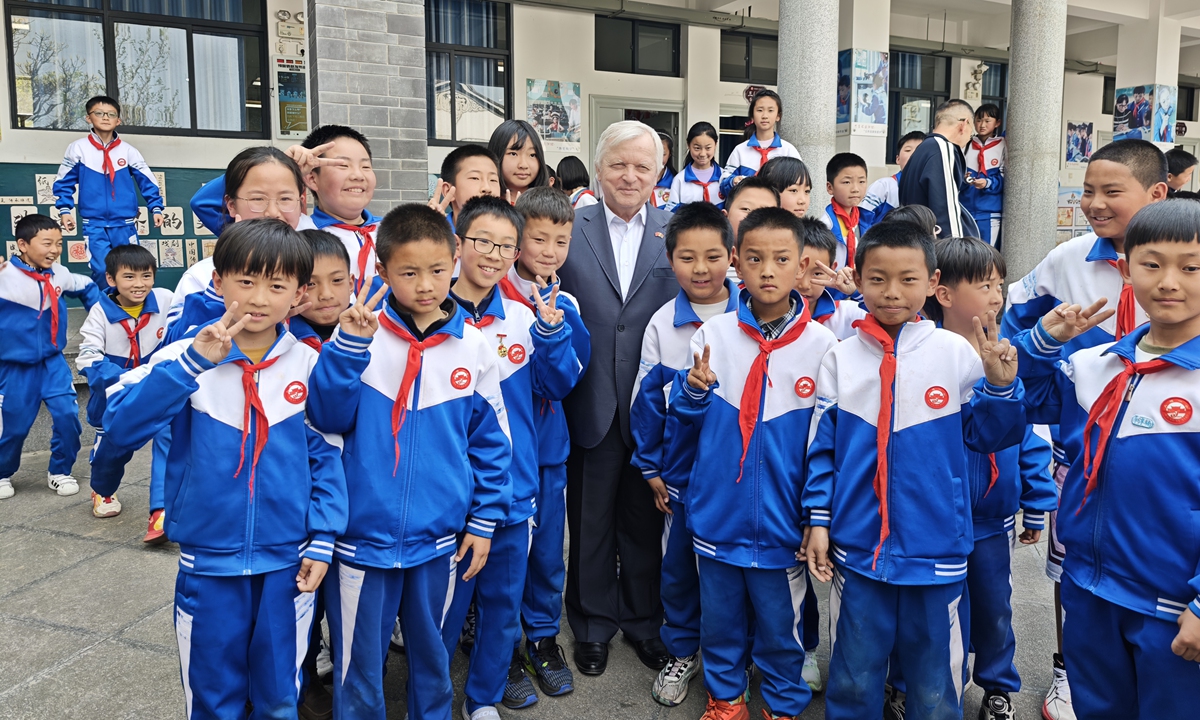
Anatoly Tozik conducts research at a primary school in Dali, Southwest China's Yunnan Province, on April 1, 2025. Photo: Courtesy of Anatoly Tozik
Editor's Note:
Chinese President Xi Jinping has pointed out, "to understand China today, one must learn to understand the Communist Party of China (CPC)." With the rapid development of China's economy and society, and the steady advancement of the Chinese path to modernization, the notable achievements of the CPC have drawn extensive international attention and scholarly interest. Against this backdrop, the Global Times has launched the "CPC in Global Eyes" column, focusing on the feelings, perspectives, and insights of international friends from various fields regarding the CPC's historical path and achievements.
They include those who have visited or toured China, those who study the CPC deeply in academic fields, those who work, live, study, or do business in China across various sectors, and those who closely follow the CPC's policies and developments. Through their vivid personal experiences, we aim to present a multifaceted overseas view of the CPC.
In the twelfth installment of this series, we interviewed Anatoly Tozik, director of the Republican Confucius Institute of Sinology at Belarusian State University and former deputy prime minister of Belarus, who reflects on China's poverty governance through decades of firsthand experience. Recalling his recent visit to Nujiang, where he witnessed rural transformation firsthand, Tozik highlights a governance approach that values both visible, short-term achievements and the less apparent, long-term foundations of development - an understanding he believes offers important lessons for policymakers worldwide.
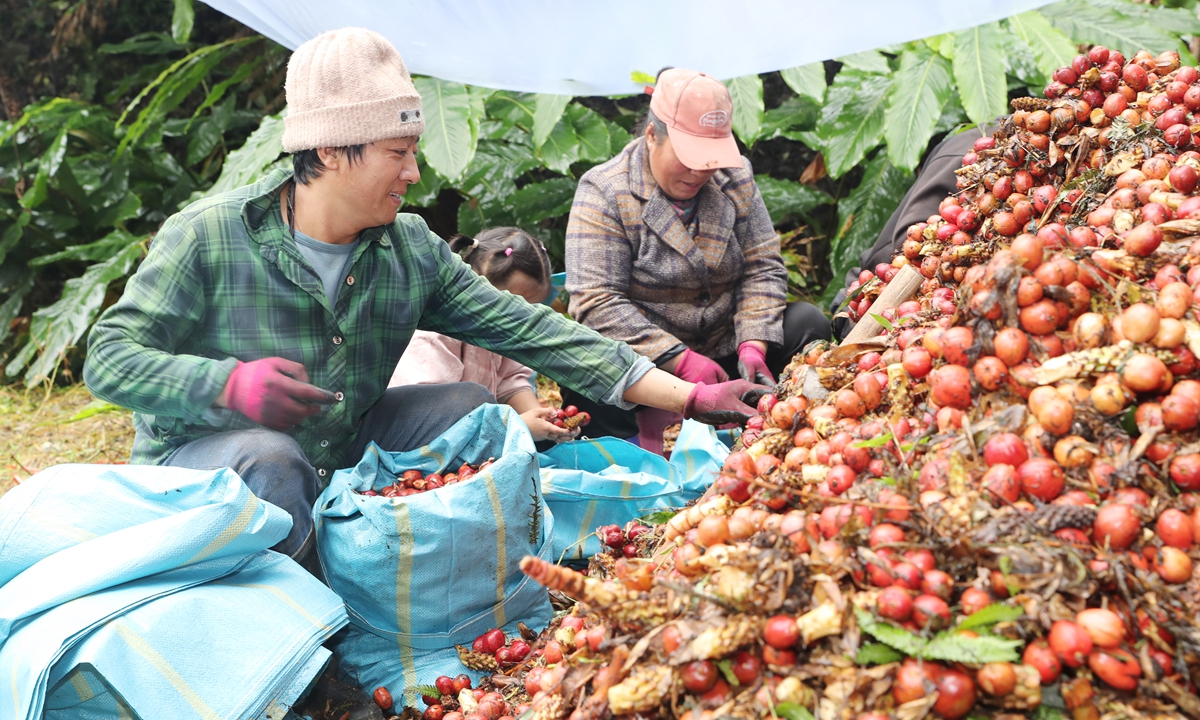
Local farmers harvest fresh Amomum Tsao-ko, a ginger-like Chinese herb, in the rain in Fugong County, Nujiang Lisu Autonomous Prefecture, Yunnan Province, on November 6, 2025. Photo: VCG
In the spring of 2025, the Nujiang River Grand Canyon in Southwest China unfolded like a living scroll in the gentle light of the mountains. At 76, Anatoly Tozik, director of the Republican Confucius Institute of Sinology at Belarusian State University and former deputy prime minister of Belarus, walked along cliffside paths, pausing to take in the vast gorge.
He stepped into cafes to taste locally grown coffee, visited guesthouses and specialty shops, and spoke with villagers about how tourism has reshaped their lives.
Once among China's most impoverished regions, Nujiang - home to the country's only Lisu autonomous prefecture - has undergone a profound transformation. Over 100,000 residents have relocated into towns, transport infrastructure has leapt forward, industries are gaining vitality, and ecological protection now advances in tandem with development, according to the Xinhua News Agency.
"What struck me most was that everyone, officials and ordinary people alike, all spoke of these changes with genuine pride and joy," Tozik told the Global Times.
To him, such sentiments were not incidental - they were perhaps the most convincing testament to the work carried out on the ground, where transformation is measured not only in what is immediately visible, but also in what quietly reshapes the future.
Witnessing change along the canyon
During his research trip to Nujiang Lisu Autonomous Prefecture, Southwest China's Yunnan Province in the spring of 2025, Tozik traveled through villages and visited the local poverty alleviation communication center, observing firsthand how the region has consolidated its poverty reduction achievements while advancing rural revitalization through integrated agriculture, culture and tourism.
Over the course of just a few days, Tozik met with local officials, community leaders and residents in both newly built resettlement areas and revitalized traditional villages.
In Fugong County's Shidi Village, he toured a boutique hotel built around ethnic cultural and ecological themes, learning how tourism generates employment and boosts sales of local agricultural products. At a Lisu cultural heritage site in a village, he watched traditional song and dance performances and discussed cultural preservation with local practitioners.
At a poverty alleviation exchange center in Nujiang, immersive exhibitions, powered by advanced technology, brought to life the region's dramatic leap from deep poverty to rural revitalization, offering what Tozik described as a "truly tangible sense" of this transformation.
Nujiang's rugged terrain once made it one of China's "hardest bones to crack" in poverty alleviation. The completion of the Nujiang section of National Highway 219 five years ago changed that reality, turning isolation into connectivity. Today, products like cardamom, coffee and medicinal herbs flow out of the mountains, while the region's dramatic landscapes attract a growing number of visitors, according to a local media outlet of the Nujiang government. "What left an indelible impression on me was the sheer scale of what has been accomplished," Tozik reflected.
Equally striking, he noted, was the clear necessity and legitimacy of these projects - resettlement communities, highways and tunnels stretching for miles. "Nowhere did I see projects built merely for show," he said. "Everything was designed to give this land, and its people, a renewed life."
He was also deeply moved by the shared sense of pride among both officials and residents. And perhaps most tellingly, he observed that local authorities had not simply handed out ready-made solutions. "They did not give people fish," he said, invoking a familiar metaphor. "They gave them well-crafted fishing rods" - tools that enable sustainable, self-driven development.
Tozik said that with its breathtaking natural landscapes and rich cultural diversity - more than 20 of China's 56 ethnic groups live in Yunnan - combined with modern highways, airports and widespread internet access, the province is now drawing a steady stream of visitors. In turn, local communities are building service systems to meet this demand, fueling growth in tourism, agriculture, hospitality and traditional crafts.
"Poverty, whether of the land or of the people, has become a thing of the past," Tozik said.
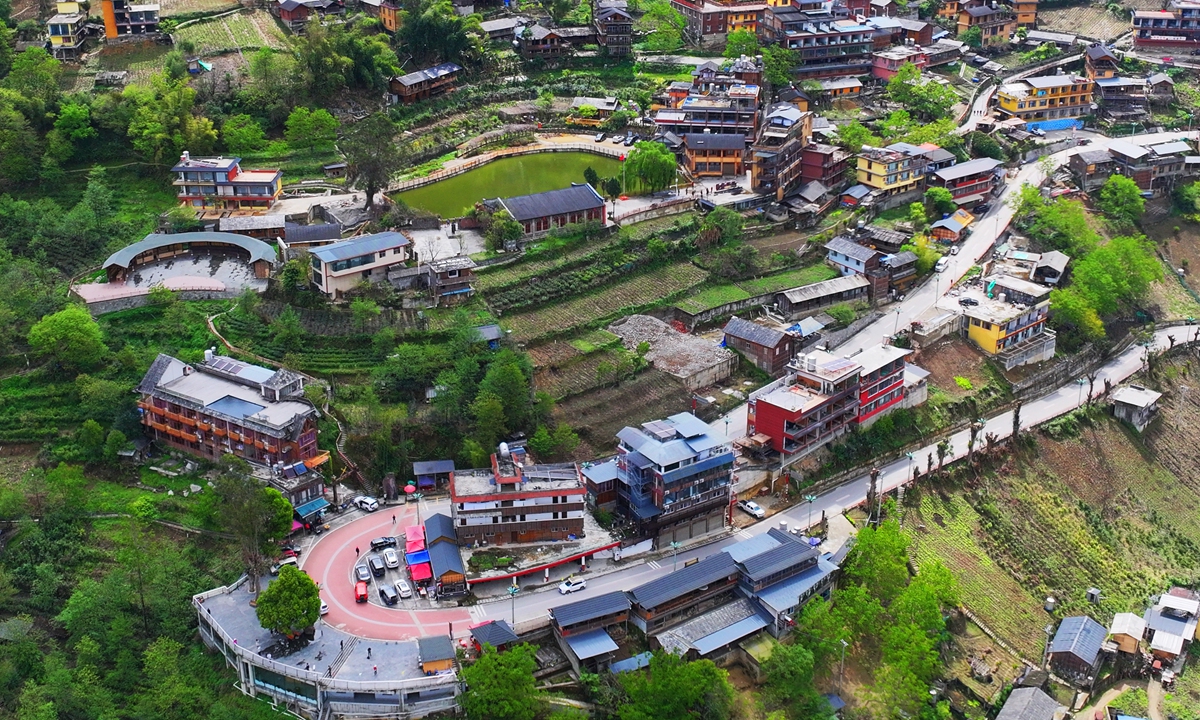
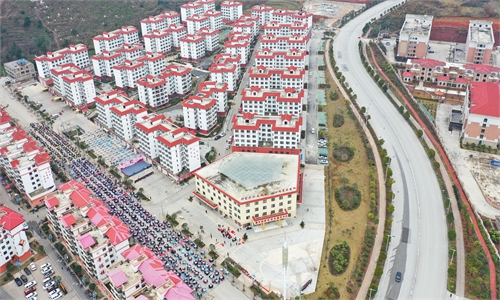
An aerial view of a village in Fugong County, Nujiang Lisu Autonomous Prefecture, Yunnan Province Photo: VCG
Balance between visibility and value
Tozik's reflections are shaped not only by what he saw in Nujiang, but also by decades of engagement with China. Having served as Belarus's ambassador to China from 2006 to 2011, he traveled extensively across the country, visiting nearly every province, municipality and autonomous region.
"I witnessed China's rapid development with my own eyes," he told the Global Times, "and the steady improvement in people's living standards year after year."
He often returns to a striking figure: over the past four decades of reform and opening-up, China has lifted 770 million people out of poverty - roughly equivalent to the entire population of Europe. Importantly, he emphasized, China's poverty line encompasses not only income, but also access to food, safe drinking water, clothing, secure housing, compulsory education and basic healthcare.
"This was an extraordinarily hard task spanning more than 40 years," he said. "A nationwide campaign, like a fortress assault, has achieved something unprecedented in China's thousands of years of history."
In his view, such achievements cannot be separated from how performance is understood and evaluated at the local level.
Drawing on his own experience as a senior government official, including as deputy prime minister, Tozik offered a nuanced perspective. Projects that deliver short-term, visible results, enhancing public image or bringing immediate benefits, are not inherently problematic.
"Such projects exist in every country," he noted. "They are necessary, especially when they improve people's well-being or strengthen governance."
Officials who complete such projects efficiently and to a high standard, he argued, deserve recognition.
However, Tozik stressed that the true test of governance lies elsewhere: in addressing fundamental issues and pursuing initiatives that generate long-term benefits. These are the responsibilities that should command the greatest attention from leaders at all levels.
"Ultimately, it is these leaders who must be trained to understand how to evaluate performance correctly," Tozik said.
Recent moves by the Chinese government have reinforced this direction. In February 2026, the General Office of the CPC Central Committee issued a notice on launching a campaign within the entire Party to study and uphold a correct view on governance performance. This correct view on governance performance includes achievements that deliver immediate, visible results, as well as those that lay the foundation, increase long-term momentum and benefit future generations.
Model beyond borders
For Tozik, China's experience offers lessons that extend far beyond its borders.
"Let us listen to China's voice and its proposals," he said. "Behind them lie thousands of years of wisdom and experience." In his view, the most remarkable outcome of Chinese modernization is the historic eradication of absolute poverty in a country of such vast scale - an achievement unmatched by other major nations.
China's governance experience, he noted, is rooted in broad public support and a long tradition of statecraft. Yet what distinguishes it internationally is its openness: while engaging with the world, China does not insist that others replicate its model.
Instead, its approach to poverty reduction, particularly targeted poverty alleviation, has become a global reference point, representing a major contribution to humanity's shared mission of eliminating extreme and multidimensional poverty, Tozik said.
Tozik has also witnessed how these principles extend into international cooperation. As an early advocate of the Great Stone China-Belarus Industrial Park, he played a role in fostering collaboration inspired by China's reform experience. He recalled how, during his tenure as ambassador, cooperation with Chinese partners helped advance key industrial projects in Belarus, overcoming constraints in funding and technology.
After retiring in 2014, he devoted himself to the study and promotion of China as head of the Republican Confucius Institute of Sinology at Belarusian State University. Under his watch, Chinese language education in Belarus has expanded dramatically: from virtually nonexistent before the 1990s to dozens of universities and hundreds of schools today, with plans for further growth.
Yet for Tozik, language teaching is only part of the mission. "Studying China's policies is a key task," he emphasized. Through high-level seminars on topics such as China's reform experience and the Belt and Road Initiative, he has sought to distill lessons applicable to Belarus' own development.
He also highlighted the enduring relevance of Chinese civilization - its emphasis on benevolence, harmony and respect - as a source of guidance for today's world.
On Tozik's desk lies a well-worn copy of Xi Jinping: The Governance of China, filled with notes and tabs.
"Having studied it in detail, I am now convinced that a China committed to mutual development and respect for diverse civilizations can align its national goals with the broader interests of humanity," Tozik said.
RELATED ARTICLES