China-Kazakhstan cooperation forges ahead: Cultural, trade ties boom, deepening everlasting strategic partnership
Envoy: China-Kazakhstan cooperation forges ahead
By Dong Feng and Published: Apr 23, 2026 11:46 PM

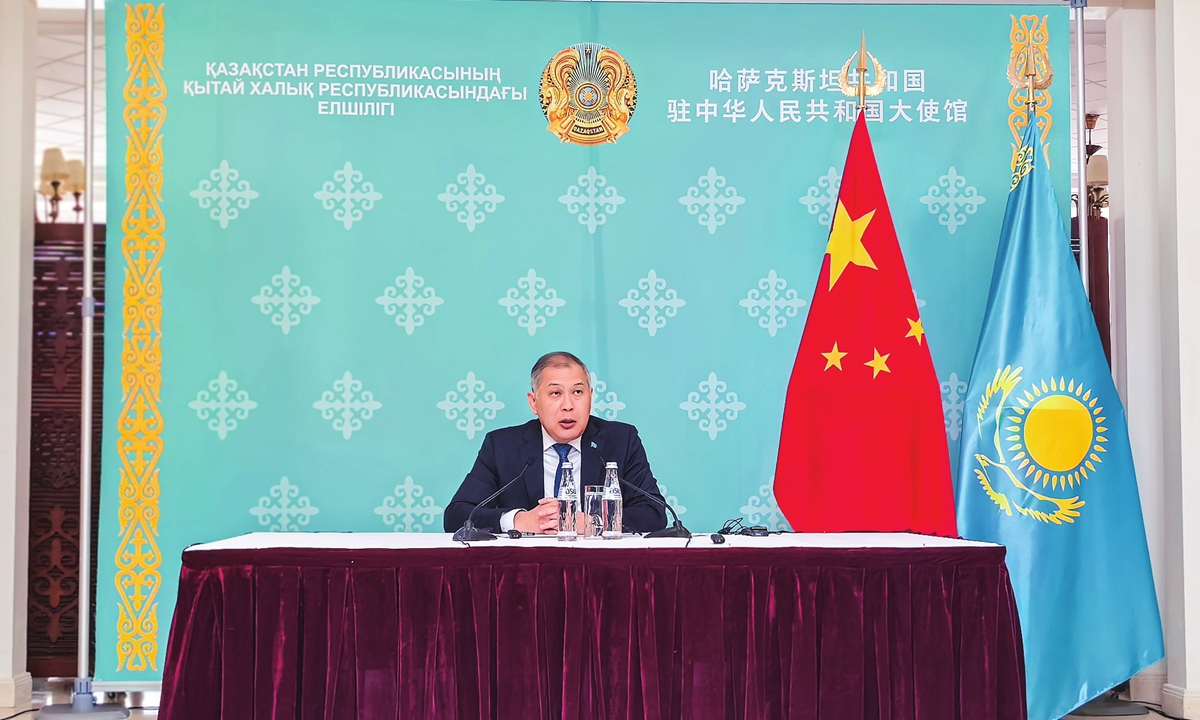
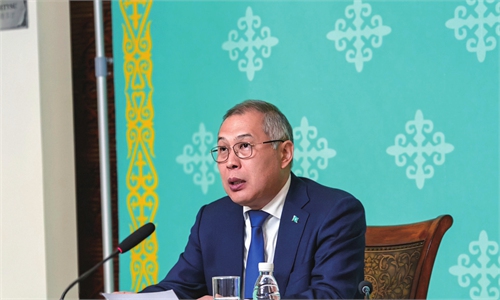
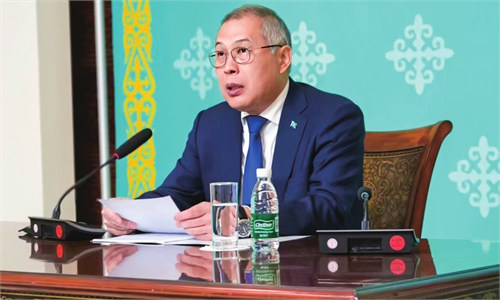
Ambassador of Kazakhstan to China Shakhrat Nuryshev briefs media at a press conference of the Embassy of the Republic of Kazakhstan in China on April 22, 2026. Photos: Dong Feng/GT
The Embassy of the Republic of Kazakhstan in China on Wednesday hosted a press conference in Beijing. Ambassador of Kazakhstan to China Shakhrat Nuryshev updated the media on Kazakhstan's constitutional reforms, the Year of Kazakhstan-China Cultural Exchange, and the achievements of cooperation between the two sides.On the topic of China travel, Nuryshev told the Global Times that thanks to the Kazakhstan-China permanent comprehensive strategic partnership, the two countries' mutual visa-exemption policy for their citizens and an extensive network of direct flights are making cross-border travel highly convenient.
China's stable public security and guaranteed environmental safety have ensured Kazakhstani citizens' complete safety throughout their travels within the country, said Nuryshev.
What's more, through inter-bank cooperation, China is refining supporting services, such as mobile payment systems to further enhance the convenience of consumption and travel for Kazakhstani citizens visiting China, he added.
Having worked as a diplomat in China for many years, the ambassador further remarked that due to China's vast territory and diverse regional cultures, visiting just a single location is insufficient to gain a comprehensive understanding of the country.
"I therefore sincerely welcome and encourage the people of both countries to make in-depth trips into each other's countries, to personally experience the diverse local customs and traditions, and further foster people-to-people friendship and strengthen mutual understanding," he said.
During the media briefing, the ambassador said that in 2025, Kazakhstan's Gross Domestic Product (GDP) reached $306 billion for the first time, joining the rank of the world's top 50 economies. Kazakhstan is entering a new stage of development centered on the integration of political stability, economic growth, and social responsibility, summarized Nuryshev.
Talking about the bilateral relations, Nuryshev highlighted that Kazakhstan and China continue to strengthen the economic and trade cooperation.
"China has consistently been one of Kazakhstan's largest trading and investment partners. In 2025, the volume of bilateral trade between Kazakhstan and China reached $48.7 billion, an increase of 11 percent year-on-year,setting a new historical record," he said.
The ambassador affirmed that there is enormous potential for further expansion of economic and trade cooperation between the two countries.
Kazakhstan is focusing on developing industrial cooperation, improving transportation and logistics connectivity, and deepening trade digitalization. In this process, the Belt and Road Initiative has played a special role, laying a solid foundation for long-term economic cooperation in the region, he noted.
In February, Kazakhstan was designated by China as one of the six "theme countries" under the "Export to China" initiative. "I believe this will not only facilitate the joint hosting of forums and exhibitions, but also, in practice, encourage more Kazakhstani companies to enter the Chinese market and share high-quality Kazakhstani products with Chinese consumers," the ambassador said.
According to Nuryshev, energy cooperation has always been an engine of bilateral interaction. "Chinese companies have actively supported the transformation of our oil and gas industry, moving from crude oil extraction to a complete processing industry chain."
Nuryshev added that transportation cooperation continues to develop. Expanding direct flights is a crucial element in strengthening ties between the two countries. "There are approximately 90 flights per week on 17 routes between Kazakhstan and China. We view the development of air transportation as an important link in deepening business, tourism, and cultural exchanges between the two countries," he stressed.
He also briefed that in 2025, 970,000 Chinese tourists visited Kazakhstan, while 730,000 Kazakhstani tourists visited China.
"We are pleased to see the increasing number of tourists. We believe that this frequent exchange of tourism will contribute to our good neighborly relations and strengthen our permanent comprehensive strategic partners, making this one of the important priorities of our diplomacy," said Nuryshev.
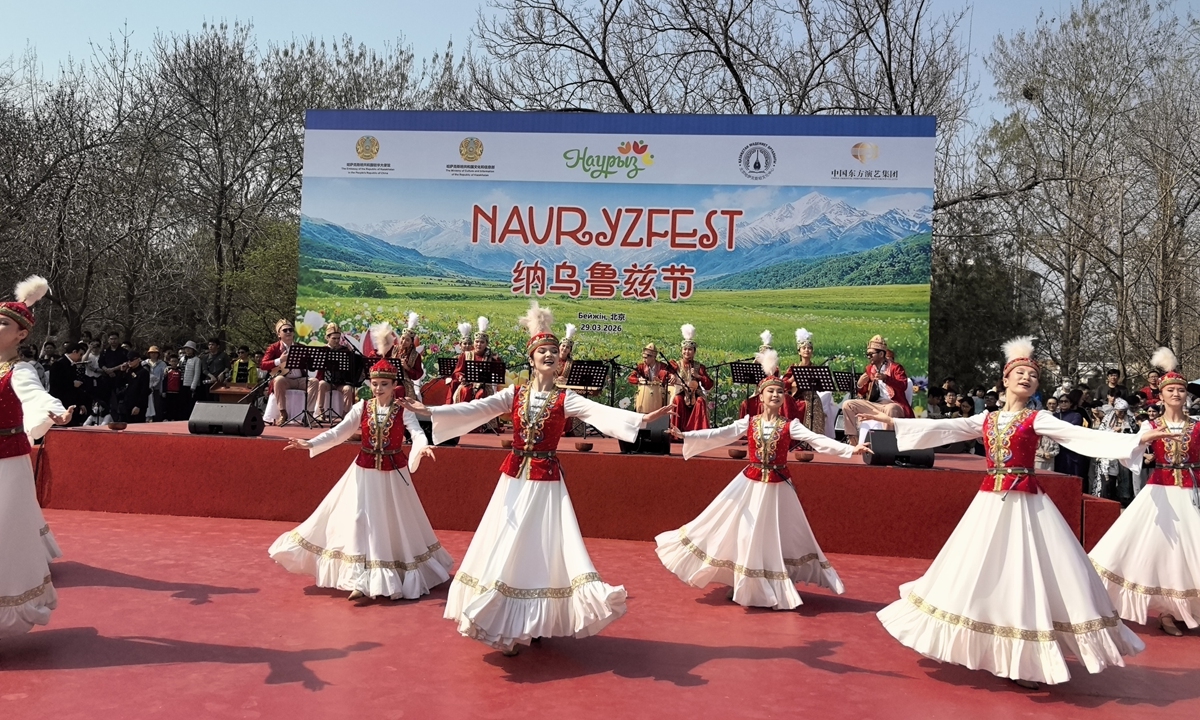
The Embassy of the Republic of Kazakhstan in China hosts a celebration for the Nauryz festival in Chaoyang Park in Beijing, on March 29, 2026.
On March 29, the Embassy of the Republic of Kazakhstan in China hosted a celebration for the Nauryz festival in Beijing's Chaoyang Park, featuring programs performed by Kazakh students. The activity allowed the Chinese audience to learn more about Kazakhstani culture and customs.2026 is the China-Kazakhstan Year of Cultural Exchange, which was launched with a grand opening ceremony in Beijing on March 31. Sun Yeli, China's minister of culture and tourism, and Aida Balayeva, Kazakhstan's deputy prime minister and minister of culture and information addressed the ceremony. Young artists from both countries performed at the opening ceremony.
The ambassador reiterated that bilateral regional cooperation in 2025 also showed a positive trend. The Consulate General of the Republic of Kazakhstan in Guangzhou has also been opened, and is actively involved in fostering bilateral regional cooperation.
Cooperation in the field of education is also flourishing between two sides, the ambassador said. More than 6,000 Kazakhstani students are studying at top-tier universities in China, while over 3,000 Chinese students are studying at universities in Kazakhstan.
The Central Asia-China cooperation mechanism, a strategic platform aimed at strengthening cooperation between China and the five Central Asian countries, is becoming one of the most dynamic regional cooperation mechanisms in Eurasia, Nuryshev added.
This mechanism holds special significance for Kazakhstan. "Our two countries are not only friendly neighbors and reliable partners, but are also closely linked by shared concerns for regional sustainable development, security, mutual benefit, and prosperity," he said.
RELATED ARTICLES