Illegal US-Israel military operations against Iran the root cause of obstruction in the Strait of Hormuz: Chinese envoy to the UN
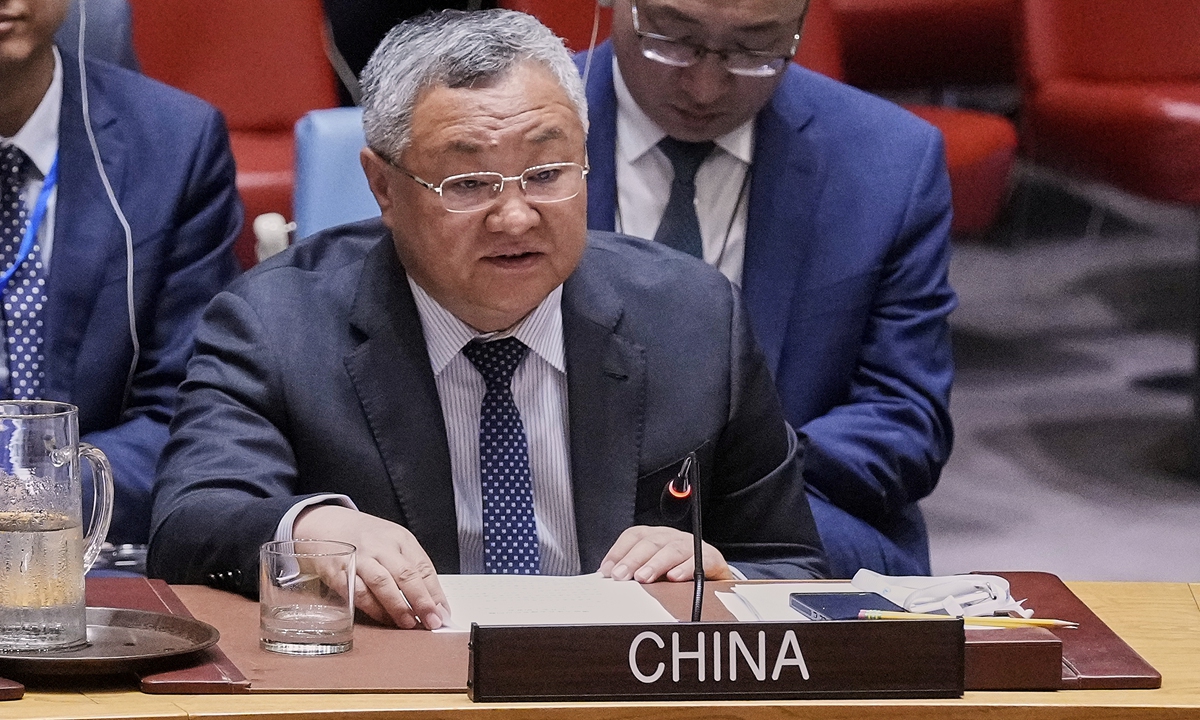
China's permanent representative to the United Nations Fu Cong. Photo: VCG
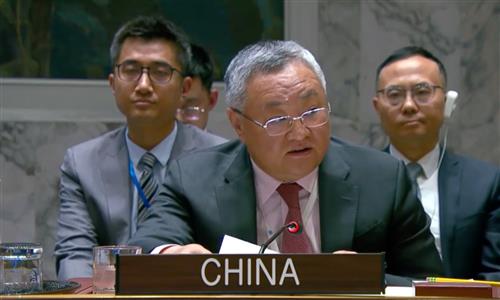
The root cause of the obstruction of navigation in the Strait of Hormuz is the US and Israel's illegal military operations against Iran, Fu Cong, China's permanent representative to the United Nations, said at a UN Security Council meeting on maritime safety on Monday local time.The US increased military deployments and targeted blockade actions, even after a temporary ceasefire agreement had been reached; these are dangerous and irresponsible actions, the Chinese envoy stated.
In his speech, Fu put forward four key propositions on maritime security: pursuing the political settlement of hotspot issues, firmly upholding the international rule of law, combating maritime crimes in accordance with the law, and continuously improving global governance.
In terms of the hotspot issues in the Middle East, Fu emphasized that the Strait of Hormuz serves as a vital international passage for goods and energy trade, noting that safeguarding peace, stability and unimpeded navigation in this region is in the common interest of the international community.
The fundamental solution to shipping disruptions in the strait lies in achieving a comprehensive and lasting ceasefire at an early date and restoring peace and stability in the Gulf and the wider Middle East region, FU stated.
Only by resolving differences through dialogue and consultation to de-escalate hotspot tensions can a sound environment for safe navigation be fostered, Fu said, adding that the abuse of military means cannot fundamentally defuse risks; on the contrary, it will exacerbate tensions and confrontation and trigger graver security crises.
The Chinese envoy also stated that China appreciates the mediation efforts made by Pakistan and other countries. He urged relevant parties to resolve disputes through political and diplomatic means and oppose all acts that undermine the ceasefire and escalate conflicts.
Fu reaffirmed that China will continue to play a constructive role in advancing regional peace and stability.
Furthermore, he noted that the United Nations Convention on the Law of the Sea, together with relevant international treaties and customary international law, constitutes the foundation of the modern international maritime order. All countries shall interpret and apply the Convention in a full, accurate and good-faith manner, and reject selective application and double standards.
Countries should exercise the freedom of navigation enshrined in international law in good faith, earnestly respect the sovereignty, security and legitimate rights and interests of coastal states, and ensure normal maritime trade and unimpeded shipping, he added.
Against the backdrop of a worsening maritime security landscape marked by drug trafficking, arms smuggling and human trafficking, Fu stressed that all nations must combat maritime crimes in compliance with domestic laws and international norms, and fully respect the exclusive jurisdiction of flag states over their vessels.
Meanwhile, he emphasized that it is imperative to support coastal states in economic development and people's livelihood improvement to eradicate the breeding ground for crimes and turbulence.
The Chinese envoy also called on the international community to support the United Nations in playing a central role, steadily advance international legislation and rule-making, and actively address emerging challenges such as marine ecological conservation and sea level rise.
Guided by the vision of openness, inclusiveness, win-win cooperation, countries need to strengthen maritime connectivity and infrastructure development, and promote the sustainable development and rational utilization of marine resources, Fu said.
Global Times
RELATED ARTICLES