National implementation report showcases China’s responsibility in nuclear issue
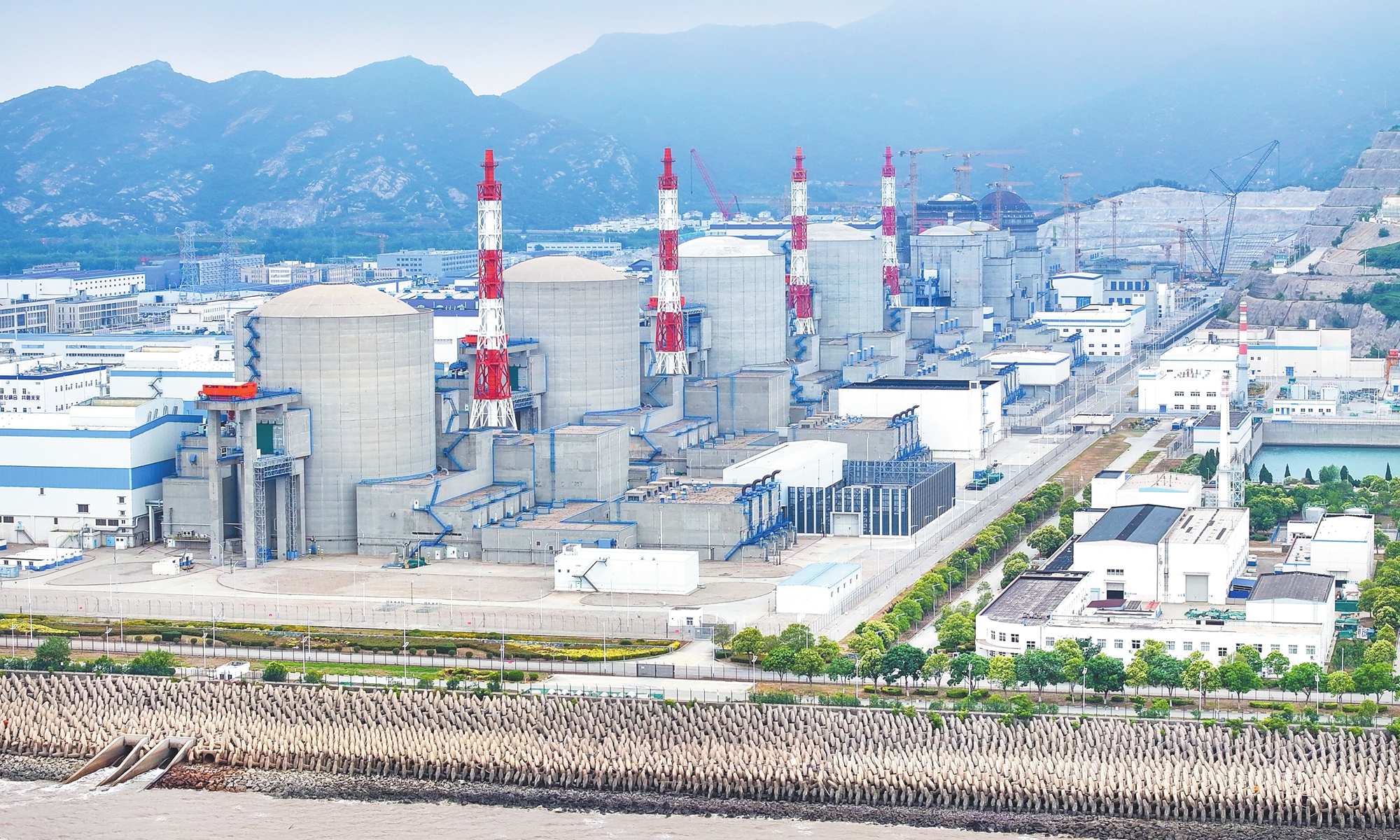
A view of the Tianwan Nuclear Power Plant in Lianyungang, East China's Jiangsu Province Photo:VCG
As the 11th Review Conference of the Parties to the Treaty on the Non-Proliferation of Nuclear Weapons (NPT) convened on Monday, the national report China had submitted earlier this month is gaining global attention.The document systematically outlines China's policies and practices across the three pillars of the NPT: nuclear disarmament, nuclear non-proliferation and the peaceful use of nuclear energy. It presents pragmatic and feasible Chinese solutions to the grave challenges currently facing global nuclear arms control and non-proliferation.
China's implementation report reinforces the foundations of strategic stability through a declaration of high transparency. The report explicitly reaffirms that China adheres to a self-defensive nuclear strategy and strictly abides by its commitment to "no first use" of nuclear weapons. Furthermore, China unconditionally commits not to use or threaten to use nuclear weapons against non-nuclear-weapon states or nuclear-weapon-free zones.
China maintains its nuclear force at the minimum level required for national security, never participates in any form of nuclear arms race, and has never deployed nuclear weapons on foreign soil or provided a "nuclear umbrella" to other countries. Meanwhile, through the release of white papers, active notification of relevant activities, opening decommissioned nuclear facilities and participating in dialogues with other nuclear-weapon states, China continues to enhance strategic mutual trust and prevent miscalculations through transparency of intent. Regarding the recent "secret nuclear test" allegations hyped by certain countries, the report presents clear facts that render such falsehoods baseless.
Non-proliferation is the core objective of the NPT. China has constructed a robust line of defense through rigorous rule of law and strict oversight. At the legislative level, China has established a comprehensive non-proliferation legal system led by various regulations. Regarding export controls, China strictly implements the "three principles" for nuclear exports to ensure effective oversight. Internationally, China was the first nuclear-weapon state to bring the Additional Protocol to the Safeguards Agreement with the International Atomic Energy Agency (IAEA) into force, with 30 Chinese nuclear facilities currently under IAEA safeguards.
The peaceful use of nuclear energy is a legitimate right granted to all nations. China champions openness, sharing and win-win cooperation to promote the inclusive development of nuclear energy. As the second-largest contributor to the IAEA's Technical Cooperation Fund, China has donated approximately $130 million and established multiple international cooperation centers to train nuclear talent for developing countries. It has also opened up 12 of its nuclear research facilities and experimental platforms to the world, signed intergovernmental cooperation agreements on the peaceful uses of nuclear energy with more than 30 countries and regions. China firmly opposes the politicization or weaponization of peaceful nuclear energy use, rejects sanctions and "decoupling" that hinder international cooperation, and has driven UN resolutions to protect the developmental rights of developing countries.
The national report China submitted showcases China's highly responsible, consistent and transparent nuclear policy. It serves as a "calibration tool" for the international nuclear order, reaffirming multilateralism and the baseline of rules while resisting dangerous actions like "friendly proliferation" or "nuclear sharing."
China's restrained, stable policies regarding the development, use and control of nuclear weapons serve as an "anchor" in a turbulent global landscape. It pushes for the realization of the consensus among the five nuclear-weapon states that "a nuclear war cannot be won and must never be fought," cooling the risks of global conflict.
By practicing a vision of common, comprehensive, cooperative and sustainable security, China is providing a road map for global cooperation to address food security and public health challenges, ultimately working toward a community with a shared future for nuclear security.
China's practices prove that it remains a steadfast defender, active builder and vital contributor to the NPT. As the NPT review process faces daunting challenges, the international community must abandon the Cold War mentality and double standards to return to the track of multilateral cooperation. Countries with the largest nuclear arsenals should fulfill their special and primary responsibilities by substantively advancing the nuclear disarmament process. China will continue to work with all nations to hold the line on non-proliferation and promote the peaceful use of nuclear energy, making unremitting efforts toward global strategic stability and a world free of nuclear weapons.
The author is the director of the Center for Arms Control Studies at the China Institutes of Contemporary International Relations. opinion@globaltimes.com.cn
RELATED ARTICLES