Safeguarding Tokyo Trial is defending post-WWII international order: Chinese scholar Cheng Zhaoqi
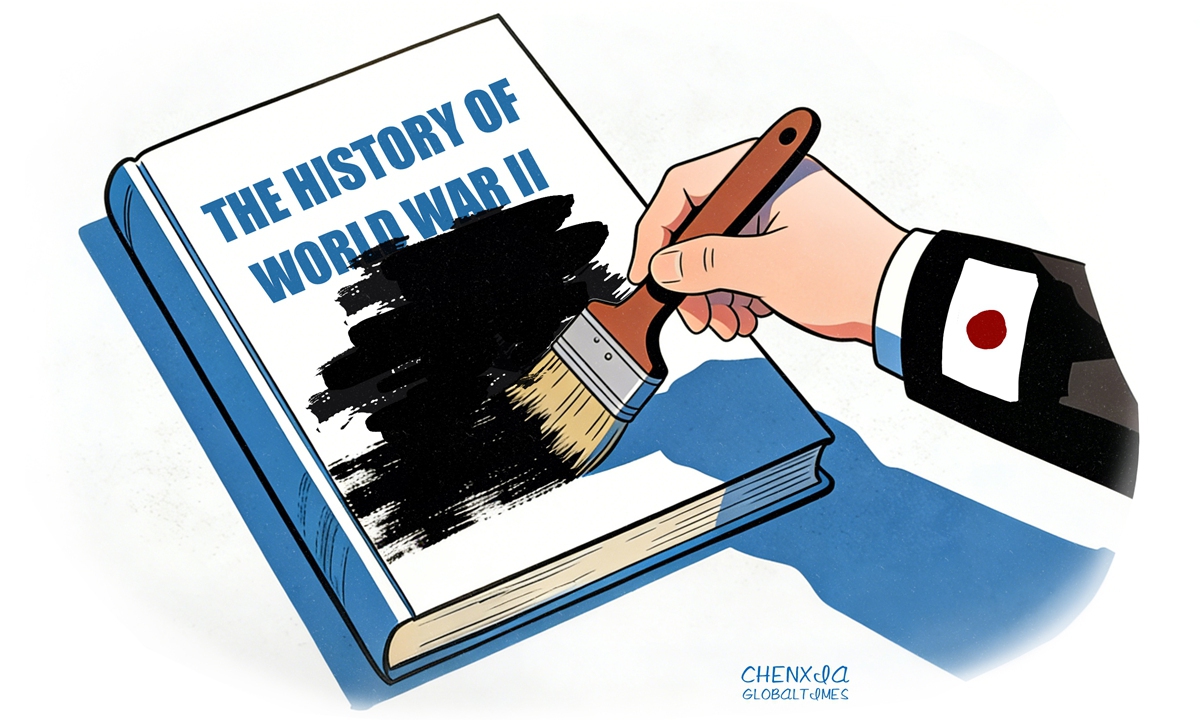
Illustration: Chen Xia/GT
Editor's Note:2026 marks the 80th anniversary of the beginning of the Tokyo Trial. From 1946 to 1948, judges from 11 countries convened for two and a half years of courtroom proceedings to collectively try the Class-A Japanese war criminals of World War II (WWII). In an interview with Global Times (GT) reporter Zheng Xuan, Cheng Zhaoqi (Cheng), director of the Center for the Tokyo Trial Studies of Shanghai Jiao Tong University, stated that the Tokyo Trial has had profound significance, standing as a symbol of justice and a definitive historical verdict. He emphasized that all parties should work together to uphold the truth and prevent the erosion of history.
GT: In your view, what was the significance of the Tokyo Trial at that time?
Cheng: The significance of the Tokyo Trial at the time lay in the use of international law to deliver a definitive verdict on Japan's modern-era aggression and atrocities. It established key principles of international law, such as "aggressive war constitutes a crime" and "state leaders bear individual criminal responsibility," thereby laying an important legal foundation for the postwar international order, especially in East Asia.
Through open and fair judicial proceedings, the Tokyo Trial exposed to the world the crimes of Japan's militarist leaders, and also provided external legal pressure and moral grounds for the formulation of Japan's postwar "pacifist constitution" and the rise of pacifism.
The Tokyo Trial also broke with the traditional notion of the "absolute immunity of state sovereignty," marking the international community's move toward holding individuals criminally responsible for war crimes. They had a profound impact on the subsequent establishment of the International Criminal Tribunal for Rwanda and the International Criminal Court.
GT: What significance does the Tokyo Trial hold today?
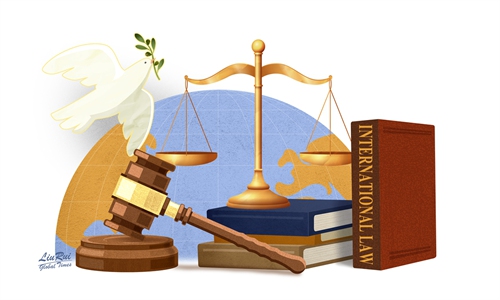
Cheng: Today, the Tokyo Trial stands as a symbol of justice and a definitive historical verdict. Safeguarding the Tokyo Trial is defending the post-WWII international order. Against the backdrop of persistent attempts by right-wing forces in Japan to deny the history of aggression and revise the "pacifist constitution," the legal facts and verdicts of the Tokyo Trial remain a powerful tool for exposing historical revisionism.
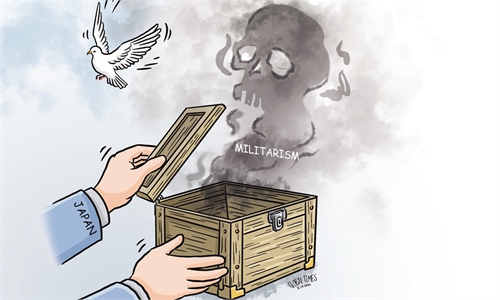
Meanwhile, the legal categories established by the Tokyo Trial - "crimes against peace," "war crimes," and "crimes against humanity" - remain cornerstones of international criminal law and human rights law to this day. For the peoples of Asia who suffered from Japanese aggression, the Tokyo Trial embodies respect for victims and affirmation of historical truth. It also serves as a moral safeguard against the resurgence of Japanese militarism and for the long-term peace of East Asia. For this reason, any attempt to overturn the verdicts on Class-A war criminals, to pay homage at the Yasukuni Shrine, or to deny the legitimacy of the Tokyo Trial is a challenge to the very foundations of the postwar international order.
GT: Over the past 80 years, how have Japanese right-wing forces sought to deny or overturn the Tokyo Trial?
Cheng: For a long time, Japan's right-wing forces have portrayed the Tokyo Trial as an "unjust" and "illegitimate victors' justice." By visiting or offering tributes to the Yasukuni Shrine, which honors convicted Class-A war criminals responsible for the war of aggression in WWII, they attempt to reject the trial and whitewash the history of aggression. On April 21 this year, Japanese Prime Minister Sanae Takaichi made a "masakaki" ritual tree offering to Yasukuni Shrine as prime minister.
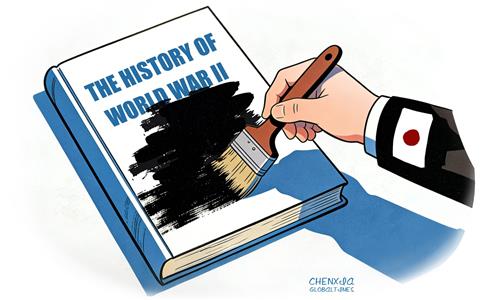
In addition, Japanese right-wing forces have approved numerous history textbooks that downplay or omit aggression. Some Japanese political leaders have even openly denied the Tokyo Trial. For instance, then Prime Minister Shinzo Abe claimed that the Tokyo Trial was "victors' justice" on March 12, 2013. By invoking the dichotomy of "winners" and "losers," they blur the distinction between justice and injustice. They argue that charges regarding "crimes against peace" were based on an ex post facto law, violating the legal principle of nullum crimen sine lege ("no crime without law"), emphasize Japan's "victimhood" in events such as the atomic bombings and the Great Tokyo Air Raid, and even portray Japan's wartime actions as a "Greater East Asia War against Western colonialism."
GT: What motivates the Japanese right wing's persistent attempts to overturn the Tokyo Trial?
Cheng: The legal documents governing Japan's reintegration into the international community clearly state its commitment to accept the Tokyo Trial. The Tokyo Trial determined that Japan's modern expansion constituted a war of aggression. Although Japan recovered its sovereignty in 1952, it remained subject to constraints such as the "exclusively defense-oriented policy" and the prohibition on maintaining armed forces.
In the eyes of Japanese right-wing forces, the Tokyo Trial is a major obstacle to Japan's attempts to revise Article 9 of its constitution, significantly increase military spending, and develop preemptive strike weapons. Moreover, they believe that if Japan seeks to restore its so-called "past glory" and build a "strong and prosperous" nation as Takaichi has advocated, it must remove the Tokyo Trial as a fundamental constraint.
GT: Why has Japan failed to reflect on its wartime aggression thoroughly in the same way as Germany has?
Cheng: Many factors led to this. First, there are cultural differences between Germany and Japan. German intellectuals and the church have a tradition of deep self-reflection on Nazi atrocities, while postwar Japan has long suffered from the pernicious influence of so-called "victim mentality." During the Cold War, many war criminals dismissed from public office quickly regained their political status, and there were even cases of Class-A war criminals suspected of wrongdoing returning to the prime ministership (such as Nobusuke Kishi).
Second, the differences between the two countries in their education and social communication mechanisms cannot be ignored. Postwar Germany, under Allied leadership, established a thorough de-Nazification education system. Schools, media, and public memorial sites systematically conveyed the awareness of war guilt, and details of the Nuremberg Trials were included in textbooks and widely disseminated. Japan's education reforms after WWII, however, failed to systematically eliminate militaristic content. The Japanese Ministry of Education, Culture, Sports, Science and Technology long avoided the task, or beautified content related to the war of aggression in textbook approval. Germany established numerous concentration camp memorials and a system of memorial days for victims, while Japan's national sites related to war (such as the Yasukuni Shrine) often strongly glorify the invaders but lack public displays of responsibility for the aggression.
Furthermore, Germany suffered a complete defeat, and Nazi ideology was entirely rejected, while Japan's supreme commander was not prosecuted as a war criminal. After WWII, Germany was divided into four occupation zones jointly administered by the US, the Soviet Union, Great Britain and France, with checks and balances on each other's occupation policies and a thorough de-Nazification process. Japan, on the other hand, was occupied solely by the US, and its original government institutions remain in charge of the administration. In terms of reckoning, the Nazi Schutzstaffel (SS), the zaibatsu that supported the war of aggression, and the entire military-industrial complex in Germany were systematically purged, while most of Japan's zaibatsu and right-wing organization leaders were not prosecuted, and core war institutions such as the military and the Ministry of Munitions were not convicted as a whole of criminal organizations, resulting in a large number of people who actually participated in the planning and execution of the war of aggression escaping legal punishment.
GT: It is generally believed that China is the primary source of the Tokyo Trial's legitimacy. How do you see such a view?
Cheng: Some Tokyo Trial judges argued that the major participating countries in the trials - the US, Britain, France, and the Netherlands - all had similar histories of colonial expansion in modern times, making it "unfair" to try Japan. This argument was inherited by the Japanese right wing and further reinforced by their beautifying of Japan's war crimes. Japan's war crimes and modern Western colonialism cannot be offset against each other, but if the trial had only involved judges from Western countries, the impression of a "victor's trial" would have been even stronger. Furthermore, because many of the countries participating in the Tokyo Trial were either colonial powers or colonies that had not yet gained independence at the time of the trials, some claimed that the distinction between aggression and being aggressed was blurred to some extent, leading to disagreements among the judges. Therefore, the significance of China's participation in the trials is self-evident. Unlike other countries participating in the trial, China is, in every sense of the word, a country that suffered from invasion, and Japan's aggression against China best fits the classic definition of aggression and being aggressed. It was because of China's participation that the Tokyo Trial possessed sufficient legitimacy.
GT: How does China safeguard the Tokyo Trial's legitimacy?
Cheng: Chinese Judge Mei Ru'ao played a crucial role in working to ensure that all criminals were punished through discussions and drafting of the verdict within the judicial panel. As premier Zhou Enlai stated, Mei did a great service to the people and brought honor to the nation. Chinese representatives have reaffirmed the legal validity of the Tokyo Trial at the United Nations and other forums. Chinese scholars, through compiling Tokyo Trial documents and conducting empirical research, refuted the fallacies of the Japanese right wing. The Chinese government has consistently regarded the Tokyo Trial as an unshakeable legal cornerstone in its diplomacy with Japan.
GT: Today, Japan's historical revisionism and "neo-militarism" are colluding. What harm does this cause to neighboring countries and the international community? How should we respond?
Cheng: These trends in Japan pose a risk of collapse to the postwar peace order, making a regional arms race unavoidable, undermining regional mutual trust, and escalating the risk of conflict.
We should strengthen international public opinion pressure, expose the actions of Japan's right wing on occasions such as the United Nations, and deepen historical research to refute their claims in a targeted manner. Furthermore, we should enhance coordination with relevant countries, such as South Korea, to jointly uphold the truth and prevent the erosion of history.
RELATED ARTICLES