Dictated more by short-term considerations, EU's China policy is not sustainable
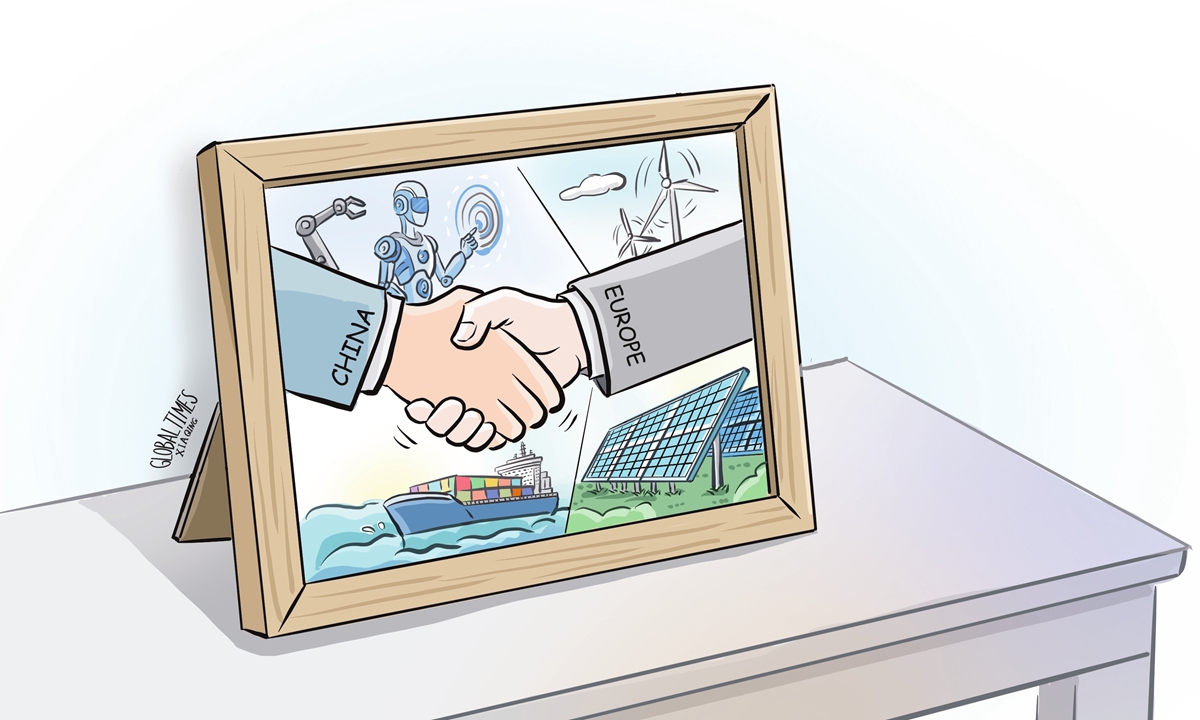
Illustration: Xia Qing/GT
Editor's Note:
In May 2026, China and the European Union (EU) celebrate the 51st anniversary of their diplomatic relations. For more than five decades, despite the ever‑changing international landscape, China‑EU relations have demonstrated remarkable resilience and vitality. However, in recent years, the bilateral ties have been confronted with increasing differences and even frictions in various spheres. What is the biggest reason for such features? How should the two major global players build new models of cooperation to enhance mutual understanding between them amid frictions? Stefano Manservisi (Manservisi), former director-general for International Cooperation and Development in the European Commission, shared his views with Global Times (GT).
GT: This year, a number of European leaders have visited China. An EU Parliament delegation is reportedly coming in late May. What signals or trends have these engagements sent?
Manservisi: In the last couple of years, the EU's position toward China has been dictated more by short-term considerations. In my view, this is not sustainable over time. We cannot deal with a big power solely through containment measures.
The fact that many leaders and European Parliament members are now going to China shows the necessity of reflecting on the long-term relations and of organizing our mutual understanding in a better and deeper way. I do not believe for one second that we will be able to reorganize a sustainable world without China and without China's specific contribution, so all this movement is very welcome. I hope it will relaunch dialogue at the highest level, and I hope this wave contributes to something much deeper.
GT: 2026 marks 51 years of official diplomatic relations between the EU and China. Over the past 50-plus years, the relationship has remained resilient. What do you think is the biggest reason for this resilience and vitality?
Manservisi: China is now technologically at the top, and in many fields much more advanced than Europe - that is the reality. If we want to be resilient together and give an example to the rest of the world, the two systems should be more complementary. There needs to be a dialogue to organize our trade and investments. We need a better understanding and a better way of doing this together.
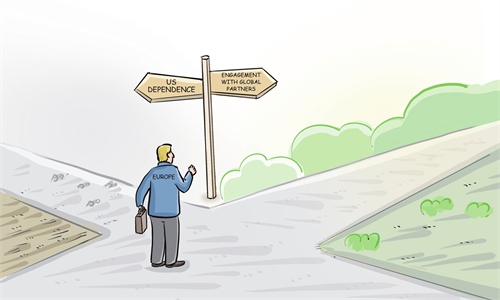
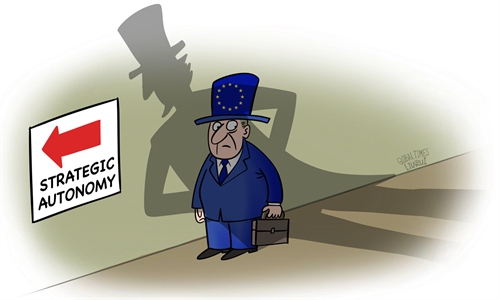
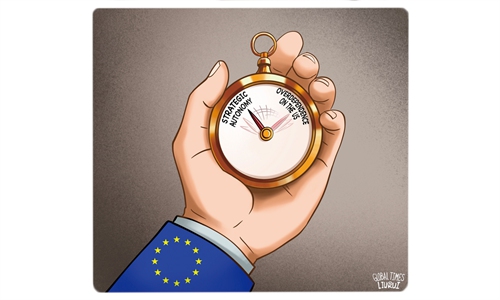
I hope the current movement produces the need for a common understanding of how to do business and how to deal with the big threats around the world. Resilience will not be the resilience of one at the expense of the other, but resilience built together. The strategic autonomy of the EU must be autonomy in partnership. If it is not in partnership, it will not last.
GT: Some observers see a contradiction at the EU level. It keeps seeking protectionist actions against China, but member states still show a strong willingness to engage with China. What's your take on this? Does it mean that some EU policies don't fit with the needs of member states for their relations with China?
Manservisi: There are EU rules; the EU has exclusive competence in trade and economic matters. Member states cannot decide bilaterally on conditions that affect trade, tariffs and quotas. But when they need investment and technology, it is clear that countries are willing to expand cooperation. Take electric vehicles. The EU has set quite high duties, but we see BYD cars everywhere in Brussels and many other capital cities in Europe. The reality of partnership in international trade is much stronger. There is an apparent contradiction, but it should be addressed in a more comprehensive way. Policy setting involves some fear of competition, but investments, job creation and transfer of technology are welcome. It cannot be seen only in a short-term advantage; it should be a way to rebuild trust.
GT: China-EU cooperation still faces real political and perception hurdles. For example, the recent European Industrial Accelerator Act has drawn criticism in China. China's Ministry of Commerce called it "posing serious investment barriers and constituting institutional discrimination." With your years of experience in this field, how do you suggest we build new models of cooperation amid these frictions? And how can we make the dialogue more constructive and inclusive?
Manservisi: The prevailing approach today is to consolidate protective norms and rules. Europe has been an open market for too long, but the perception now is that openness should have limits - partially due to internal weaknesses as well as aggressive competition worldwide.
We cannot work without instruments that allow us to say "stop, this is strategic." That said, I hope this is the beginning of a dialogue, not just a barrier. Let's discuss what we have in common and how to organize our long-term relationship.
We cannot keep working on short-term objectives. The current protectionist mood should be a starting point for talks, not an end.
GT: With today's uncertainties, how can China and Europe work together to bring more certainty to the world? What global issues could we focus on first?
Manservisi: The Global South is particularly important. These countries now seek to be recognized as protagonists, not merely as poor countries requiring assistance. China has been very advanced in dealing with them. Here, I believe we could do more.
China's experience could be used not only bilaterally but also in small multilateral formats with the Global South and with Europeans. We need to invent forms of cooperation, perhaps not at the highest level but on dedicated issues - that is very important to build mutual trust. That is the spirit: building mutual trust together.
GT: The US and Europe are increasingly divided on issues like Greenland and the Middle East. French President Emmanuel Macron recently said again that "Europe should wake up and strengthen its strategic autonomy." What's your take on this?
Manservisi: The EU considers itself part of the West, but at the same time, it feels largely betrayed by the current US government. Years ago, French President Emmanuel Macron described NATO as experiencing "brain death." That was said well before the current crisis. Today, the signals given by the US government to NATO are devastating. The US believes NATO only exists to serve US interests.
"Strategic autonomy" was long a French idea, but now it is much more broadly shared, even by Germany. Everybody now wants to develop a European defense and security capability, and the ability to project it internationally - not only through peace missions but also with reliable partners.
RELATED ARTICLES