ARTS / CULTURE & LEISURE
Documentary director’s odyssey to rediscover reel of justice
Incontrovertible testimony
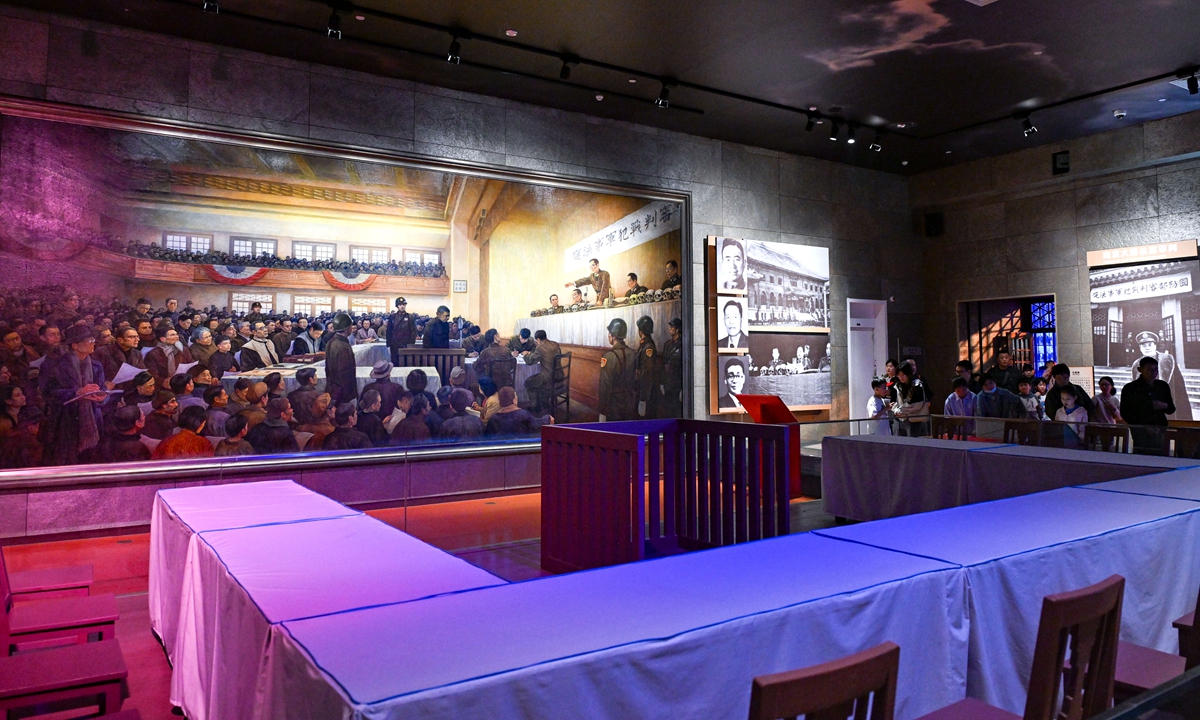
Visitors explore the Memorial Hall of the Victims of the Nanjing Massacre in Nanjing on May 4, 2026. Photo: VCG
Editor's Note:This year marks the 80th anniversary of the beginning of the International Military Tribunal for the Far East, or the Tokyo Trial.
Eighty years ago, judges from 11 countries presided over 818 hearings over two and a half years. A total of 419 witnesses testified, 4,336 pieces of evidence were examined, and more than 48,000 pages of trial records were produced. In the end, 25 defendants were found guilty, and seven of them, including Hideki Tojo, were sentenced to death by hanging.
This was a just reckoning of the crimes stemming from Japanese militarism and a warning to anyone attempting to revive militarism.
As the largest international trial in human history, the Tokyo Trial carries profound historical significance. Together with the Nuremberg Tribunal, they established through international judicial practice for the first time that "a war of aggression constitutes a crime" and individual perpetrators must bear criminal responsibility. They also sent a clear message to the world that "aggression will be punished and atrocities will be held to account," laying an important cornerstone of the post-war international order.
Looking back on the century-defining Tokyo Trial, its historical weight has not diminished in the slightest with the passage of time.
In the US National Archives, a film canister awaited the arrival of Chinese director Chen Yi'nan until 2015. Using a ballpoint pen to pry it open, Chen took out the reel and mounted it onto a projector. As black-and-white images flickered into view, a historical dialogue spanning time and space quietly began.
The reel is one of the voluminous materials that Chen collected to produce three documentaries, namely The Tokyo Trial, Asia Pacific War Crimes Trials and The Trials of Justice, over the period of the past 10 years.
This year marks the 80th anniversary of the opening of the Tokyo Trial.
Chen told the Global Times that the Tokyo Trial had a profound impact on the contemporary structure and framework of international criminal law, as well as on relations among major countries of the world.
The documentaries were designed to present the history of the Chinese People's War of Resistance Against Japanese Aggression (1931-45) from an international perspective, and foster a correct understanding of the war and its history within the global community from a legal standpoint, Chen noted.
Rare footage
Chen's team has, for the first time, uncovered a large body of rare archival footage showing witnesses testifying in court at the Tokyo Trial. Among them are scenes of Hsiang Che-chun, China's chief prosecutor at the Tokyo Trial, delivering an impassioned statement in English in the courtroom, condemning Japan's crimes.
The materials discovered in the US National Archives also include film footage of US missionary John Magee testifying in court. Magee risked his life to document the Nanjing Massacre with a 16mm camera and later appeared in court as a witness.
In 1937, Magee secretly filmed the slaughter of disarmed Chinese soldiers and civilians by Japanese troops in Nanjing. The 105 minutes of footage is the only known film to record the massacre, in which 300,000 people were murdered by Japanese troops.
A large portion of Chen's documentary focuses on the Nanjing Massacre. It was during the Tokyo Trial that the atrocities of the Nanjing Massacre were first presented to the world with incontrovertible evidence, exposing the crimes committed by the Japanese forces.
To ensure that every historical detail was thoroughly substantiated, Chen and her team tracked down trial footage scattered across the world, amounting to the equivalent of 900 films.
They visited historical sites in Nuremberg in Germany, Tokyo in Japan, Hawaii in the US, and other locations.
They examined 20 million words worth of court records, identified 15,000 photographs of war criminals, court personnel, and participants, and reviewed more than 200 academic works in multiple languages.
Chen acknowledged that the biggest challenge was to present the historical events from vast amounts of fragmented materials and scattered clues.
"We had to ensure that every frame and every narrative is backed by verifiable evidence," Chen said. "This is a matter of respect for history and our responsibility to the audience."
Professor He Qinhua, former president of the East China University of Political Science and Law, said The Tokyo Trial documentary offers a broad perspective and presents this history in a rational and restrained manner from the standpoint of world peace, rather than expressing the resentment of a victimized nation toward the aggressor, Jiemian News reported.
In particular, He noted that the documentary's excavation of primary archival materials is highly valuable and has a wide-ranging impact on both the international community and Chinese academia.
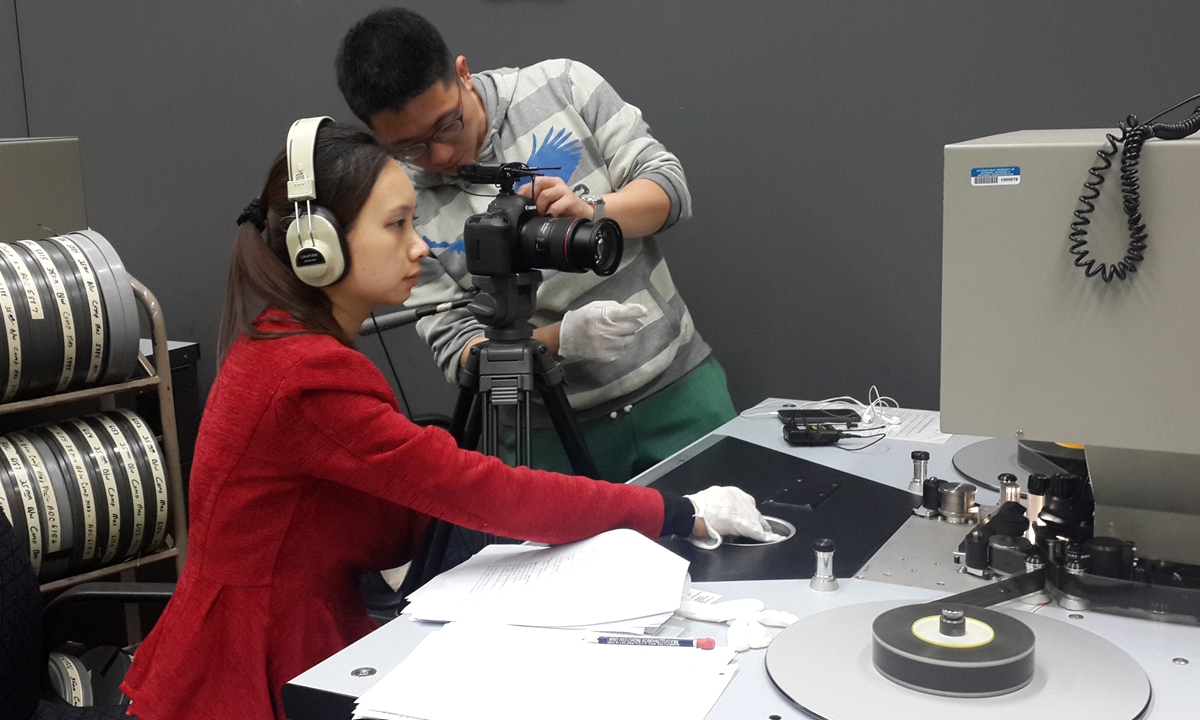
Director Chen Yi'nan collects footage of the Tokyo Trial at the US National Archives in April 2015. Photo: Courtesy of Chen Yi'nan
Chinese perspective
In addition to the clips from the Nanjing Massacre, Chen said the documentary production team also uncovered at the US National Archives footage of the testimony from a witness in a Chinese private-sector enterprise, revealing Japan's economic crimes.
Tong Shoumin, deputy general manager of then Shanghai Pudong Electric Company, appeared in court 47 times to testify at the Tokyo Trial, presenting extensive data and factual evidence to prove the Japanese military's plunder and destruction of Shanghai's industrial and commercial sectors.
"We brought the footage from the US back to Shanghai and confirmed its veracity with Tong's son. The testimony had been ultimately accepted by the tribunal, demonstrating its commitment to justice," Chen said.
On November 15, 2018, The Tokyo Trial documentary was screened at the McGowan Theater of the US National Archives, marking the first time the institution had shown a documentary produced by a major Chinese media outlet.
Chen recalled that the first snow of the season in the eastern US was falling that day, while inside the venue, the theater was packed to capacity.
"I told them, 'These materials were originally collected from your archives. Today, we have finally been able to present this chapter of history back to you in its full form,'" she said.
The Chinese People's War of Resistance Against Japanese Aggression was an extraordinarily arduous struggle for both its military and civilians.
However, for a long time within the global narrative of the World Anti-Fascist War, China's role as a major battlefield in the East has been significantly underestimated in Western discourse.
With new archival discoveries in the field of tribunal studies in recent years, it is time to let the world know a more detailed history, she said.
RELATED ARTICLES