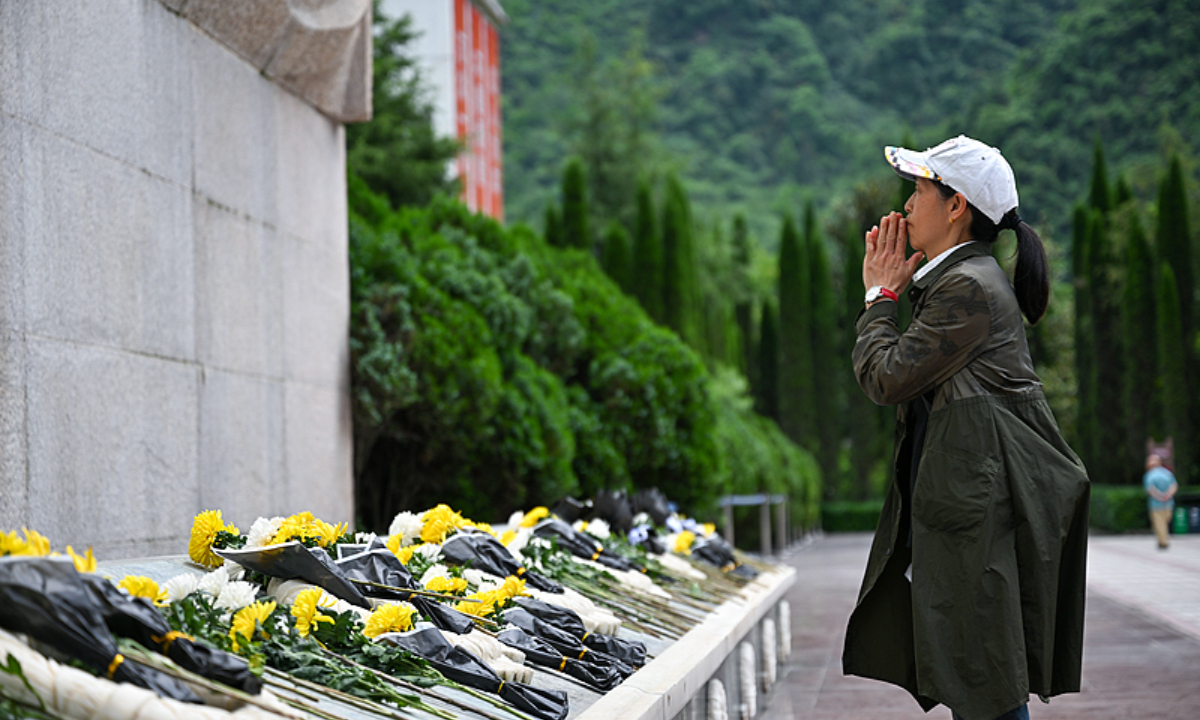
People visit the ruins of Xuankou Middle School in Wenchuan, Southwest China's Sichuan Province on May 11, 2026, to mourn victims of 2008 Wenchuan earthquake. Photo: VCG
At 2:28 pm on May 12, 2008, a devastating earthquake struck Wenchuan county, Southwest China's Sichuan Province, killing nearly 70,000 people and leaving nearly 18,000 missing, with mountains shattered, towns buried in ruins and countless families forever changed. 18 years later, on the anniversary of the disaster on Tuesday, many Chinese netizens once again returned to the memory of that afternoon, mourning those who lost their lives while reflecting on how places once covered in rubble have gradually been rebuilt with new life, light and hope.On Chinese social media platform Sina Weibo, the hashtag marking the 18th anniversary of the Wenchuan earthquake had received more than 320 million views and 7.64 million comments as of press time. Many netizens left messages remembering the victims and paying tribute to the resilience that followed the tragedy.
Some netizens expressed that they still remembered the days after the earthquake, blood donation stations across the country were crowded with people. Many stood in line in tears, shouting "Stay strong, Wenchuan; Stay strong, China," CCTV News reported.
One netizen wrote that the experience remains "etched into the heart of every Chinese." "At first, it was difficult to imagine how severe the disaster really was. But as the coverage continued, the weight of it became heavier and heavier," the comment read. "When disaster struck, countless Chinese people stepped forward and stood by one another."
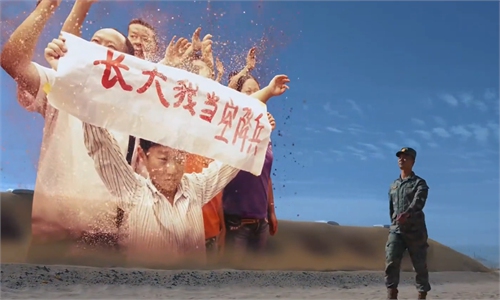
There were also posts released on social media platform, recalling moments including the parachute jump of 15 pilots and the final message of love. On May 14, 2008, 15 airborne soldiers who parachuted from an altitude of 5,000 meters in the skies above Maoxian county without ground guidance or complete weather data in order to open an aerial rescue route into the disaster zone, CCTV News reported. One netizen also released a post on the platform in memory of the mobile phone message left unsent by a mother who died shielding her baby beneath the rubble, ending with the words "I love you."
Zhang Zhouzhi, who visited the ruins of Xuankou Middle School Ruins in Wenchuan on Monday, told the Global Times on Tuesday that the significance of commemorating the earthquake lies in reverence for life.
"The tour guide was once a student at Xuankou middle school. I could sense that she had become very familiar with recounting these stories, yet her voice still trembled. She spoke about how she and her classmates happened to avoid the collapse of the dormitory building because they were in class on that day. She also talked about why Sichuan people adopted a more spontaneous attitude toward life after the earthquake. Behind these changes lies a reflection on the fragility of life and, in turn, a deep reverence for being alive," Zhang said.
Over time, places once reduced to ruins have slowly taken on new forms. The children who survived the earthquake have grown up in different ways, carrying with them memories of loss as well as the expectations of a generation that witnessed reconstruction firsthand.
Lin Hao, who rescued two classmates during the disaster as a child, has now started his own family and works as a village official in Wenchuan, according to a video he released.
Niu Yu, who was rescued after being trapped beneath the rubble for three days and nights at the age of 11, told the People's Daily that she later completed a half marathon wearing a prosthetic limb, became a deputy to the 14th People's Congress of Sichuan Province, and published a book.
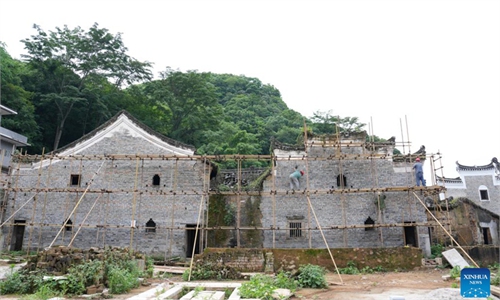
Behind the stories of these children is also the broader reconstruction of Wenchuan and other disaster-hit areas.
According to a report from a WeChat account under Beijing Daily, the number of people impacted from Wenchuan earthquake exceeded the combined population of the five Nordic countries. Reconstruction was made even more difficult by the region's mountainous terrain, fragile geological conditions and relatively weak economic foundation at the time.
Yet the pace of rebuilding became one of the defining memories of the years that followed.
Ten days after the earthquake, more than 15 million people had received emergency shelter. Two years after the disaster, housing for 250,000 urban households was largely completed, achieving the goal of ensuring every family had a home one year ahead of schedule, per people.cn.
A decade later, key economic indicators in hit regions, including industrial output, service-sector growth, investment, consumption and residents' incomes, had risen to around three times their pre-earthquake levels. In 2024, Wenchuan county's GDP surpassed 10 billion yuan ($1.47 billion), according to reports from local governments.
One netizen wrote on Rednote that over the years he had visited newly rebuilt county towns in Beichuan, Wenchuan and Qingchuan, and the new towns are well designed and beautifully built, with local people now live stable and peaceful lives.
Wang Changjiu, a researcher from the Institute for Disaster Management and Reconstruction, Sichuan University, told the Global Times that the earthquake posed major challenges for post-disaster recovery due to its vast impact area, deep structural destruction, and the complexity of systemic reconstruction. Researchers assessed rural recovery, disaster reduction planning, while also conducting studies on the restoration of cultural and ecological systems, including the maintenance of the Dujiangyan irrigation network. Psychological counseling efforts launched after the disaster are also continuing to this day.
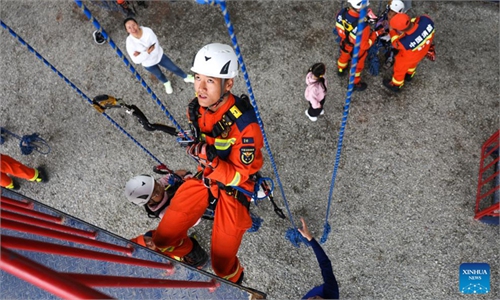
What people remembered from the earthquake was not only pain. Since 2009, May 12 has been observed as China's National Disaster Prevention and Reduction Day. This year, students took part in an earthquake and fire emergency evacuation drill, and firefighter introduces firefighting and rescue equipment to students at a primary school on Tuesday, Xinhua reported on Tuesday.
"To remember disaster is not to remain trapped in sorrow, but to cherish the present and live well," one netizen wrote. "Today the mountains and rivers remain peaceful, and life continues. May there be no more disasters, and may the world stay safe."
RELATED ARTICLES