IN-DEPTH / IN-DEPTH
Chinese, Bangladeshi, Pakistani researchers gather in Shanghai to breed better fish and closer ties
Fishing for colors
By and Lu Ting in Shanghai Published: May 12, 2026 11:36 PM

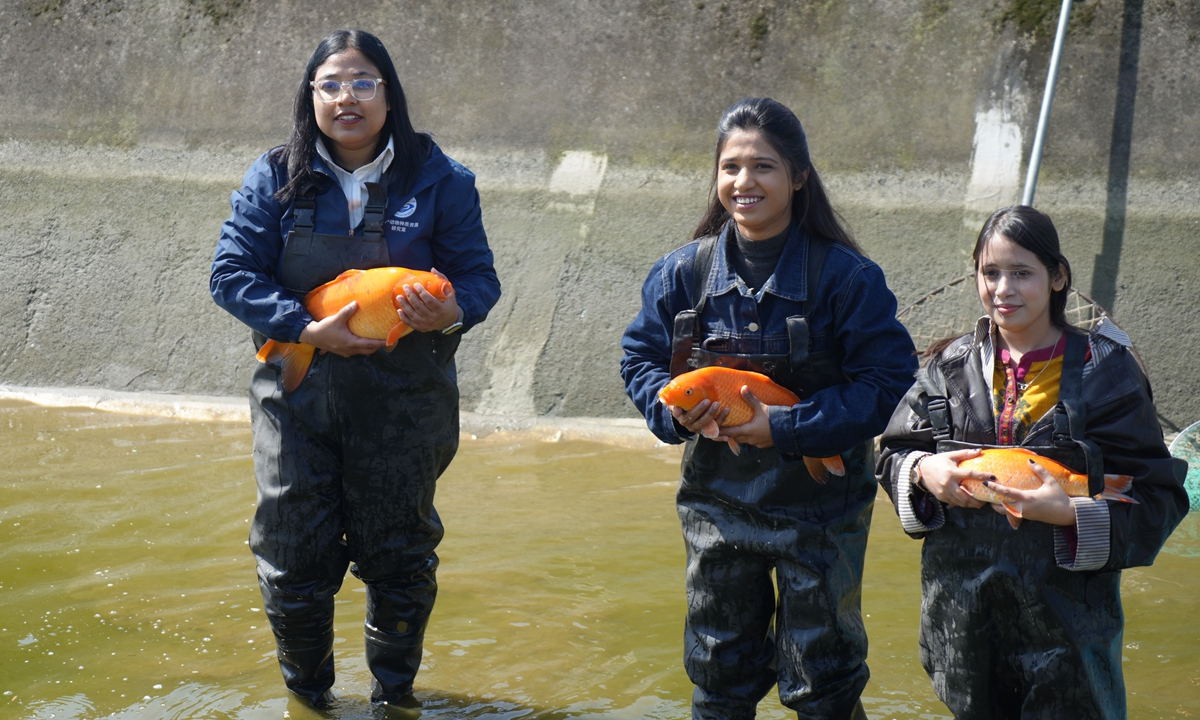
Three South Asian researchers work at the base of an experimental station for aquatic animal germplasm resources of Shanghai Ocean University on April 24, 2026. Photo: Lu Ting/GT
Editor's Note:
"No mountain or ocean can distance people who have shared aspirations." This powerful message underscores the force of friendship and cooperation in bridging hearts across nations, cultures and civilizations.
People from diverse backgrounds and fields, united by common goals and dreams, traverse mountains and oceans to connect with each other. Through letters, face-to-face dialogues and vibrant cultural events, they are collectively weaving a magnificent tapestry of building a community with a shared future for humanity.
The Global Times presents "Intertwined Destinies, Shared Paths," a series spotlighting the touching stories written by these "friendship ambassadors." They are scholars pushing the boundaries of research, diplomats advocating for deeper cooperation on the global stage, artists igniting imaginations with their creations and ordinary people extending heartfelt love beyond national borders driven by their genuine sincerity.
Their stories illuminate the spark of cultural exchanges, the driving force of technological innovation, the bountiful harvest of economic cooperation and the enduring warmth of human connection - all contributing to a more peaceful, prosperous and open world. This is the 13th installment of the series.
The ocean is the cradle of life and the shared blue home of humanity. In recent years, China has actively participated in the United Nations Decade of Ocean Science for Sustainable Development (2021-2030), contributing China's solutions to the sustainable development of the global ocean. As June 8, the 18th World Oceans Day, approaches, the Global Times is launching a special subseries, "Fishing Together," which chronicles stories of fishery cooperation between China and various countries. This is the first installment of the subseries.
At five o'clock on a misty morning in Xinchang Town of suburban Shanghai, the fog has yet to lift, and the fish pond's surface shimmers with a clear, silvery light.
There, at the base of an experimental station for aquatic animal germplasm resources of Shanghai Ocean University (SHOU), three young women in chest waders and black rubber boots are already hard at work in the ponds. With a gentle sweep of their nets, one brightly colored common carp after another break through the water. Some blaze red like flames, some are as white and smooth as congealed jade, and some are red with black spots.
These beautiful fish, known by their colorful names such as "whole red," "whole white," "white with black patches" and "red with black patches" - all belong to a single species: the Oujiang color common carp. Native to the Oujiang River basin in East China's Zhejiang Province, the Oujiang color common carp has long been widely farmed in the region. Its breeding and improvement have also become the fruit of more than two decades of dedicated research by the College of Fisheries and Life Science of SHOU.
This fish, which combines culinary value with ornamental beauty and embodies the efforts of Chinese scientists, is now drawing young fishery scholars from around the world to China in pursuit of their dreams - a vivid example of China's wisdom in sharing the development of global fisheries.
Among them are these three overseas students of SHOU, who work hard at the base in early mornings: Nusrat Hasan Kanika, a postdoctoral researcher from Bangladesh, Rabia Tahir, a postdoctoral researcher from Pakistan, and Ayesha Arif, a doctoral student, also from Pakistan.
"The first time I noticed the pure beauty of the red-colored fish in 2022, I immediately fell in love with it," Kanika said, crouching by the pond as her eyes follow the flicker of an "whole red" fish in the water. "Maybe it felt special to me as both China and Bangladesh have red on their flags."
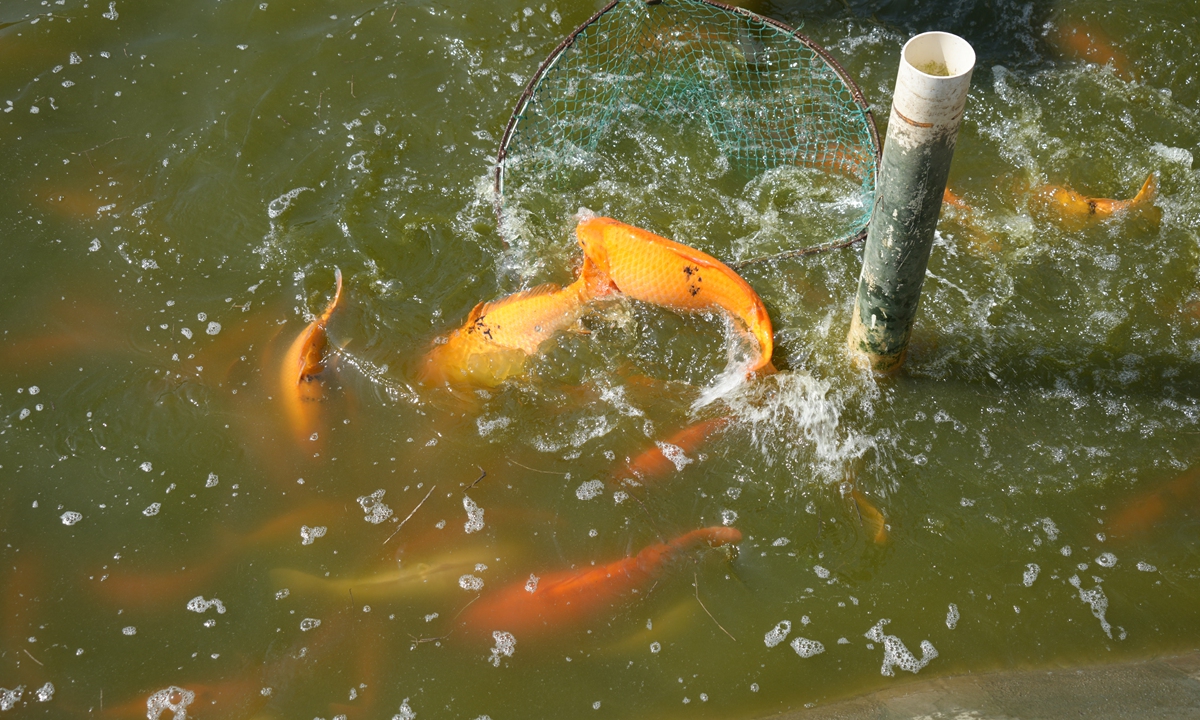
The Oujiang color common carp raised in a pond at an experimental station for aquatic animal germplasm resources of Shanghai Ocean University. Photo: Lu Ting/GT
A research journey in China
Kanika is from Bangladesh, a country often poetically described as the "land of rivers." She once studied at Jagannath University, which has long-standing academic ties to SHOU. It was this cross-border scholarly connection that eventually brought her to Shanghai.
At SHOU, Kanika mainly focuses on the gut microbiome of fish. She observed that certain lipids, synthesized by bacteria, are enriched in the red variety of the Oujiang color common carp. "So we isolated and applied to increase those bacteria, and the fish actually showed a brighter color, as well as an increase in size," Kanika told the Global Times.
Kanika, along with her fellow researchers, is working on the mechanism from the gut to the final skin color formation of the fish. "It's still under development, but we hope to reveal this connection very soon."
Kanika hopes that her research will make contributions to the development of her home country in the future. "Coming from a developing country, we need some applicable research for healthy aquatic environment and economically beneficial productions. If I work with these beneficial bacteria, I can apply [the knowledge] in my country to make [the fish there] more beautiful, more productive, taller and bigger," she told the Global Times by a pond of the base.
Arif is drawn to the mysteries of heredity. Now pursuing her PhD in aquaculture at SHOU and mainly working on epigenetics, Arif traces her scientific interest back to her earlier years, when she spent hours gazing at fishponds developed through China-Pakistan cooperative projects under the China-Pakistan Economic Corridor framework in her village.
As a child, spending time with the fish, turtles and other aquaculture species in the ponds is what sparked her initial curiosity about aquatic life and heredity. The area also practiced rice-fish culture, where rice cultivation and fish farming were carried out together in the same ecosystem, further deepening her fascination with sustainable aquaculture.
Reflecting on those childhood memories, Arif told the Global Times, "This curiosity eventually brought me to China."
Tahir, also from Pakistan, has turned her attention to environmental stress and gene regulation, exploring how factors like heat and low oxygen can influence how fish grow, look and function. Tahir earned her PhD from Sichuan Agricultural University, and later continued her research at SHOU, attracted by China's advanced aquaculture research platforms.
While in Pakistan, Tahir's mother once suggested that she pursue her research in a leading country, and she chose China. "In terms of research technologies and real-world applications to address global challenges, China is currently at the forefront. That's why I chose to come here," she explained. She hopes this experience will help bridge fundamental research with practical aquaculture applications.
Studying in China has not only enriched Tahir's research journey, but also brought her closer to the country's pragmatic approach to science and its open, inclusive spirit of collaboration.
'It feels like home'
The three international researchers are members of Key Laboratory of Freshwater Aquatic Genetic Resources of SHOU. Founded in 1982, the lab was among the earliest first institutions in China dedicated to the study of aquatic animal germplasm resources, according to SHOU.
Why does fish farming also need scientists? Wang Jun, an expert at the lab and a professor at SHOU's College of Fisheries and Life Science, explained that ordinary fish farmers often do not pay much attention to genetics and selective breeding. As a result, self-breeding can lead to severe inbreeding in subsequent generations, causing growth and other performance to gradually decline.
"What we need to do is to understand the status of germplasm resources, and through genetic evaluation and optimization, keep selecting better traits to create better and genetic stable varieties," Wang told the Global Times.
After decades of steady work, the lab has bred a national-level improved variety of the Oujiang color common carp, Longshen No. 1 Oujiang color common carp, and is now developing Longshen No. 2, which is expected to grow faster and display more stable red coloration, according to Wang.
The lab has also formed a small international "research team" of its own: six postdoctoral researchers and doctoral students from countries including Pakistan, Bangladesh and Egypt. Their main focus is the selective breeding and color genetics in color common carp, with subfields spanning cutting-edge areas such as epigenetics and gut microbiology, Wang said.
This collaboration among international researchers is far more than a one-way process of "learning." In Kanika's view, it is a form of mutual empowerment. She said that in the lab, whenever a new member joins, they teach them how to do the work in the lab and share the work they have done before. As a team, they handle different parts of the lab tasks.
China's open and inclusive research environment has given these young scientists a strong sense of security and confidence. Tahir said that the teachers and experts at SHOU come from all over the world, enabling them to discuss research ideas from various backgrounds. "Different minds can contribute to one scientific problem at the same time. And through collaboration, we can solve global challenges together," Tahir told the Global Times.
For Arif, who was somewhat alone during her early days in China, the country's human warmth that can be felt in everyday details has soon offered a kind of emotional connection that goes beyond the laboratory - a distinctive warmth in the exchange between Chinese and international science and culture.
"It feels like home," she told the Global Times.
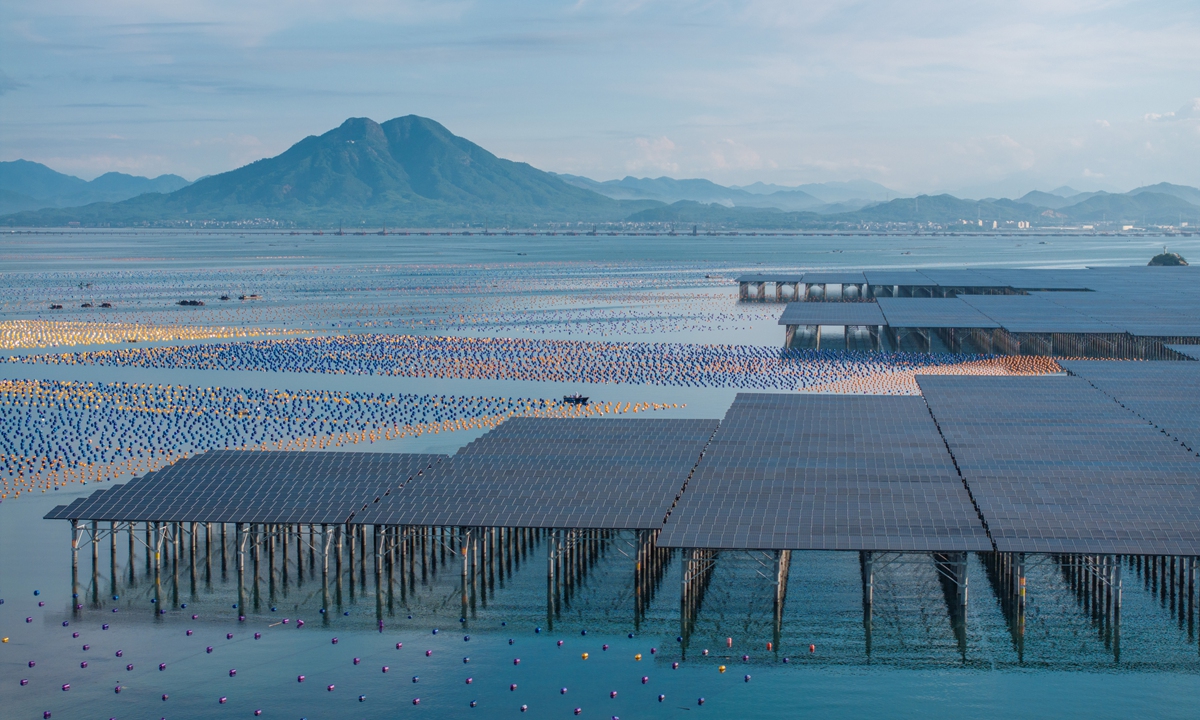
A view of a project aimed at improving aquaculture efficiency at an offshore aquaculture base in Dongshan, East China's Fujian Province Photo: VCG
A maritime community with shared future
For many overseas students like Kanika, Arif and Tahir, traveling all the way to China to study fish, especially the color genetics of the Oujiang color common carp, goes far beyond the beautiful colors.
The Oujiang color common carp is the centerpiece of the rice-fish system in Qingtian County of Zhejiang, which was the first in China to be recognized in 2005 as a Globally Important Agricultural Heritage System by the Food and Agriculture Organization of the United Nations. Moreover, according to SHOU, the Longshen No. 1 common carp has been introduced to more than 10 provinces and municipalities across China, covering over 1,333 square kilometers of rice field, and is playing an important role in rural revitalization.
For Kanika, this fish represents an opportunity to upgrade the fisheries industry in her home country.
"We Bangladeshis are called a fish-and-rice people. In China, I saw that Chinese people also love fish and rice for lunch and dinner," Kanika told the Global Times, adding that she is glad to see that China is becoming more globalized, and is inviting people from many other countries to further cooperate in different fields.
China has been actively engaged in global ocean governance, and has worked to build a maritime community with a shared future. In April 2025, China officially signed to join the United Nations Food and Agriculture Organization's Agreement on Port State Measures, marking a significant step forward in the country's ongoing efforts to combat illegal fishing and protect marine fishery resources, the Xinhua News Agency reported.
Looking ahead, Tahir said she plans to continue her research career in China, to become a top fisheries scientist, and to apply what she has learned to real-world aquaculture practice, contributing to the development of global fisheries.
Kanika described her journey in China as "fantastic," a journey, as she put it, filled with "colorful fish, a colorful world and colorful culture." She believes that China's fisheries-related programs are connecting more and more global scientists, fishers and communities, being a vivid example of building a maritime community with a shared future. "No matter where we come from, we share the same responsibility to protect and sustain our oceans," she told the Global Times.
RELATED ARTICLES