EU-China Conference held in Beijing, seeking common ground; participants stress dialogue to sustain bilateral ties
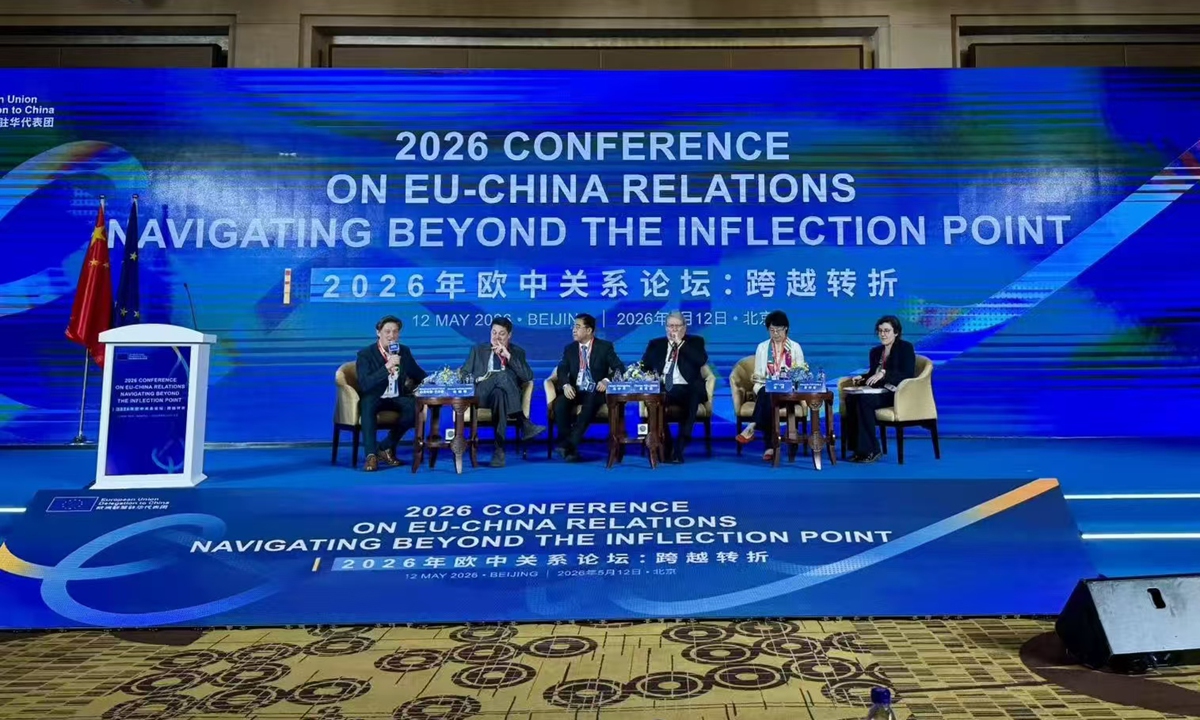
Themed "EU-China relations: navigating beyond the inflection point," the 2026 EU-China Conference is held in Beijing on May 12, 2026. Photo: Dong Feng/GT
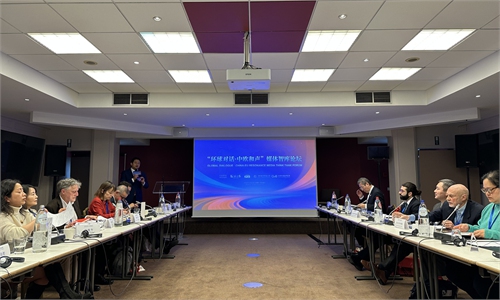
Officials and experts from China and the European Union (EU) on Tuesday stressed at a conference in Beijing that against a backdrop of global turbulence, China and the EU both acknowledge the need to narrow differences and broaden common ground while resolving divergences through dialogue to sustain steady bilateral ties.Themed "EU-China relations: navigating beyond the inflection point," the 2026 EU-China Conference, held by the EU Delegation to China, brought together over 40 panelists, including government officials, academics, business leaders, and experts from both the EU and China, with many of them expressing opinions about further bilateral cooperation potential in areas including trade, green transformation, and climate change.
At the Tuesday conference, Jorge Toledo, EU Ambassador to China, looked back to the conference last year, noting in his opening speech that dialogue remains necessary, and the task now is to make that dialogue consequential, to connect words with action, to encourage more balanced and bold commitments, and embrace responsibilities.
"China always believes that China and the EU are two major poles in a multipolar world, two major forces safeguarding world peace, two major markets driving common development, and two major civilizations advancing human progress," Li Jian, Director General of the department of European Affairs of China's Foreign Ministry, noted in the opening speech at the conference.
China-EU relations have a bearing not only on the prosperity of Eurasia, but also the stability of the global landscape, Li said, stressing that "differences are no reason to become rivals, nor are divergences a cause for confrontation."
Erik Kurzweil, Managing Director of the Asia-Pacific Department of the European External Action Service, referenced in his follow-up keynote speech a line from Director General Li's earlier remarks, repeating the wording that "we have more reasons to build a good relationship, and no reason to build a bad one."
Kurzweil also stressed the importance of resolving difference through discussion, and that the discussions need to be followed up by "consequential action."
The trade issue between China and the EU was also one of the focal points at the conference on Tuesday. Jian Junbo, director of the Center for China-Europe Relations at Fudan University's Institute of International Studies, who also attended the conference, told the Global Times on Tuesday that Europe should enhance efficiency, reduce costs and strengthen its own competitiveness through innovation and reindustrialization, rather than politicizing economic and trade issues.
Several participants also shared with the Global Times their insights into the potential of future China-EU cooperation and specific areas where the two sides can strengthen coordination.
Jens Eskelund, president of the EU Chamber of Commerce in China, told the Global Times on the sidelines of the conference that it is right to say that the color of cooperation between the EU and China is green, as "it is an area where we have already seen very substantial cooperation, and we continue to see significant potential to do more together."
"I think there's an opportunity for Europe and China to demonstrate leadership in developing the solutions that will allow us to address what I believe is a generational challenge of our times, and that is to address the threat of climate change," said Eskelund.
Dimitri de Boer, director for China at ClientEarth, told the Global Times that "from an environmental perspective, the EU-China relationship is really important, and we need to focus on cooperation, as there's nothing you can achieve for the environment if you don't cooperate."
RELATED ARTICLES