PLA Navy’s new terminal defense system completes type certification trials; expert cites world-class ultra-low-altitude interception capability
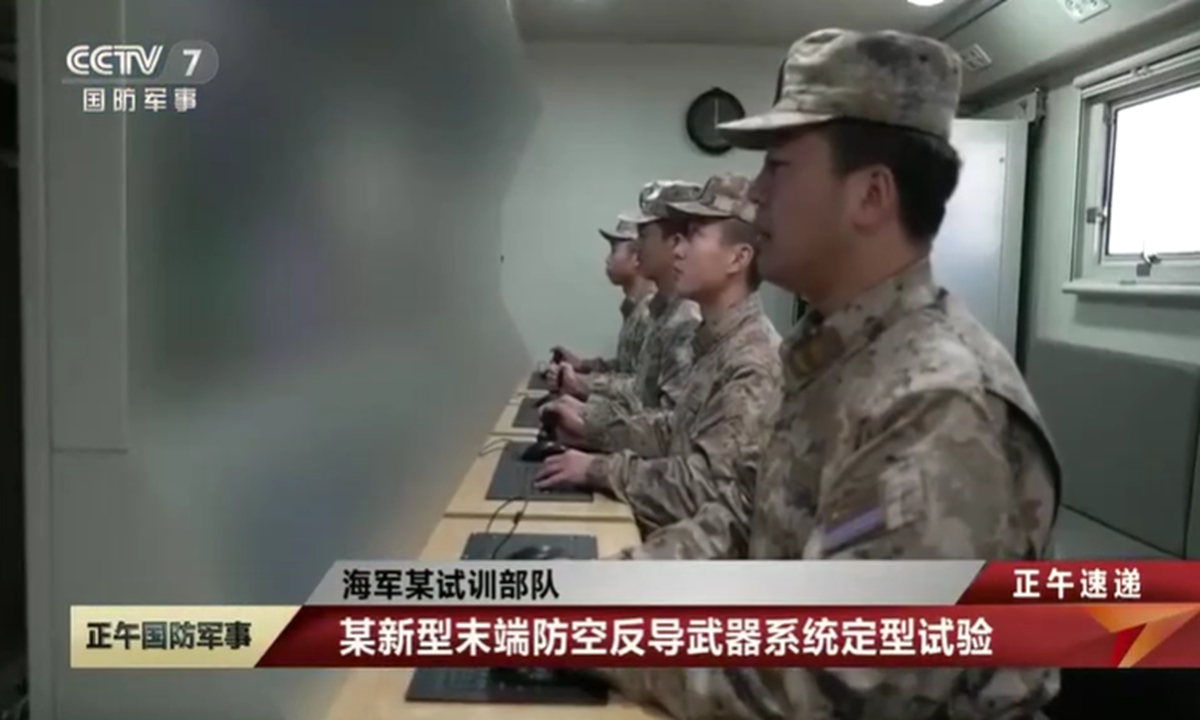
The command screens of the new terminal air-defense and anti-missile weapon system seen in the footage are heavily blurred. Photo: Screenshot from the military channel of CCTV News
An official media report on Tuesday offered insight into a test and training unit of the Chinese People's Liberation Army (PLA) Navy recently completed type certification trials for a new terminal air-defense and anti-missile weapon system in the Bohai Sea. The trials tested the system's interception capability under complex electromagnetic conditions and against ultra-low-altitude penetration targets.
Footage from the China Central Television (CCTV) News report showed the system successfully intercepting and destroying multiple high-speed target drones conducting ultra-low-altitude sea-skimming penetration maneuvers.
A military affairs expert told the Global Times that the heavy blurring applied to the command-and-control center screens in the footage underscored the system's high technological sensitivity and strategic importance, hinting at world-leading capabilities.
"Naval surface combatants' air-defense systems are generally divided into area air defense and point defense, with point defense further split into forward-layer and terminal-layer interception. 'Terminal' interception refers to destroying incoming threats when they are already approaching the ship at close range," military affairs commentator Song Xiaojun was quoted by the CCTV News as saying.
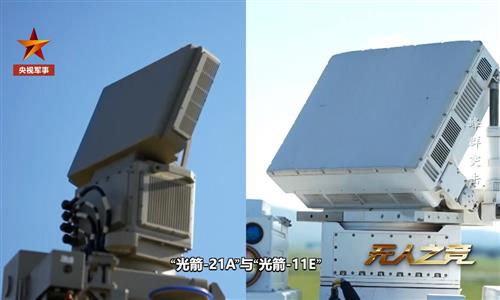
Li Yaqiang, another military commentator, was cited by the CCTV News report as saying that a terminal air-defense and anti-missile system is composed of multiple types of equipment that must both perform distinct functions and operate in coordination.
"First, there must be detection equipment, as well as corresponding guidance radars. Short-range air-defense missiles are essential, and the next layer is close-in defense guns. Each serves different purposes and missions," Li said.
Song added that type certification trials are a key stage in the development of military equipment. Completion of such trials generally indicates that development work is largely finished and that the system is approaching deployment. After completing testing, this weapon can basically be installed on relevant naval platforms, including frigates, destroyers, and possibly even aircraft carriers.
According to the report, multiple drone targets in the trials simulated realistic high-threat attack scenarios by flying at ultra-low altitudes over the sea and conducting concealed penetration maneuvers.
Song said the exercise was designed to replicate combat environments involving both small targets and hypersonic missiles.
Besides simulating ultra-low-altitude penetration attacks, the tests also introduced complex electromagnetic conditions, said the report.
"Electronic interference is now widely used in actual combat and has even become a form of warfare in itself," Li said. "How to effectively overcome such interference is a problem that modern weapon systems must solve."
The report also noted that all command screens visible in the television footage were heavily blurred, drawing significant public attention.
Wang Yunfei, a Chinese military affairs expert, told the Global Times on Wednesday that the strict "mosaic" blurring treatment applied to the command-and-control center's core screens indirectly demonstrated the system's extreme technological sensitivity and strategic value.
In Wang's view, the new system is likely among the world's most advanced. Based on the limited information disclosed, he suggested the system may possess several notable features.
First, the system was reportedly capable of intercepting sea-skimming targets flying at altitudes of only 5 to 10 meters above the surface. Successfully engaging threats at such low altitudes indicates world-class performance, Wang said.
Second, its ability to accurately intercept multiple ultra-low-altitude, high-speed sea-skimming targets suggests the system may employ "lofted dive" trajectories and kinetic-kill technologies. This would allow it not only to counter conventional missiles but also potentially intercept hypersonic targets traveling above Mach 5, demonstrating highly advanced fire-control and guidance algorithms, said Wang.
In addition, the expert highlighted the system's anti-jamming capability under complex electromagnetic conditions, saying it would enhance the system's overall combat effectiveness.
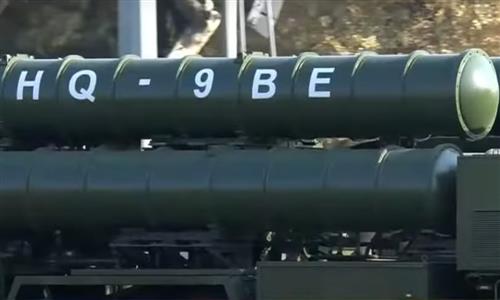
The new system would fill the ultra-low-altitude defense gap between the Chinese Navy's HQ-9B and HQ-10 missiles as well as the Type 1130 close-in weapon system. The development marks the emergence of a comprehensive layered interception network for the PLA Navy, enhancing the battlefield survivability of carrier strike groups and other naval formations, Wang added.
RELATED ARTICLES