Illustration: Liu Rui/GT
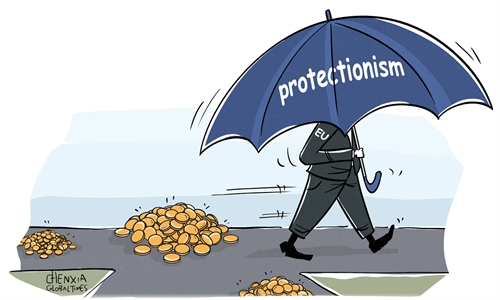
Confronted with its declining competitiveness, the EU has chosen a misguided path of protectionism. Instead of tackling the root causes of its economic malaise, it has aggressively escalated protectionist rhetoric and actions directed at China.In the latest example, an analysis published on Tuesday by the European Central Bank (ECB), titled "The impact of China's industrial rise on the euro area," claimed that euro area producers have been losing market shares where they face competition from China, particularly since 2020. China's import penetration has increased considerably in the European market, especially in medium- and high-tech industries, putting pressure on European producers, the report asserted.
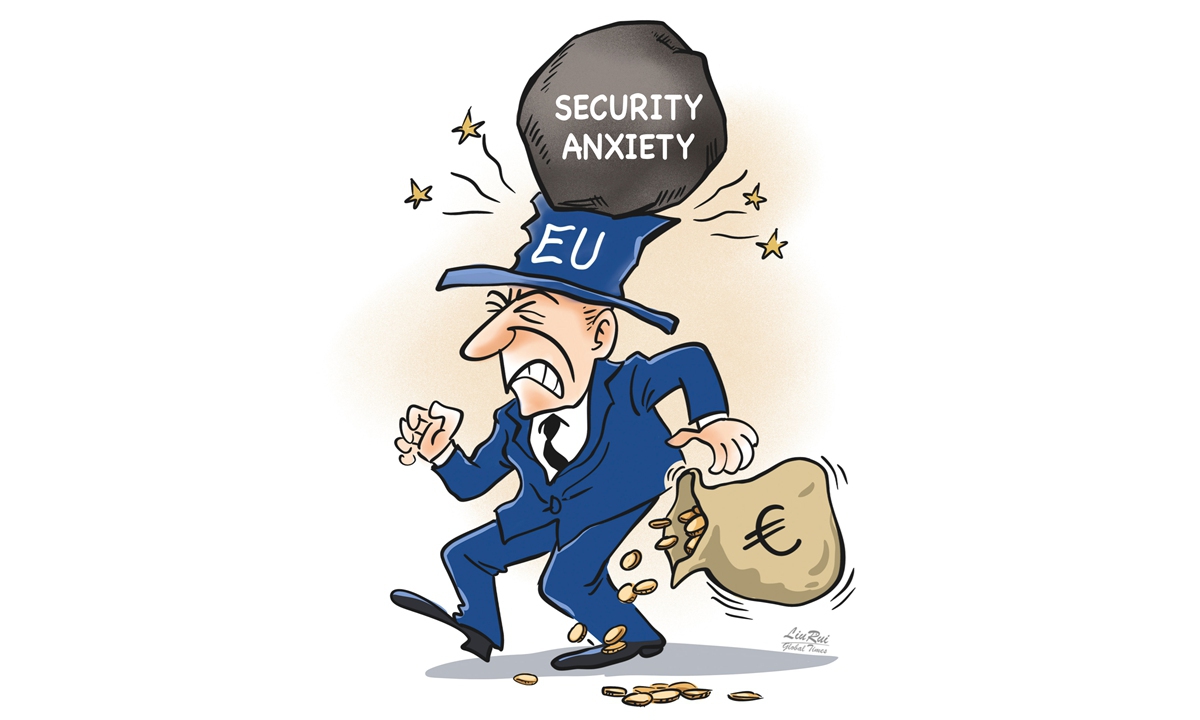
The so-called analysis largely repeated claims that have already been made by various European institutions or politicians. It further reflects anxiety within the EU, which tends to simplistically blame China's industrial ascent as the primary culprit behind Europe's own economic woes. In essence, this is an ill-advised attempt to shift responsibility for Europe's industrial development problems onto external factors.
This "blame China" narrative is politically convenient. It allows some EU politicians to point outward rather than inward, and to blame an external competitor rather than confront uncomfortable truths about their own economies. It has provided them with a seemingly plausible justification for trade protectionism and unreasonable trade restrictions. However, political expediency and protectionist actions cannot hide - let alone address - the fundamental problems within the EU.
The root cause of the EU's economic woes has never been China, but rather the deep seated structural economic problems that the bloc has accumulated over the long term. Attributing internal development ailments to external competition not only oversimplifies the issue but is also highly misleading. This line of thinking deliberately avoids confronting Europe's real economic problems. Yet, gains and losses in market share always reflect the combined effect of multiple factors. Exaggerating the impact of external competition while ignoring one's own structural defects can only lead to one sided and distorted conclusions, and will further delay Europe's needed reforms and transformation.
In recent years, Europe's industrial upgrading has fallen badly behind. European businesses are strangled by a fragmented maze of divergent standards, overlapping technical regulations, and cumbersome layers of approval processes across member states. This regulatory chaos severely cripples their ability to respond quickly to market demands. As a result, the competitive advantage of Europe's traditionally strong industries has eroded sharply.
At the same time, labor costs in Europe have remained high for a long time, coupled with a sharp rise in energy prices that have further pushed up producers' production and operation costs and weakened the competitiveness of European manufacturing in the global market.
These problems have nothing to do with China - they are the accumulated product of the EU's internal policy choices and development models. Even without the rise of Chinese manufacturing, European industry would still have faced these very problems.
It is worth noting that even the ECB report - which emphasizes the "pressure" - cannot avoid acknowledging the fact that for sectors that recorded an average annual increase in imports, increased exposure to imports of intermediate goods from China was linked to a 0.6 percentage point boost in industrial production growth.
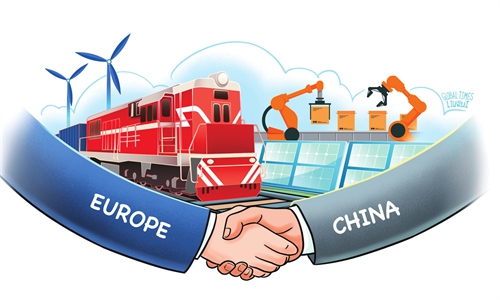
China's exports of intermediate goods have actually helped European companies lower production costs and sustain the operation of their domestic manufacturing supply chains. This means that the industrial relationship between China and the EU is by no means a simple zero-sum game. Rather, they are complementary partners in global value chains.
What the EU truly needs is not to build higher trade barriers, but to face competition with an open mind and force its own structural adjustment through competition. The restructuring of the global industrial chain has brought challenges and opportunities to all economies.
Whether the EU can seize these opportunities hinges on one thing: its readiness to confront its own failures and pursue meaningful reforms, instead of scapegoating China and closing the door to mutually beneficial cooperation.
RELATED ARTICLES