Caracals viral for plump appearance; zoo staff say molting season makes fur appear extra‑fluffy
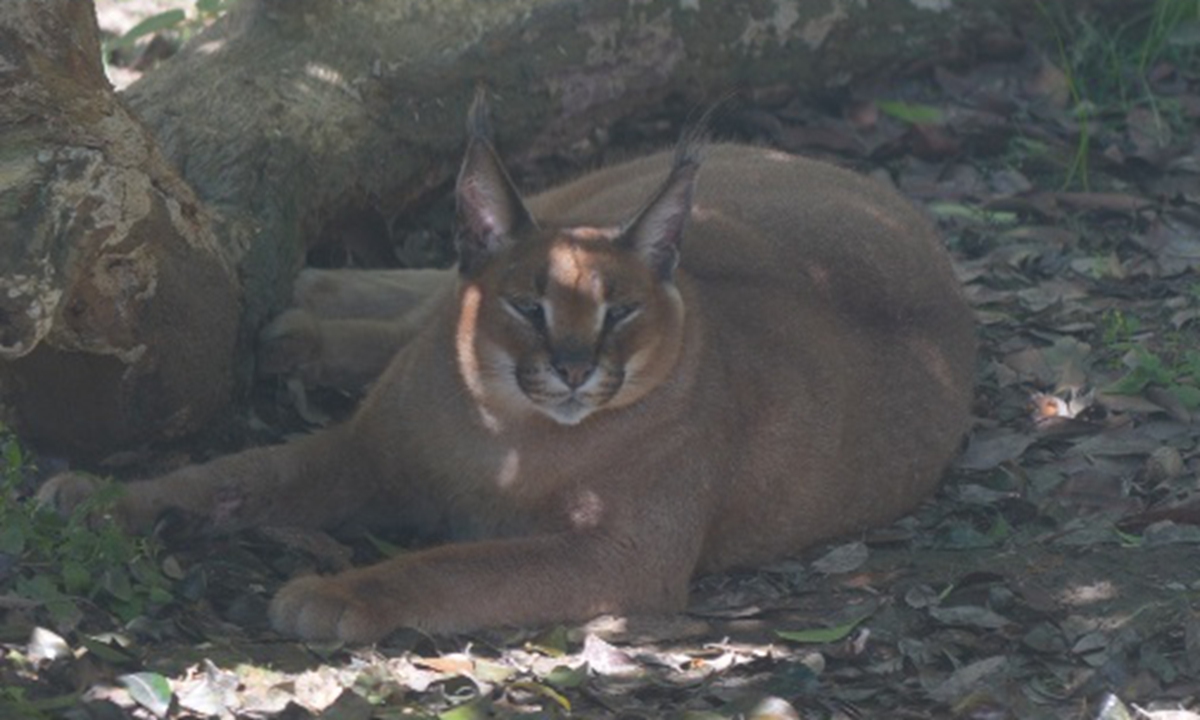
Photo: Screenshot from media reports
Over the past 10 days, a video clip of caracals, a kind of carnivore that typically preys upon birds, rodents, and other small mammals, taken by a tourist at the Wannan Wildlife Park in East China's Anhui Province has gone viral online. Posted by a netizen nicknamed "Vicenteshushu" on May 4 on Douyin, the video shows footage of a caracal exhibit board states the featured animal is supposed to be with "slender limbs." In contrast, the next shot shows two caracals are found to be round and chubby, with fluffy fur and plump bodies, appearing very different to the agile image of caracals in the wild. An employee told the Global Times that this is a shared problem among zoos, as the wild animals are not hunting their own food in a limited space.
"They've been overfed so much that they now look like missiles," a comment to the video by a netizen who is based in North China's Hebei Province was favored by at least 297,000 Douyin users as of Friday.
"Seems to me, these animals are so well fed that they look way overweight," another netizen echoed.
Due to their unusually plump appearance, netizens have been making fun of the two caracals. As of press time, the video has garnered nearly a million likes and 694,000 shares in Douyin.
Wang Daojun, a staff member at the Wannan Wildlife Park, told the Global Times on Friday that the park has also noticed the video online. The two caracals are named "Wan Ning" and "Wan Meng."
Caracal is a medium-sized wild cat, belonging to the carnivorous class along with tigers and lions. Wang said that the routine diet of these two caracals can be described as "top-notch." They eat meat-based meals three times a day, mainly beef and chicken. "Although caracals are not large animals, they still eat about a pound of meat per meal," Wang said.
Wang explained that the two caracals are not actually overweight or obese. During their spring molting season, which runs from March through May their fur becomes exceptionally fluffy, making them appear rounder. "Each year, during the two-molting seasons in spring and autumn, like other animals, they need more nutrition," he said.
Meanwhile, caracals are nocturnal animals and spend much of their daytime sleeping and resting under trees, resulting in low activity levels and a relaxed posture which makes them appear bulkier, he added.
Compared to their wild counterparts who have irregular meals and hunt everywhere, the caracals in the zoo have plenty of food and are in better physical condition.
To solve the problem, and in response to the concerns of enthusiastic netizens, the zoo has developed a plan to help the caracals lose some weight. Wang said that the park has assigned a veterinarian to conduct daily checks to examine the caracals, and their vital signs are normal; it has not yet reached the point where they need to lose weight. "It is being monitored daily by dedicated professionals," he said.
As for the diet scheme proposed by netizens, the park has a feeding management plan in place. Wang said that the park always prioritizes ensuring the animals' nutrition, which is why many animals appear plump. However, if an animal shows signs of being overweight, loss of appetite, or health problems, the feeding plan will be adjusted immediately.
"When a caracal needs to lose weight, we will control its calorie intake by feeding it smaller, more frequent meals. We will also change the feeding method, using feeding enrichment facilities to encourage the caracals to exercise and forage independently, increasing their activity levels and preventing obesity from causing high blood pressure, high cholesterol, and high blood sugar," he added.
Wannan Wildlife Park sits in Jingxian county in Anhui Province. Located within a large primitive forest ecological zone, the park is home to more than 8,000 rare animals from more than 200 species around the world.
Even though it is a zoo located in a county, Wannan Wildlife Park has been in the limelight on social media platforms in China. During this this year's May Day holidays for example, the park has received approximately 50,000 visits over five days.
RELATED ARTICLES