Argentine government’s approval of incentives for expansion of a Chinese-backed lithium project driven by economic interests; resilient supply chains require trust and cooperation: Chinese expert

President of Argentina Javier Milei at The Palace of the Argentine National Congress on April 29, 2026 in Buenos Aires, Argentina. Photo: VCG
Argentine President Javier Milei's government approved a series of incentives on Thursday for the expansion of a lithium mine half-owned by a Chinese firm. A Bloomberg report on Friday described the move as "a rare step for the libertarian, who has prioritized ties with the US administration."
The decision was driven by Argentina's economic needs, as China's mature supply chain networks and advanced mineral-processing technologies can help resource-rich regions make better use of their reserves, a Chinese expert said, adding that practical economic considerations, rather than political motives, remain the top priority for most economies.
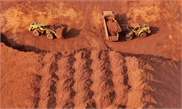
Milei's government cleared a joint venture led by China's Ganfeng Lithium Group to invest $1.24 billion in an expansion of its mine in the province of Jujuy along with partners Lithium Argentina AG, which has US-listed shares, and state-owned JEMSE.
Lithium, a key critical mineral, is widely used in emerging industries ranging from new-energy vehicles and energy storage systems to mobile communications, medical treatment and nuclear reactor fuel, according to Xinhua News Agency.
Ganfeng is the largest shareholder of the project, owning 47 percent of the mine, according to Bloomberg.
The report described the development as "unusual progress" for a Chinese firm in Argentina, noting that Milei administration had previously blocked Chinese state-owned companies from participating in other projects.
"Chinese mining companies have operated in Argentina and across South America for years, gradually building mature supply chain networks while creating significant local employment. Such long-term industrial foundations and operational experience are difficult for many other multinational firms to replicate in the short term," said Zhou Mi, a senior researcher at the Chinese Academy of International Trade and Economic Cooperation.
Against this backdrop, it was unsurprising that the Argentine government approved the expansion project, Zhou said, as the companies involved could help the country better develop and utilize its resources.
At the same time, the Argentine government also sees such investment as conducive to boosting local economic capacity and industrial development, which Zhou said was an important reason behind the approval.
Notably, after signing a minerals agreement with the US on February 4, Argentina made clear that it "does not rule out Chinese investment" in the sector. The agreement came on same day that Washington sought to form a critical minerals bloc aimed at loosening so-called "China's grip" on the industry with allies.
The US announced plans in February to marshal allies into a "preferential trade bloc for critical minerals," aimed at "loosening China's grip on materials crucial to advanced manufacturing," according to Reuters.
Meanwhile, Argentina's foreign ministry separately announced it had agreed on a framework agreement with the US to strengthen and diversify supply chains as the South American nation looks to boost its copper and lithium exports, the Reuters report said.
Notably, Argentina later said the agreement "does not rule out Chinese investment in the country's mining sector," according to another Reuters report published on February 6.
"This, as of today, does not imply that China cannot or will not participate in investments in Argentina. In fact, it has investments in Argentina, in minerals," Argentine Foreign Minister Pablo Quirno said in a press conference, Reuters reported.
Chinese companies have already established a well-defined and mature role in the global industrial division of labor, with their competitive advantages built over years of market development and industrial upgrading, making them difficult to replace artificially in the short term, Zhou said.
He stressed that if countries genuinely seek to enhance the resilience and security of global supply chains, they should avoid attempting to reshape the international division of labor based on ideological or political considerations.
China had previously reiterated that its position remains unchanged on the issue of maintaining the stability and security of the global industrial and supply chains for critical minerals and that all parties have the responsibility to play a constructive role in this regard.
"China has always maintained that all countries need to follow the principles of the market economy and international economic and trade rules, step up communication and dialogue, jointly keep industrial and supply chains stable and unimpeded, and promote the steady growth of the global economy," Foreign Ministry spokesperson Lin Jian said at a press conference on February 4 regarding critical minerals issues.
RELATED ARTICLES