Shanghai’s transportation network, e-commerce enlarge CIIE’s spillover effect for BRI products
Shanghai turns CIIE into year-round BRI trade through e-commerce, other platforms
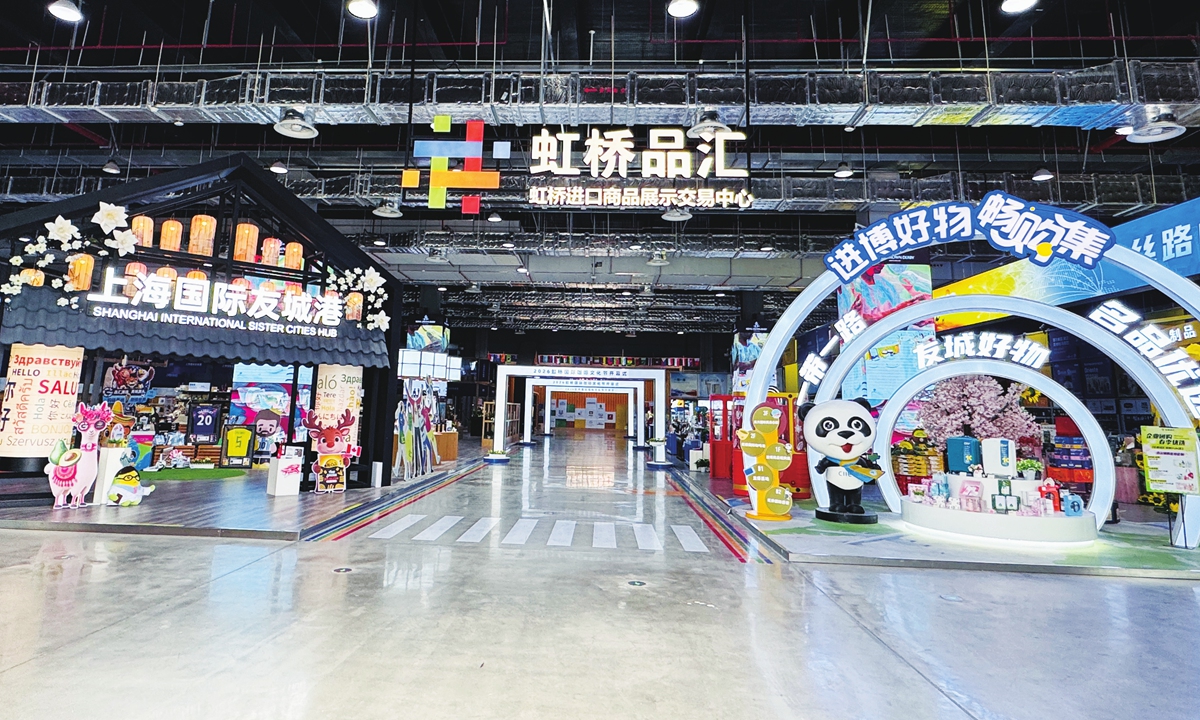
A view of the Hongqiao Import Commodity Exhibition and Trade Center in Shanghai on May 14, 2026 Photo: Chi Jingyi/GT
Soft alpaca dolls made from Peruvian alpaca wool, once a viral highlight at the annual China International Import Expo (CIIE), now sit permanently on shelves at the Hongqiao Import Commodity Exhibition and Trading Center in Shanghai, near the venue of the CIIE.
From Peru to Shanghai's exhibition halls and then across China's consumer market, this small toy reflects the smooth, efficient trade flows fostered under the Belt and Road Initiative (BRI) and highlights the expanding spillover effect of the CIIE.
To help products from BRI partner countries reach Chinese consumers through distributors, Shanghai has introduced a "6 + 365 days" year-round display and trading platform to strengthen procurement cooperation and better leverage the spillover effects of the CIIE through a comprehensive, omnichannel import trading service.
As the flagship venue of this platform, the Hongqiao Import Commodity Exhibition and Trade Center, also known as Hongqiao Pinhui, aims to serve as a centralized showcase for CIIE achievements, a major distribution hub for imported goods, and a prime gathering place for international trade enterprises.
"Many overseas exhibitors have established permanent display points at Hongqiao Pinhui. Major companies have also set up offices here. For example, Canadian food giant McCain has moved in to expand its presence in the Chinese market," Zhu Jing, deputy general manager at Hongqiao Import Commodity Exhibition and Trade Center, told the Global Times on Thursday.
The center actively undertakes follow-up business matching for exhibitions held in Shanghai. International business delegations visit regularly, helping transform short-term exhibition participation into long-term trade cooperation.
"Products such as alpaca products and Bangladeshi jute handicrafts, which gained popularity at the CIIE, have successfully entered the Chinese market and are now sold both domestically and internationally," Zhu said, pointing at the shelves displaying star products at the CIIE.
As a core platform for handling CIIE spillover, the center relies on its comprehensive industrial resources and a multimodal logistics system covering sea, land, air, rail, and river transport to deeply integrate into the broader BRI economic and trade cooperation framework, said Zhu.
Situated near the Shanghai Hongqiao International Airport and Shanghai Hongqiao Railway Station, Hongqiao Pinhui is at the center of several transport hubs.
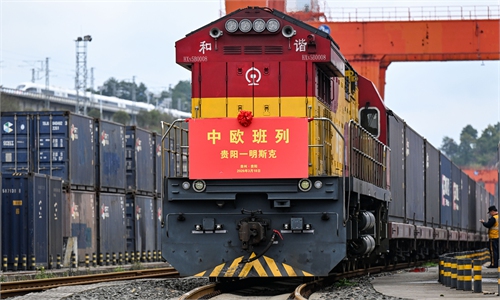
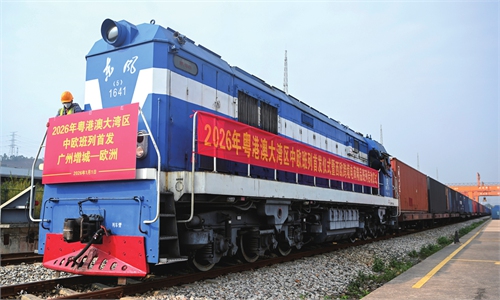
On September 28, 2021, the China-Europe Railway Express (Shanghai) service was officially launched, enriching the China-Europe Railway Express network. This "steel camel caravan" departing from Shanghai and connecting the Eurasian continent has leveraged the unique advantages of international rail intermodal transport to bring a steady flow of European beer, chocolate, machinery, milk, auto parts, and many other products into China, while also enabling Chinese products to reach the world more quickly.
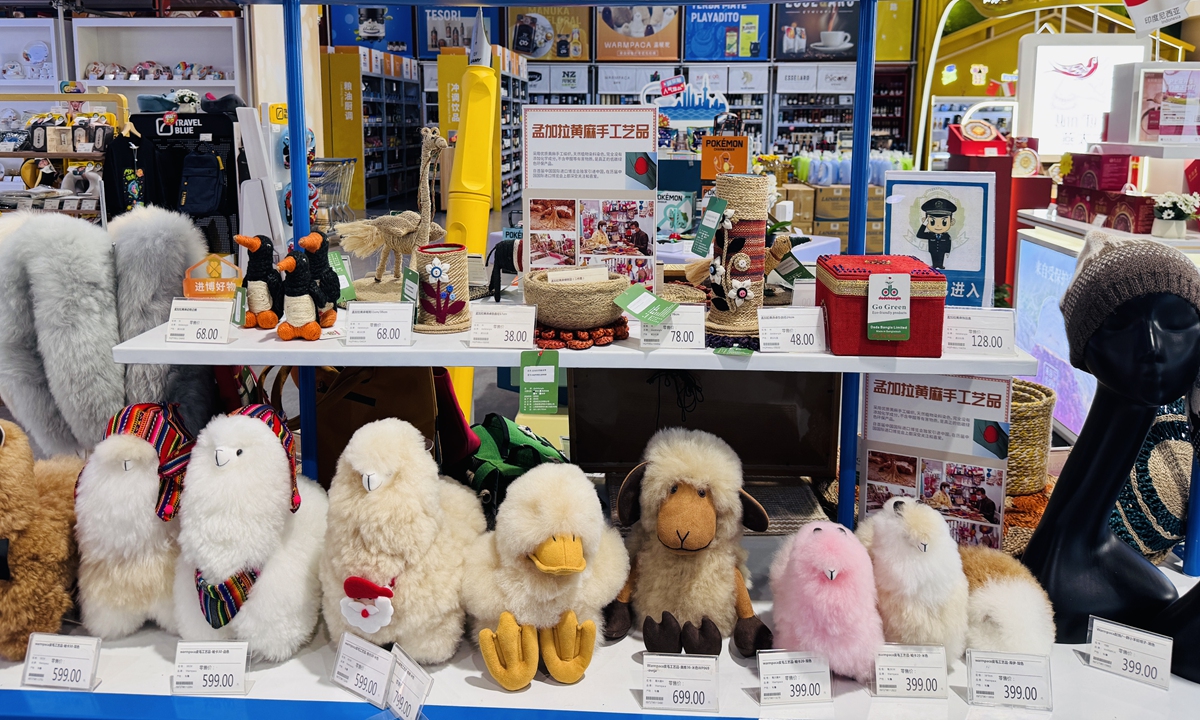
Alpaca products and Bangladeshi jute handicrafts displayed at the Hongqiao Import Commodity Exhibition and Trade Center in Shanghai on May 14, 2026 Photo: Chi Jingyi/GT
On the cloud
Beyond physical connectivity, Shanghai is promoting the Silk Road e-commerce project to help connect sellers and buyers online.
Hongqiao Pinhui has developed a livestreaming e-commerce base, together with multiple specialized sub-platforms, including the Shanghai international sister cities port, Hongqiao International Coffee Port, Hongqiao International Wine Cellar, according to official information.
"We have become a model for Silk Road e-commerce cooperation, especially in the coffee sector. Visitors can explore products from around the world, enjoy the aroma of coffee from 47 BRI partner countries, and taste wines from along the Silk Road," said Zhu.
A representative of a coffee importer introduced coffee beans from Ethiopia, Uganda and Kenya. "With the platform of Hongqiao Pinhui, it is becoming increasingly easy for Chinese consumers to access high-quality products from around the world," the representative said.
As a key implementation platform for Silk Road e-commerce in Shanghai, Hongqiao Pinhui has aggregated specialty products from over 60 BRI partner countries.
The Global Times observed that brands such as South Korea's Samyang and the US' Brooks Brothers were promoting products through these livestreaming studios during a visit there.
Beyond selling products, Hongqiao Pinhui trains livestreaming hosts from BRI partner countries and helps convey the cultural stories behind the goods to Chinese consumers.
Shanghai is fully advancing the construction of a national "Silk Road e-commerce" pilot zone. For example, Meione (Shanghai) Network Technology Co said in a statement sent to the Global Times that it has hosted multiple themed livestreaming events for BRI partner countries under the "Silk Road e-commerce" project, further strengthening digital trade links between Chinese consumers and BRI products, such as Thai food and African coffee.
High-level opening-up
Relying on the key Belt and Road maritime project - the direct "Chancay-Shanghai" shipping route - the Peruvian alpaca doll reaches Shanghai's Yangshan Port in just 23 days, according to the Xinhua News Agency.
Alpaca doll from Peru, African coffee beans, wheat products of Kazakhstan and cotton of Uzbekistan - these products from BRI partner countries on the shelves at Hongqiao Pinhui, awaiting Chinese distributors and consumers, serve as a microcosm of broader Silk Road economic and trade connectivity. It reflects how China's opening-up is evolving into lasting economic impact.
Zhu noted that the CIIE has become a vital platform for China's high-level opening-up and a key pillar supporting the BRI.
For example, the 8th CIIE in 2025 recorded intended deals of $83.49 billion, a 4.4 percent increase from the previous year and a new record, according to official statistics. Over the first seven sessions, cumulative intended deals exceeded $500 billion, with the number of participating BRI partner countries nearly doubling.
From Peruvian alpaca dolls arriving by sea in 23 days to European goods transported via the China-Europe Railway Express, the BRI continues to write a story of mutual connectivity between China and the world.
RELATED ARTICLES