New positioning of China-US relations indicates Thucydides Trap is not a destiny

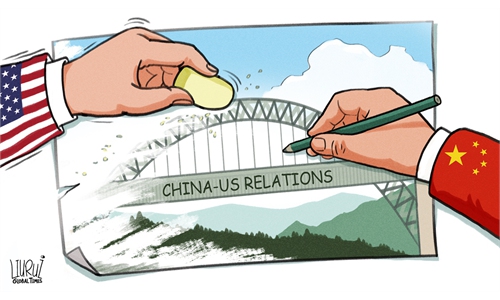
Illustration: Liu Rui/GT
Editor's Note:After US President Donald Trump concluded his state visit to China, discussions surrounding China-US cooperation and the future trajectory of bilateral relations have continued across Western media outlets. What are the takeaways from the visit? How can the outcomes and far-reaching implications of the latest interactions between Beijing and Washington be better understood? What direction might China-US relations take going forward? The Global Times has invited three experts to share their in-depth analyses.
Einar Tangen, an American scholar and a senior fellow of the Center for International Governance Innovation, a Canadian think tank
For years, the dominant assumption surrounding China-US relations was that deterioration had become irreversible. Trade wars, sanctions, semiconductor restrictions, military signaling around Taiwan, ideological hostility, and alliance restructuring across Asia all pointed toward one conclusion: The world's two largest powers were moving steadily toward confrontation.
Many analysts, myself included, believed the momentum had become structural - an almost inevitable drift toward the Thucydides Trap, the historic pattern where rising and established powers slide into conflict. At best, people hoped for guardrails. Yet what unfolded in Beijing may force us to reconsider those assumptions. Not because trust suddenly appeared; it did not. Not because competition disappeared; it has not. But because both sides may have recognized that the alternatives are becoming too dangerous and too expensive to sustain indefinitely.
What may now be emerging is not an alliance or détente, but a strategic understanding where both sides continue competing within limits designed to avoid systemic rupture.
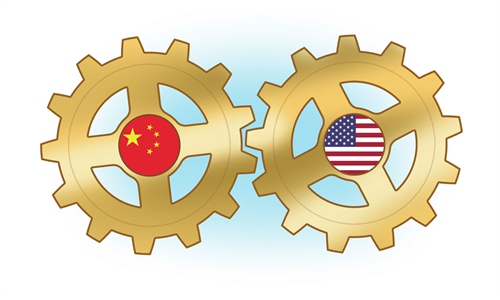
For China, the appeal is obvious. Beijing has repeatedly warned about the dangers of the Thucydides Trap. Its objective has never been war with America; it has been to avoid war while continuing economic and technological advancement. That is why the agreement to define relations as a constructive China-US relationship of strategic stability matters. It reflects the concepts Beijing has pursued for years: managed competition, coexistence and recognition that neither side can eliminate the other from the international system.
For the US president, the appeal is equally clear. A broader bargain with China offers the possibility of reframing confrontation itself as the mechanism that produces peace, stabilizes supply chains, expands exports and reduces geopolitical tensions.
The Boeing purchases and soybean exports are not the real story. They are political lubricants designed to provide visible wins while larger negotiations evolve underneath.
The deeper issue is whether Washington and Beijing have accepted a common reality that neither side can achieve absolute dominance without imposing catastrophic costs on itself and the world.
If so, historians may eventually view this summit not as theater, but as the beginning of a new equilibrium.
Li Haidong, professor at the China Foreign Affairs University
The most important outcome of the China-US summit was the two sides agreeing on a new vision of building a constructive China-US relationship of strategic stability. At its core is the idea that China and the US should be partners, not rivals. It is not only a comprehensive summary of China's successful experience in handling China-US relations over the years, but also a set of strategically visionary guiding principles based on the current realities of bilateral ties and changes in the international landscape, outlining how the two countries should move toward each other in the future.
This new positioning stands in sharp contrast to the long-standing tendency among some American politicians and media outlets to define China-US relations through the lens of "confrontation" and "strategic rivalry."
To a certain extent, it also challenged the false narrative promoted for years by parts of the US establishment political elites that China is bound to threaten the US.
The summit was also "historic" in that the US appeared to reassess its China policy based on a more objective understanding of the changing balance of power between the two countries and the evolving international landscape. Both sides reached a greater consensus on managing relations on the basis of equality and mutual respect.
Equally important were the discussions between the two sides on major questions in a way that was open, thorough, constructive and strategic.
On the Taiwan question in particular, Trump's remarks in US media interviews after the summit sent an important signal that the US is beginning to view the "Taiwan independence" separatist forces in a more realistic and rational way, while also demonstrating a deeper understanding of the one-China principle.
Positive progress was also made in the economic and trade areas. The two sides agreed to establish trade and investment councils to create a more stable and effective mechanism for future economic engagement. This means China-US economic relations may gradually move away from the previous vicious cycle of tariffs and retaliatory sanctions, and instead shift toward a path of resolving differences through dialogue and consultation.
Overall, the summit reflected an important consensus between the two heads of state on creating a new paradigm of major-country relations that is healthy and stable. The China-US bilateral relationship is one of the most important in the world. The positive signals released by both sides demonstrate that major-country relations do not have to be trapped in zero-sum competition. It is possible to overcome the Thucydides Trap and find the right path toward peaceful coexistence, mutual success and win-win cooperation. Stable China-US relations serve not only the interests of both countries, but also those of the international community as a whole.
Warwick Powell, an adjunct professor at the Queensland University of Technology and former policy advisor to Kevin Rudd
In May 2026, the China-US summit potentially marks a decisive break from the fatalistic Thucydides Trap. By proposing the framework of constructive China-US relationship of strategic stability, the Chinese side has not just addressed the Thucydides Trap; it has dismantled its ontological foundations.
This relational ontology suggests that the identities and successes of China and the US are fundamentally intertwined. The trap is not a law of physics but a failure of statecraft - a result of hubris, vanity and ego overrunning the imperatives of mutual survival.
By linking the Chinese rise with "American rejuvenation," the Chinese side has performed a deft diplomatic maneuver. It has provided the US with the conceptual and political space to accept a multipolar reality.
Through the four major global initiatives proposals, China has established an operational architecture that prioritizes systemic stability over hegemonic competition. This has effectively placed China on an equal footing with the US by redefining the terms of peace rather than winning a war.
By replacing the logic of collision with an ontology of intertwinement, China has offered a "new paradigm" that recognizes a fundamental truth: In a world of shared material risks and intertwined economies, the only way to remain "great" is to ensure the stability of the whole.
The Thucydides Trap is now a choice, not a destiny.
RELATED ARTICLES