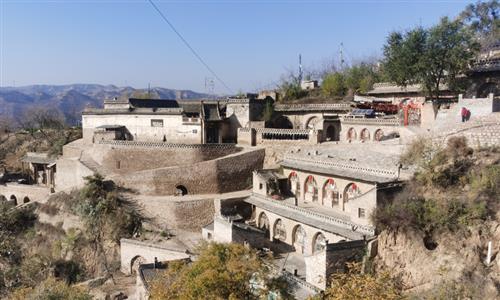
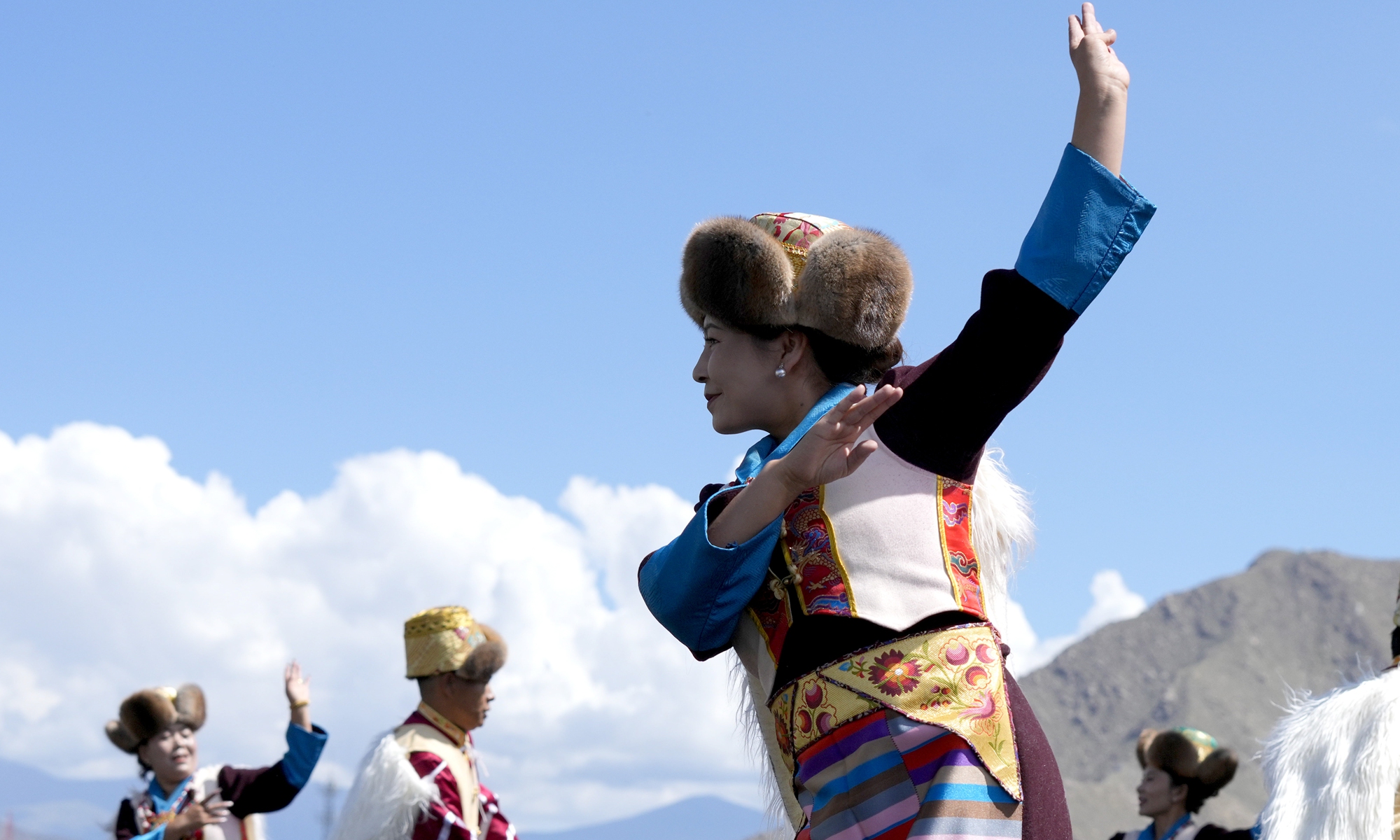
Local residents put on performances during a cultural and tourism event in Lhasa on August 16, 2025. Photo: VCG
Editor's Note:
On May 23, 1951, the Agreement of the Central People's Government and the Local Government of Xizang on Measures for the Peaceful Liberation of Xizang ("17-Article Agreement" for short) was signed in Beijing, marking the peaceful liberation of Xizang.
Before that, the 18th Army of the Chinese People's Liberation Army (PLA) marched toward the snow-covered plateau, crossing mountains, rivers and high-altitude valleys. Their arduous journey was not only a military march, but also a process of implementing policies, reaching out to local communities and laying the groundwork for Xizang's peaceful liberation and subsequent development.
Recently, the Global Times retraced parts of the route taken by the 18th Army into Xizang, traveling along the Sichuan-Xizang Highway from Qamdo to Nyingchi and finally arriving in Lhasa in today's Xizang Autonomous Region in Southwest China. Through conversations with witnesses to history, visits to historic sites, and interviews with local researchers and grassroots officials, this report revisits the arduous journey of the 18th Army into Xizang and explores how its spirit of discipline, unity and service continues to resonate in today's Xizang.
This story is also part of the Global Times' "Witness to History" series, which features first-hand accounts from individuals who were at the forefront of historic moments. From scholars, politicians, and diplomats to veterans and ordinary citizens, their authentic reflections on the impact of historical moments help reveal a sound future for humanity through the solid steps forward taken in the past and present.
Traveling westward along the G318 National Highway from Qamdo - the eastern gateway to Xizang - the scenery outside the car window seems to change every few stretches along the road.
In Qamdo, gorges, rivers and towering mountains form a rugged yet expansive backdrop. As the road continues toward Nyingchi, it winds through high mountains and deep valleys, with snow-capped peaks, forests, river valleys and meadows appearing in turn. Further toward Lhasa, the landscape gradually opens into broader plateau terrain.
Today, this Sichuan-Xizang corridor is busy with vehicles and tourists. More than seven decades ago, along roughly the same east-to-west route, the 18th Army advanced into Xizang.
After the founding of the People's Republic of China in 1949, the central government made the decision to march into Xizang in response to a complex situation involving separatist attempts and external interference, according to an article published on the website of China's Ministry of National Defense.
In early 1950, the 18th Army was ordered to march into Xizang. Some 30,000 officers and soldiers set out from Sichuan and advanced toward the snow-covered plateau, contributing to the peaceful liberation of Xizang in May 1951. Despite severe cold, oxygen and food shortages, and poor road conditions, the troops advanced across the plateau while respecting local customs, helping local residents and working to promote ethnic unity and safeguard national sovereignty, read the article.
Today, the places once marked by hardship and uncertainty have taken on new meanings. Former battle sites, places where PLA troops once stayed, and red historical sites now serve as windows for people to understand the history of Xizang's peaceful liberation. The stories left by the 18th Army continue to live on through the stories of their descendants, the work of grassroots officials and the changing lives of ordinary people.
Where the five-starred red flag was first raised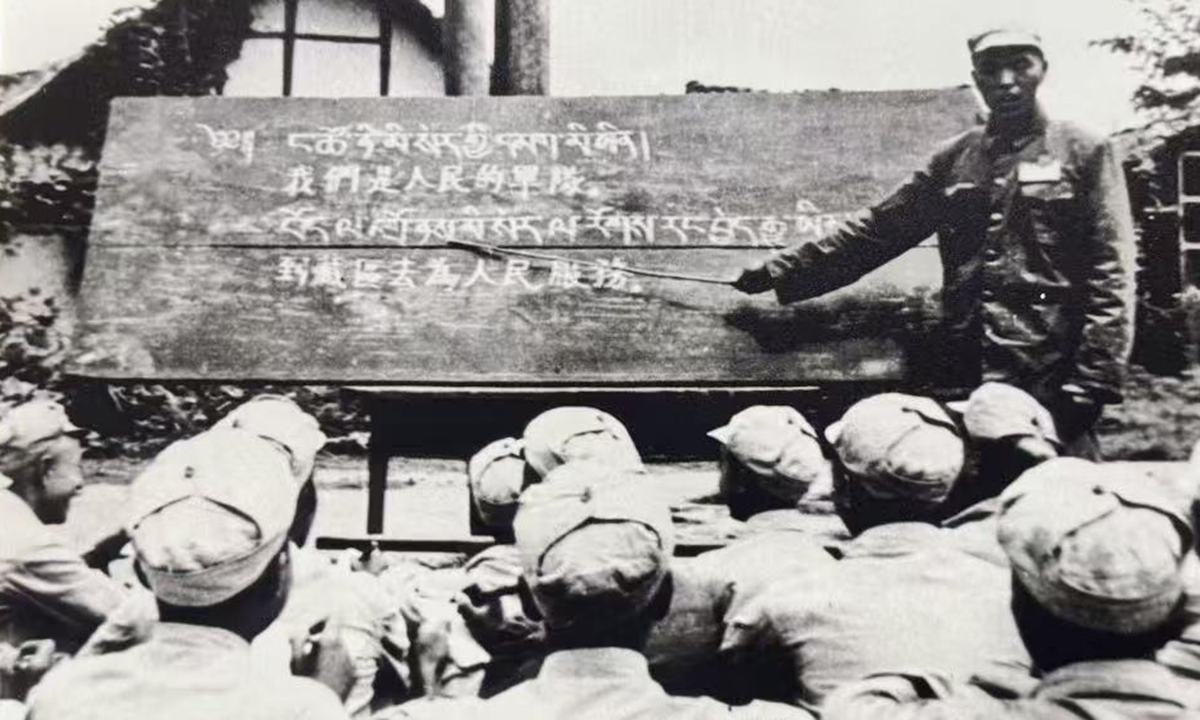
File photo: Soldiers of the 18th Army of the PLA learn the Tibetan language before entering Xizang in 1950. Photo: Courtesy of Qamdo Revolutionary History Museum
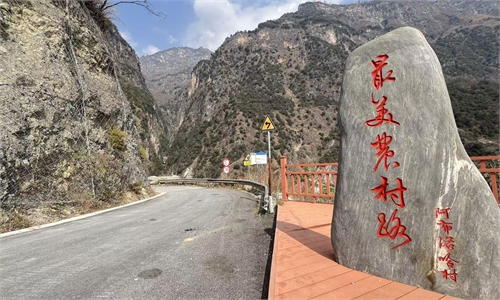
The Jinsha River bends past Gangtuo village, with Sichuan Province lying just across the water. Standing by the river and looking out, one sees the village, mountains, river and road pressed together in a narrow valley.
Located in eastern Jomda County, Qamdo, Gangtuo village is now known as "the first village liberated in Xizang." A signboard at the village entrance states that this was where the first five-starred red flag in Xizang was raised. In October 1950, as the 18th Army marched into Xizang, its troops crossed the Jinsha River at Gangtuo village and fired the first shot of the Battle of Qamdo, according to the Xinhua News Agency.
In Gangtuo village, history is not an abstract date, but a living memory preserved in villagers' oral accounts.
Zexia, former Party secretary of Aila village in Gangtuo township, said he had heard stories from his elders. After the 18th Army crossed the river and entered Gangtuo, local people saw the troops advancing while building roads, and providing medical treatment and food assistance to residents.
His father later served for a period as a guide for the 18th Army, leading the troops to the area around Bolo township in today's Jomda County. According to his father's account, Zexia said what left a deep impression on local people was not only the fighting itself, but also the troops' attitude toward the people.
"The relationship was very good," Zexia recalled, citing his father's account. At the time, local residents had crops growing in the fields, and the troops ordered soldiers not to damage anything on the field ridges. Such details made local people feel that the PLA was different from the forces they had previously seen, which had oppressed and plundered the people.
Jamyang Tsering, 93, former head of Gangtuo township, recalled that before the arrival of the 18th Army, various rumors had spread on this side of the river. Some people feared that young men would be taken away as soldiers, while others felt both afraid of and hopeful about the changes to come. However, after the troops actually arrived, many people's views began to change.
He told the Global Times that what he saw was a disciplined army that got along well with ordinary people.
This shift "from concern to trust" is a recurring thread in Gangtuo village's revolutionary memory, and it also points to the village's present-day transformation.
Today, Gangtuo village has 123 households and 605 residents. In recent years, drawing on its red heritage, the village has developed red tourism by building memorial halls, heritage displays and themed public spaces. These efforts have gradually become an important driver of local development, the Global Times learned from the village.
For Jamyang Tsering, the changes are reflected in the most concrete aspects of daily life. He said life today has undergone "earth-shaking" changes compared with the past, from food, clothing, housing and transport to village infrastructure.
Along the lively village roads of Gangtuo today, bright red Chinese national flags can be seen flying above many homes.
"This is something people do voluntarily," said Duoga, a former organization committee member of the Party branch of Gangtuo village in Gangtuo township, with pride. "For people here, life has become better year by year."
A bridge on cliffs
When vehicles pass the Nujiang Bridge in Baxoi County, Qamdo, many drivers sound their horns almost in unison. The short blasts echo through the canyon, like a customary gesture of tribute.
Locals say it is a way to honor those who built the Nujiang Bridge and opened the Sichuan-Xizang Highway.
The Nujiang River rushes through a deep canyon, with steep mountains on both sides and the road clinging to the cliffs. For vehicles passing through today, it is hard to imagine the formidable natural barrier that road builders faced more than 70 years ago.
After the peaceful liberation of Xizang, building roads into the region became essential for ensuring supplies and connecting Xizang with the rest of the country. According to displays at the Nujiang Bridge memorial hall, there was no existing road from Qamdo to Lhasa at the time, so road builders had to survey and construct the route at the same time. The Nujiang River was one of the toughest barriers along the way.
According to the memorial hall, early road builders relied on simple crossing methods and basic tools to work along the cliffs. After months of hard work, a steel-frame bridge was eventually built across the river, allowing the road to continue westward.
Outside the memorial hall, Pubu, a retired civil servant in Baxoi County, told the Global Times that he had witnessed the changes of several generations of Nujiang bridges.
"I crossed the first-generation bridge too," Pubu recalled. As a child, he traveled with his father from Lhasa to Chengdu, passing the old Nujiang Bridge when the second-generation bridge was under construction. Later, as a young man, during his working years and after retirement, he passed through the area many more times.
When the interview took place, a new generation of bridge and tunnel projects was also under construction nearby. In the future, travelers heading west from Qamdo will no longer need to follow the steep and winding "72 turns" along the Nujiang River.
Pubu said the new route will use tunnels, with trains and vehicles expected to pass through the Nujiang area in parallel, greatly shortening travel time.
A family legacy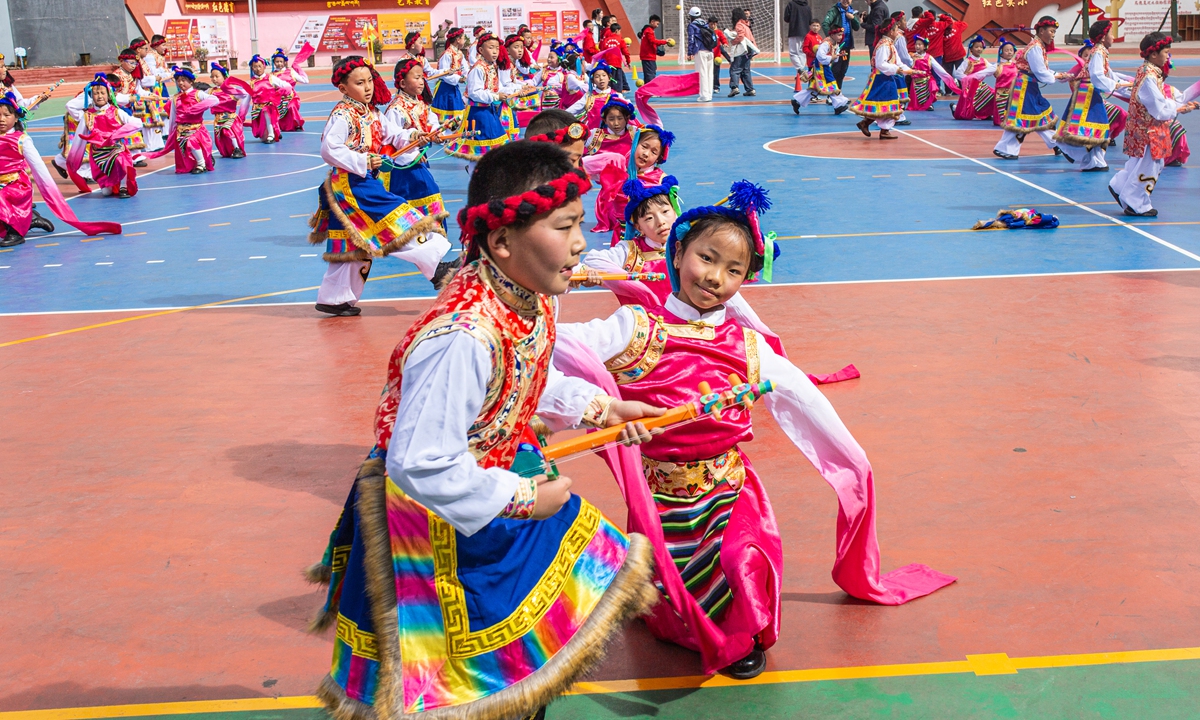
Students from Qamdo Experimental Primary School take part in various activities on campus in Qamdo, Southwest China's Xizang Autonomous Region, on May 13, 2026. Photo: Shan Jie/GT
In Ritong township, Qamdo, Lozang Sonam's office is filled with Tibetan medical classics, samples of medicinal herbs and hospital records. Located about 30 kilometers from downtown Qamdo, Ritong has long been known as a "hometown of Tibetan medicine."
Born into a Tibetan medical family in Qamdo, Lozang Sonam is the ninth-generation inheritor of a local Tibetan medical tradition. Today, he serves as head of the Ritong Tibetan Hospital and Ritong Tibetan Medicine Factory, leading his team in preserving Tibetan medicine while developing clinical treatments and pharmaceutical production.
But his family story has another thread.
Lozang Sonam told the Global Times that, through his mother's side, he is a third-generation descendant of the 18th Army. His grandfather, an ethnic Han officer, came to Qamdo with the 18th Army, later stayed to work and live there, and eventually married a local Tibetan woman.
For the family, the 18th Army's entry into Xizang was not only a chapter in history, but also an event that changed the fate of several generations.
"When my grandfather first came to Xizang, things were difficult in many ways, including language and living habits," Lozang Sonam said. His grandfather's generation lived, worked and built families on the plateau, gradually learning the local language, adapting to local customs and becoming part of local society. By Lozang Sonam's generation, the Han and Tibetan family traditions had naturally blended.
He said people of different ethnic groups learn from one another and develop together, so that ethnic cultures, including Tibetan medicine, can be passed on and promoted more widely. Today, employees from different ethnic groups work, study and communicate with one another in his hospital and medicine factory.
When asked which Tibetan medicinal herb could best describe his family inheritance, Lozang Sonam thought of the snow lotus, saying it symbolizes people's good wishes and the hope of bringing health to more patients.
For him, what his grandfather's generation left behind is not only family memory, but also a responsibility to remain rooted in the local community and continue serving people of all ethnic groups.