Illustration: Chen Xia/GT
The China-US relationship is not solely a concern of China and the US; it has become one of the most prominent factors shaping the future of the international system, global economy, technological progress, climate governance and regional security. In a world teeming with a wide range of uncertainties, including geopolitical, economic, military and distrustful factors, there is a greater awareness than ever that stable China-US relations are not only desirable but necessary.This is especially true for China's neighboring countries. From Southeast Asia to South Asia, and from the Korean Peninsula to the Pacific Islands, regional countries closely observe everything Beijing and Washington say. These countries are highly reliant on China for trade, and many maintain critical security and strategic relationships with the US.
A clash between the world's two most powerful countries would create significant strategic imbalances, economic instability, supply chain disruptions and heightened security concerns.
The world is at a new historical moment, marked by changing geopolitics, emerging technological competition and the evolution of the international order. History has shown that competition among great powers can have devastating effects not only on the powers involved but also on the international community as a whole.
China-US trade and investment ties are vital to the world economy, and cooperation between the two largest emitters is essential for effective climate governance. The nature of China-US relations is closely related to international health security, technological innovation, maritime stability and financial confidence.
Thus, the new vision of building a "constructive China-US relationship of strategic stability" agreed on by the two heads of state should be taken seriously.
There are differences in the political frameworks, strategic interests and worldviews of the two countries. These differences extend to trade issues, technology, and regional influence. But in the art of statesmanship, it is crucial to address these differences responsibly rather than dangerously.
One of the most stable foundations for stability is economic cooperation. Despite their political differences, China and the US are highly interdependent economically. The degree of their bilateral trade and investment links, manufacturing connections, and consumer dependencies underscores the impracticality of decoupling. Consultation and negotiation on an equal footing represent the most rational way to resolve trade disputes.
This message also resonates with the global economy. In many developing countries, global markets, predictable trade systems, and supply chains serve as the backbone of their functioning behind the scenes. Inflation could be exacerbated if trade and technological developments between China and the US become more contentious, particularly as tariffs and sanctions disrupt supply chains and hinder global recovery efforts. Healthy ties between Beijing and Washington, on the other hand, will instill confidence in international markets and create opportunities for mutually beneficial development.
It's reported that US President Donald Trump said "together, we can do a lot of big and good things for the two countries and the world" in Beijing. This is true because the world is far better served when the two powers work together rather than seeking to undermine one another.
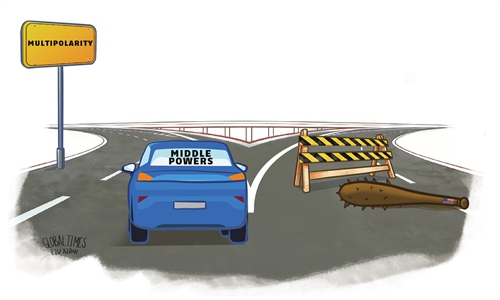
The developments are promising for other countries in the region. The majority of Asian nations are not willing to side with either China or the US. They seek a zone of order where they can coordinate their economies without unwanted strategic competition. For example, the Southeast Asian states have always been keen on the concept of ASEAN centrality, strategic neutrality and balanced diplomacy. Similarly, South Asian countries are interested in development cooperation from both powers.
A stable China-US relationship also enables cooperation on global issues that exceed the capacity of either party. Collective action is necessary to address climate change, pandemics, terrorism, food insecurity, cyber threats and energy transitions.
Maintaining a stable China-US relationship is not only in the interests of Beijing and Washington, but it's also crucial for world peace and prosperity. As the world today seeks stability amid uncertainty, the hope for a more stable and prosperous international order is perhaps more than ever tied to the positive cooperation of the most powerful countries.
The author is professor at Department of International Relations, University of Chittagong, Bangladesh, and deputy director of the Hong Kong Research Center for Asian Studies. opinion@globaltimes.com.cn
RELATED ARTICLES