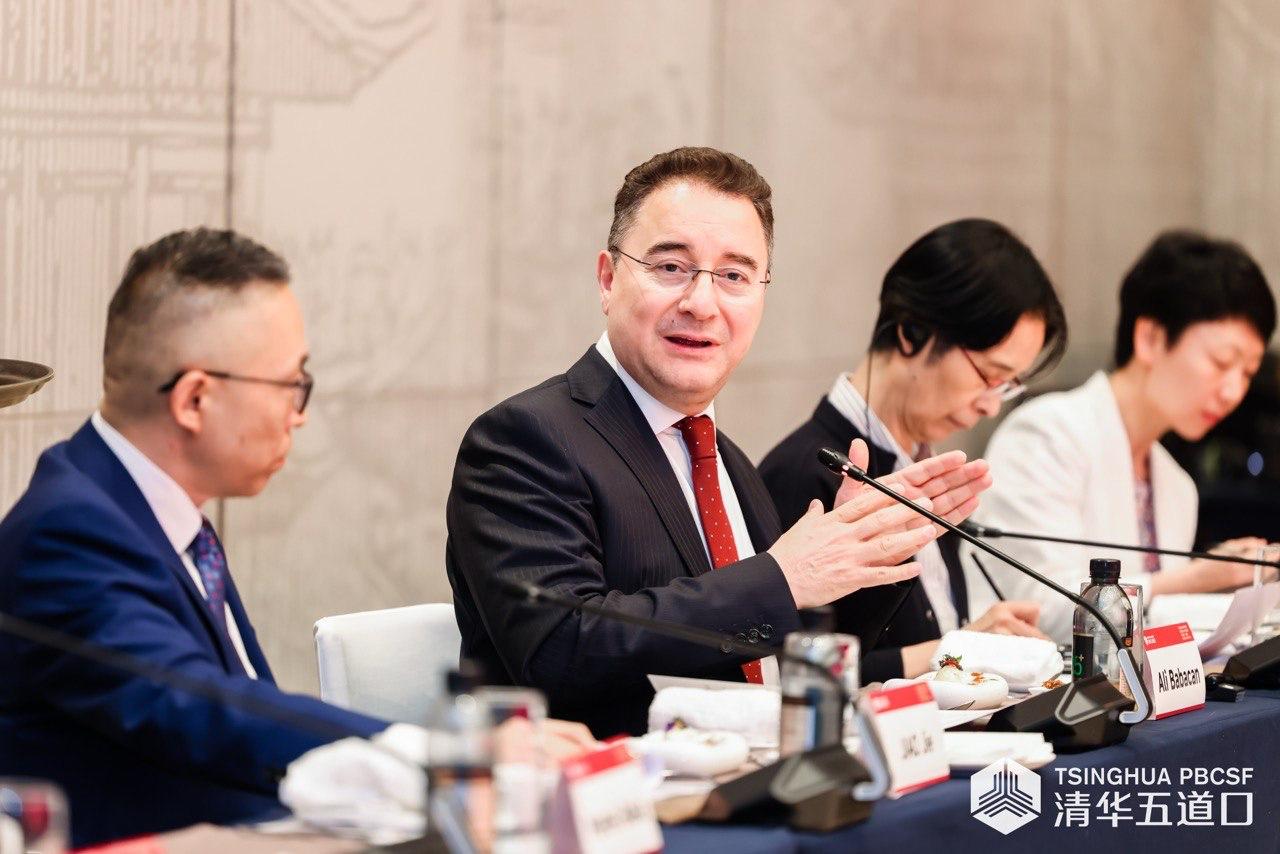
Ali Babacan, former deputy prime minister of Türkiye Photo: Courtesy of Tsinghua PBCSF Forum
Chinese economy is maturing into an economy that is no longer reliant on a low-cost labor model but is instead driven by advanced technological innovations. This model sets an example for other nations, demonstrating how long-term stability and tech investment foster sustainable growth over time.
During the country's annual "Two Sessions" in March, China set an economic growth target of 4.5 to 5 percent for 2026. The goal is entirely normal given the country's massive economic size. Given the size of China's economy, even growth in the range of 4.5 to 5 percent represents a very significant amount of additional output.
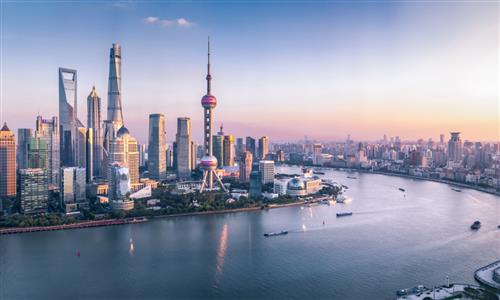
Reflecting on a speech I delivered in Shanghai in 2018, I am now struck by a profound sense of historical alignment. Back then, I argued that China's future lays not only in the quantity of its growth, but in the quality, sustainability, and inclusivity of its economic expansion. Today, witnessing China's stable growth amid global turbulences, we are clearer that China's vision is not just a theory, but also a lived reality.
Every time I visit China, I am amazed by the level of technological prowess the country has achieved.
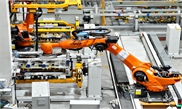
China is now a leading nation in many fields of technology. With the rapid development of artificial intelligence (AI), I am encouraged to observe AI becoming increasingly integrated into daily life across the country - education, healthcare, infrastructure, public administration, and overall security - all vital areas for AI application.
Another encouraging development has been the successful rebalancing toward domestic demand. China's drive to stimulate domestic consumption is proving to be strategically deliberate and enduring, supported by an expanding suite of targeted policies to accelerate important evolutions in the Chinese economy.
In the lead-up to the 15th Five-Year Plan (2026-30), China explicitly identified "taking the expansion of domestic demand as a strategic priority" in this year's Government Work Report. It calls for coordinated efforts to boost consumption and expand investment, tapping into every potential growth driver and better leveraging the strengths of its massive market size.
This is not a temporary measure to buffer external uncertainties, but a clear focus for China's next stage of development. It reinforces the message that China is a stable anchor for the world economy and a reliable partner in addressing global challenges.
Currently, global trade is in a highly unpredictable phase, driven not only by recent geopolitical tensions in the Middle East, but also by the abrupt policy shifts implemented by certain Western countries. Sudden changes in taxation or trade rules make it exceedingly difficult for investors and trading companies to plan. Predictability has become a rare commodity. At present, we observe that China's trade dynamics are comparatively predictable and stable.
China stands out for its institutional predictability. This is no accident. It stems from the country's ability to coordinate across sectors and to plan in multi-year cycles. This institutional strength ensures that, when challenges arise, China's response is coordinated and swift, rather than chaotic and reactive.
Furthermore, China's strategic investments in human capital - through education, vocational training, and digital literacy - have created a formidable foundation. Complementing this is the nation's embrace of cutting-edge technologies.
From AI optimizing logistics to digital platforms revolutionizing public services, China has moved from being a follower to a global leader in applying technology to solve real-world problems. This is another area from which many countries can learn.
Another crucial factor is macroeconomic stability. This is vital because stability fosters public trust and confidence. During periods of instability, market confidence and public trust can erode, and it takes a long time to regain it.
Here, China has set an example for the world: long-term macroeconomic stability is the bedrock upon which sustainable growth is built. As the global economy faces headwinds, China's steady hand provides not just a model for development, but a source of much-needed confidence.
This article is compiled based on an interview with Ali Babacan, former deputy prime minister of Türkiye. bizopinion@globaltimes.com.cn
RELATED ARTICLES