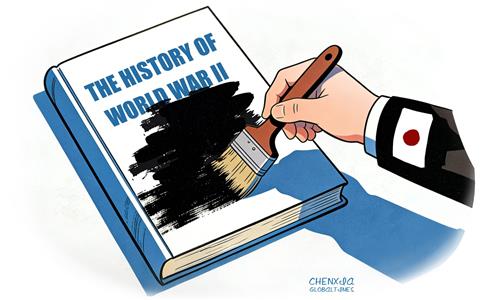
The Tokyo Trial serves as ‘a vital window into wartime history’: Japanese scholar
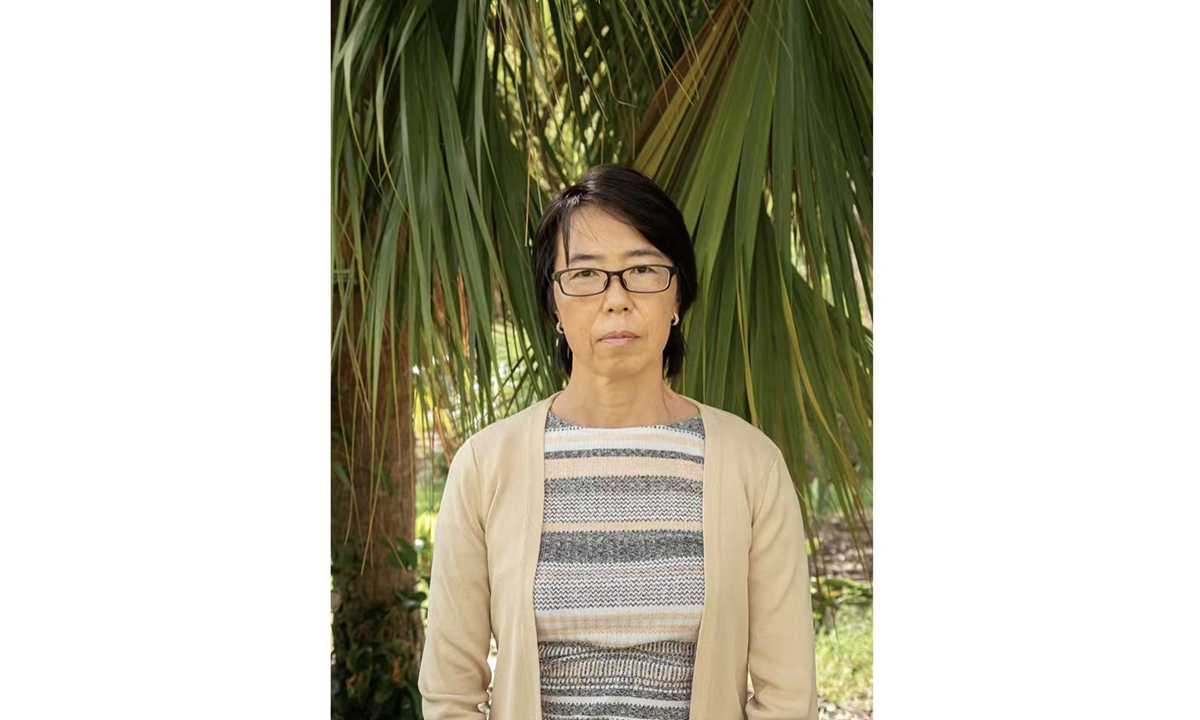
Yuma Totani Photo: Courtesy of Totani
Editor's Note:
2026 marks the 80th anniversary of the start of the Tokyo Trial. As a landmark judicial event in the aftermath of World War II, the trial has exerted a profound influence on modern international criminal law and the evolution of the international order - particularly the regional order in Asia. Yuma Totani (Totani), an associate professor in the Department of History at the University of Hawaii and a visiting fellow at the Hoover Institution, told Global Times (GT) reporter Zhang Ao in an interview that more empirical studies of the trial can help correct public misconceptions and enable the Japanese people to develop a more balanced, politically informed worldview, as the trial serves as a vital window into wartime history.
GT: In your book The Tokyo War Crimes Trial: The Pursuit of Justice in the Wake of World War II, you have clarified numerous historical misunderstandings and narrative biases surrounding the Tokyo Trial. In your view, what is the most deep-rooted misconception about the Tokyo Trial today?
Totani: I think the biggest misconception is that the Tokyo Trial's outcome was predetermined. Critics often argue, either explicitly or implicitly, that the guilty verdict was a foregone conclusion. This view is mistaken. The Tokyo Trial was a judicial proceeding, not a show trial. In reality, judges, prosecutors and defense counsel rigorously examined evidence and addressed the charges through a formal judicial process. This is the key understanding one must hold.
GT: Compared with the Nuremberg Trial, why has the Tokyo Trial long been marginalized and even stigmatized in global historical narratives?
Totani: First, the Nuremberg Trial was a landmark precedent; the Tokyo Trial was seen as a secondary follow-up and thus overshadowed from the start. Second, the Tokyo Trial ended in a split decision accompanied by five separate opinions, in contrast to the unanimous verdict at the Nuremberg Trial, which weakened perceptions of its legitimacy. Third, Japanese nationalists strongly rejected the Tokyo Trial's verdict, in sharp contrast to the broad acceptance of the Nuremberg Trial among the German people over time in the postwar decades. Although both trials confirmed that the leaders of Nazi Germany and Imperial Japan bore responsibility for aggression and atrocities, these conclusions encountered fierce resistance from Japanese nationalists. In addition, post-war US political calculations further marginalized the Tokyo Trial, as cultural and strategic considerations made it an inconvenient historical event that might complicate US-Japan relations. Legally, however, the two trials applied identical principles. There is no valid basis to celebrate the Nuremberg Trial while dismissing the significance of the Tokyo Trial.
GT: What are the far-reaching impacts and historical legacy of the Tokyo Trial on the building of the post-war international order and the evolution of modern international law?
Totani: The Tokyo Trial was not perfect, yet it was a positive and necessary development. Together with the Nuremberg Trial, it laid the foundation of modern international criminal justice. The Nuremberg Trial set the precedent; the Tokyo Trial reaffirmed those principles, later formally codified as the Nuremberg Principles by the UN International Law Commission in 1950, and enshrined in the 1998 Rome Statute, which entered into force in 2002 and governs the International Criminal Court (ICC).
This shared legacy ultimately paved the way for the establishment of the ICC and subsequent developments. We now live in a post-WWII era built on international criminal justice that began with these two trials. This is the key legacy that the younger generation should understand.
GT: What is the general opinion of the Japanese public toward this trial?
Totani: Opinions on the Tokyo Trial fall into three categories. Some Japanese support the trial because it established universal principles of international justice.
Others reject the verdict, arguing that it branded Japan as a criminal nation. For many Japanese who once viewed their country's wartime actions as a "sacred war," especially self-identified patriots and nationalists, the judgment imposed by external powers remains unacceptable.
There are also many who hold a middle position: they affirm the trial's legal principles but criticize its incompleteness - for example, failing to prosecute Emperor Hirohito and leaving major war crimes such as those committed by Unit 731 involving the development and use of biological weapons unaddressed.
Today, however, public memory of the Tokyo Trial is fading in Japan. It is therefore increasingly important to educate younger generations about World War II and the Tokyo Trial to preserve historical memory.
In the field of war crime studies, a new research trend is emerging. Meanwhile, a gap persists between China and Japan in public discourse and historical awareness. Victim countries continue to emphasize the significance of the trial, keeping their historical voices alive.
GT: Amid the ongoing rise of historical revisionism in Japan, what practical significance does re-clarifying and objectively evaluating the legitimacy and historical value of the Tokyo Trial hold for upholding historical justice and preventing historical retrogression?
Totani: The Tokyo Trial remains widely misunderstood. More empirical studies of the trial can help correct public misconceptions and enable the Japanese people to develop a more balanced politically informed worldview, as the trial serves as a vital window into wartime history. The political context in Japan is not yet ripe for open nationwide dialogue on the trial, unlike in Germany. I continue my research in the hope that this will change.
A fundamental misalignment persists between Japan's historical understanding and its foreign policy - a gap that has endured throughout the post-war era. By contrast, Germany has achieved alignment, as facing history squarely is regarded as a national interest. In Japan, this connection remains to be made, though it may yet be possible in the future.
RELATED ARTICLES