'When I stand there, I am not only representing myself': Chinese soldier who held ground with composure in front of Air Force One speaks in an exclusive interview with the Global Times
By and Niu Yingbo Published: May 24, 2026 06:21 PM Updated: May 24, 2026 11:40 PM

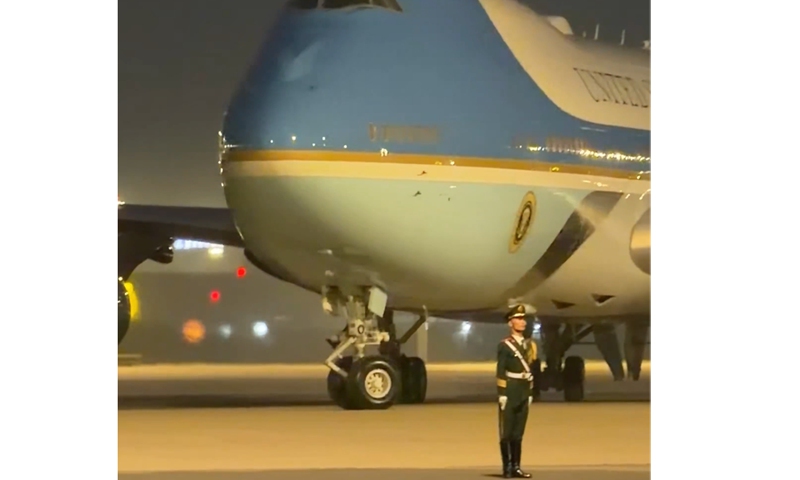
A screenshot from a video posted by Jon Michael Raasch, White House correspondent for the Daily Mail, shows a Chinese People's Liberation Army soldier standing motionless beside the runway as US President's Air Force One taxis behind him at Beijing Capital International Airport.
As US President Donald Trump arrived in Beijing on May 13, a brief moment on the tarmac quickly captured global attention: amid the deafening roar and gusts from Air Force One, a People's Liberation Army ceremonial guard stood perfectly still. The footage, shared by Daily Mail's White House reporter and viewed millions of times online, sparked widespread praise for the soldier's discipline and composure, with many saying it reflected the precision and China's ceremonial dignity.
The soldier in the viral video is 23-year-old Liu Zhencheng. On camera, he stands resolute, upright and perfectly still; yet in person, he reveals a more youthful, relaxed side, occasionally breaking into a shy smile. When speaking to the Global Times about his role as a "national gateway ceremonial guard" — what he calls the "first post" of diplomacy — his expression turns firm, his voice filled with pride and confidence.
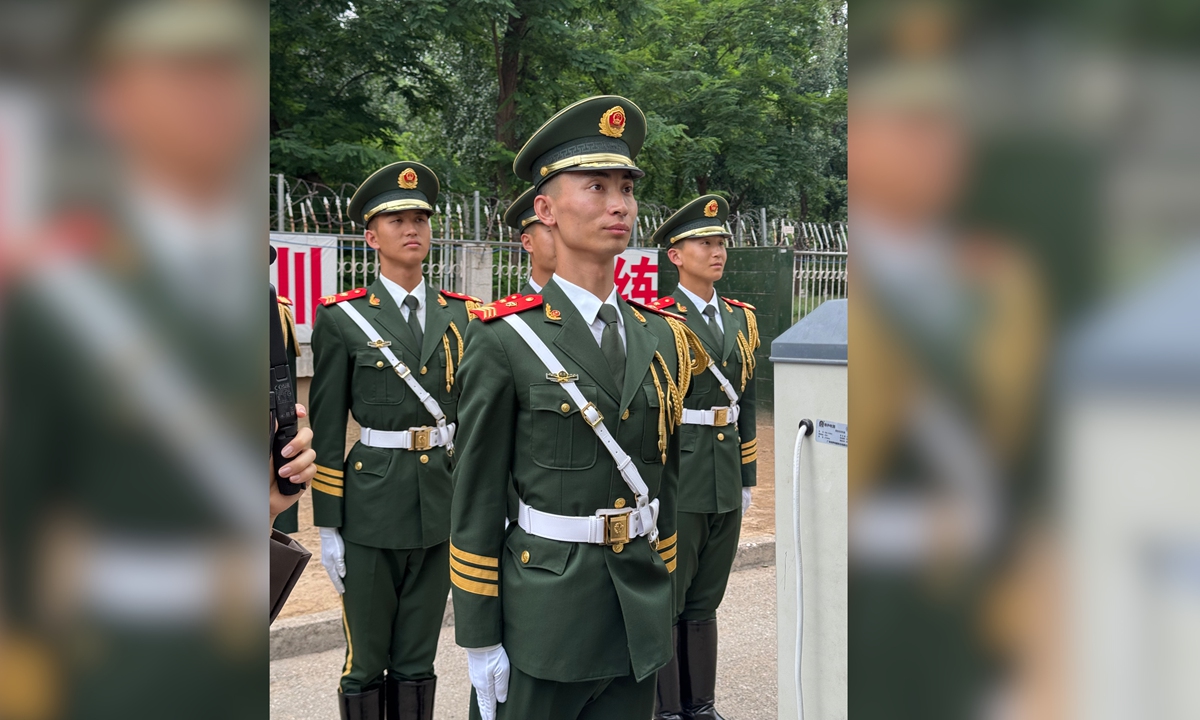
Liu Zhencheng during the eclusive interview with the Global Times Photo: Deng Xiaoci/GT
"When I stand there, I am not only representing myself. I am also representing the image of Chinese soldiers and major-country diplomacy. It is like the first calling card handed out in major-country diplomacy - we must present China's and Chinese soldier's image well to the world. That is why I must maintain an unshakable posture," Liu Zhencheng told the Global Times.
Recalling the scene at the time, Liu said the aircraft was less than 20 meters away from him at its closest point. The noise caused temporary ringing in his ears, while the heat from the engines pounded against his back, making his body instinctively lean forward.
"It all comes down to our daily training — relying on physical stability to hold ourselves steady," he said.
Asked about the wide attention the footage of his duty assignment drew on overseas social media, Liu admitted that it came as something of a surprise.
"For us, it was just an ordinary duty assignment, no different from daily training," he said. Liu noted that their routine training is already conducted according to real-combat standards. Only by treating the training ground like a battlefield, he said, can they maintain a steady mindset and calmly complete every mission when the real task comes.
The Global Times learned that, becoming a national gateway ceremonial guard requires a rigorous selection process. The first requirement concerns physical appearance: candidates are generally required to be between 1.85 meters and 1.90 meters tall, with a well-proportioned and upright build — neither too heavy nor too thin.
After being selected, they face daily intensive training. Their daily routine includes around two hours of standing-at-attention drills. To better simulate real duty conditions, training also includes strong winds, noise and other real combat-like scenarios, requiring the ceremonial guards to maintain standard military posture, physical stability and the best possible image of a soldier under pressure and interference.
Due to the special nature of their duties, the guards follow strict uniform requirements: they do not wear single-layer clothing in summer or padded clothing in winter; ceremonial uniforms and military boots are their standard attire.
Busy yet proud
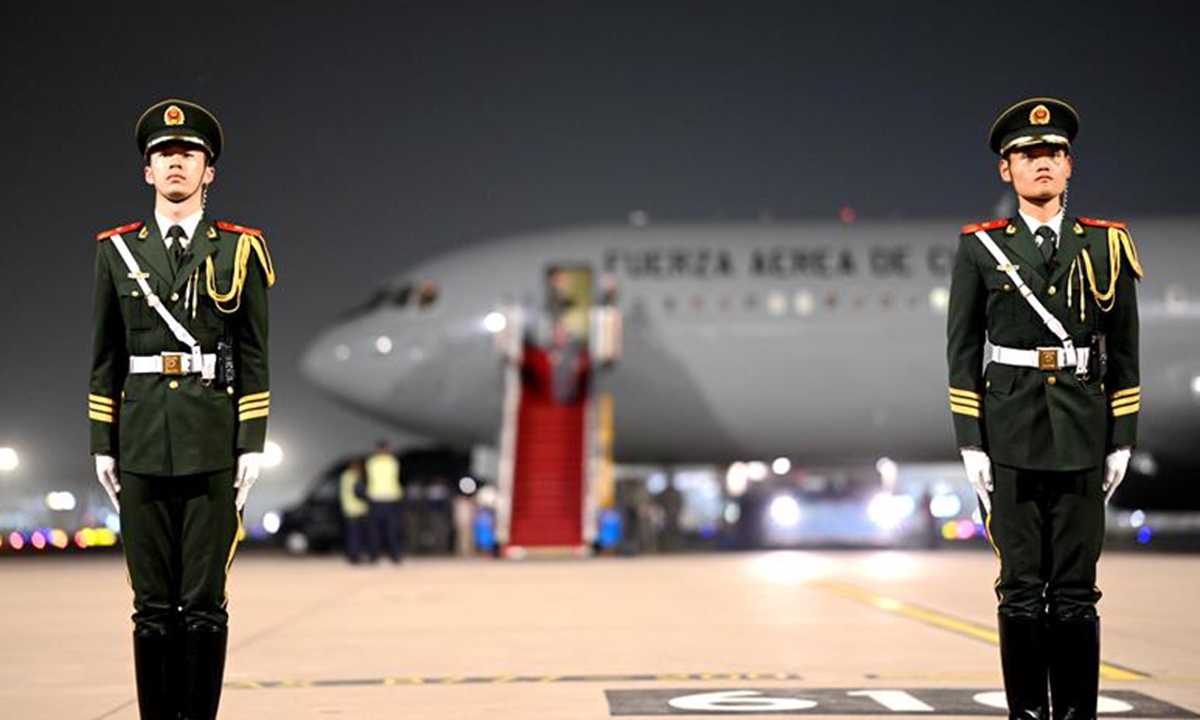
Photo: People's Liberation Army ceremonial guards perform duty
Over the past six months, leaders or heads of government from all other four of the five permanent members of the UN Security Council have visited Beijing — a rare diplomatic scene in the more than 80 years since the end of World War II. As foreign heads of state and political dignitaries continue to arrive in China one after another, Liu and his fellow soldiers stand firm on the front line of major-country diplomacy, with their duties becoming more frequent and their training and support tasks more demanding.China's diplomatic engagements have become so frequent that "tracking China's diplomatic schedule" has itself become a popular topic in public discourse. According to media statistics, leaders of all G7 countries except Japan have visited China. The list of visiting leaders from developing countries is even longer, including General Secretary of the Communist Party of Vietnam Central Committee, Vietnamese President To Lam, Sheikh Khaled bin Mohamed bin Zayed Al Nahyan, Crown Prince of Abu Dhabi, United Arab Emirates, Mozambican President Daniel Chapo, and Tajik President Emomali Rahmon, among others.
For Liu, behind the increasingly busy schedule lies the pride of a Chinese soldier personally witnessing the country's diplomatic moments. "I believe the increasingly frequent diplomatic activities demonstrate the continuous rise of China's comprehensive national strength," he said.
Liu said he will continue to stand every post well. "As a Chinese soldier, I have the confidence and ability to complete every duty assignment in the future, and to continue presenting the image of Chinese soldiers and the image of major-country diplomacy," he said.
RELATED ARTICLES