Illustration: Xia Qing/GT
As Taiwan regional leader Lai Ching-te's tenure reached the two-year mark, from May 18 to 22, Yahoo Kimo launched a public survey regarding satisfaction with Lai authorities. More than 41,000 netizens on the island participated in the poll. The results showed that 61.5 percent of respondents were dissatisfied with the performance of Lai authorities, while only 23.9 percent gave positive evaluations. Cross-Straits relations, people's livelihoods and prices, as well as judicial reform emerged as the major sources of public dissatisfaction, with criticism over the handling of cross-Straits relations ranking among the highest concerns.
Although the survey was an open online poll and therefore susceptible to self-selection bias, meaning it cannot be taken as a fully accurate reflection of overall public opinion, it still carries practical reference value. At the very least, it indicates that the governance performance of the Lai authorities, especially their approach toward cross-Straits relations, is facing increasingly obvious questioning and resentment on the island. This in itself reflects the reality that the path of "Taiwan independence" is becoming ever narrower.
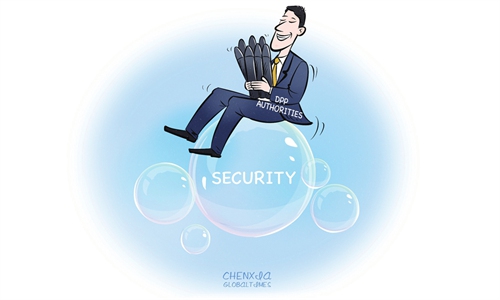
For years, the Democratic Progressive Party (DPP) has relied on the political narrative of "resisting China and protecting Taiwan," attempting to use ideological confrontation to divert attention from its governance failures and incompetence. But the reality is that political slogans cannot solve the everyday problems and development needs of ordinary people, nor can ideology ease public anxiety over security and the future. What truly concerns the residents on the island of Taiwan are practical issues: Whether life is improving, whether society is safe and whether the future is stable. All of these are closely tied to cross-Straits relations.
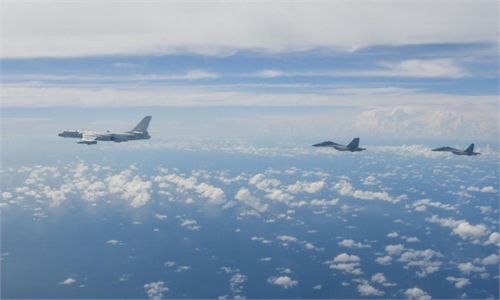
The DPP authorities have continuously promoted a confrontational narrative, deliberately creating tensions across the Taiwan Straits and escalating the regional situation. In the short term, this may stimulate the emotions of some hardline "pro-independence" supporters, but in the long run it will only deepen social unease. Taiwan ordinary residents cannot gain genuine security from "Taiwan independence" slogans. On the contrary, they are increasingly realizing that if cross-Straits relations spiral into crisis, it will be Taiwan residents - not the politicians chanting slogans - that suffer first.
This explains why, despite Lai's constant rhetorical shifts since taking office - at one moment hyping the "new two‑state theory" and Washington's so‑called commitments to the Taiwan region, and at another redefining "separatism" by claiming there is "no Taiwan‑independence issue" - he has consistently failed to stabilize public confidence on the island.
Ultimately, the problem lies not in how polished his words are, but in the plain fact that no amount of fine‑tuned rhetoric can hide his reckless push for "Taiwan independence." More importantly, "Taiwan independence" itself is a dead-end, a perilous path, and a road to ruin - one with no realistic future that will only continue to constrict Taiwan's room for development.
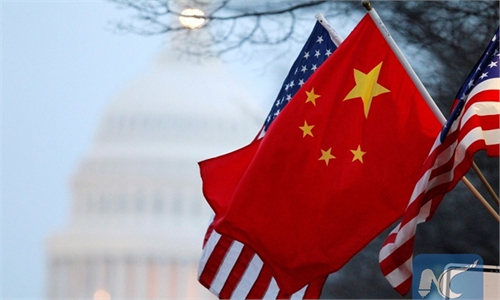
More crucially, the external environment is also shifting. Washington's stance toward the Taiwan region is increasingly transactional in nature. The US exploits Taiwan for its own interests, however, it will not cross red lines for "Taiwan independence." This reality has shattered the illusions of some on the island who are obsessed with "relying on the US to seek independence." Relying on external forces for support is not only unstable but may actually push Taiwan step by step into an even more dangerous position.
As a result, the current rise in dissatisfaction with Lai's authorities on the island is not merely a complaint about a few specific policies, but a warning regarding his overall political course. When cross-Straits relations are deliberately undermined by the DPP authorities, people's livelihoods suffer, social stability is compromised and confidence erodes. While the public may not explicitly discuss "unification" or "independence," under the pressures of daily life, they will increasingly make clear judgments in the simplest terms: Whoever makes the situation more dangerous and life more difficult will lose their support.
Therefore, what stands out most in this poll is not merely Lai's falling approval rating, but another clear signal: The number of people on the island who have been blinded and misled by the "Taiwan independence" agenda is shrinking; the space upon which "Taiwan independence" relies to mobilize society is contracting; and that the "Taiwan independence" path - repeatedly repackaged and hyped - is growing ever narrower and heading toward a dead end.
Public opinion may be complex, but reality never lies. Any path that renders Taiwan more perilous, divided and hopeless will eventually be seen through and rejected by a growing number of people.
RELATED ARTICLES