Lai Ching-te’s speech fully demonstrates ‘Taiwan independence’ is China-US common enemy
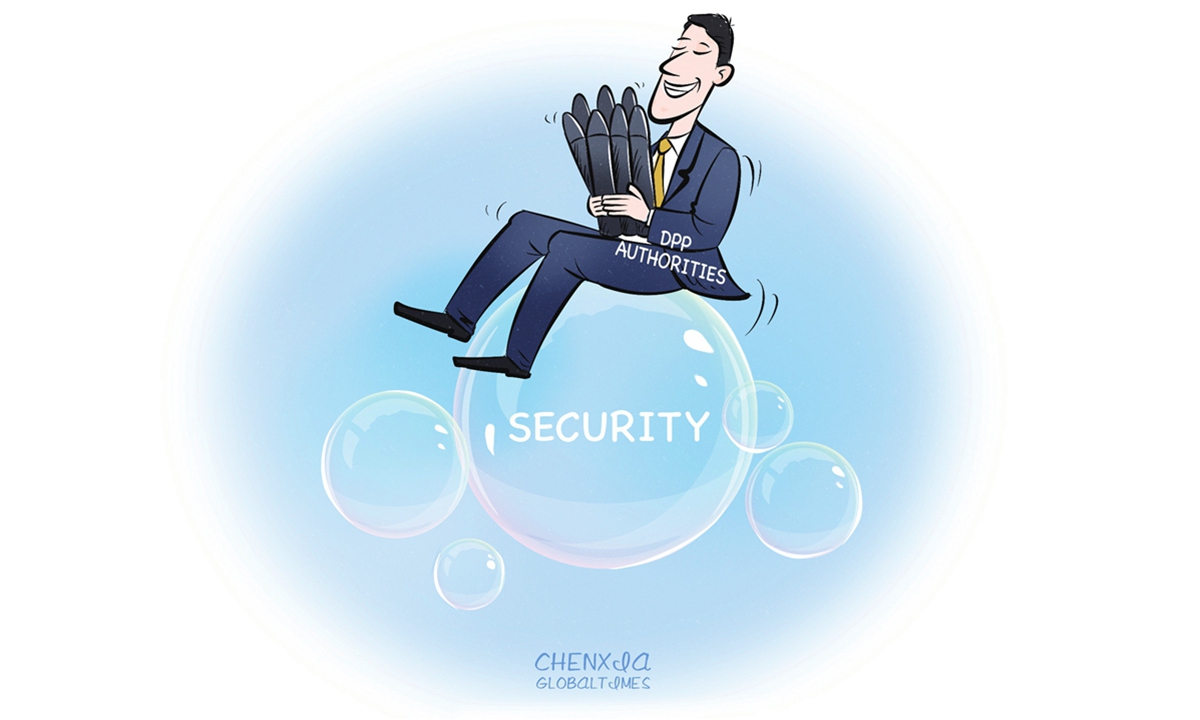
Illustration: Chen Xia/GT
In a speech marking his second anniversary in office, Taiwan regional leader Lai Ching-te superficially projected a posture of "willingness to engage in dialogue" and "maintaining the status quo of peace and stability across the Taiwan Straits." Even when answering a question from The Wall Street Journal, he portrayed himself as a so-called "guardian of peace and stability in the Taiwan Straits" at a news conference marking two years since taking office, while accusing the Chinese mainland of "undermining peace and stability." At first glance, his wording might mislead those unfamiliar with cross-Straits relations into thinking he is showing "restraint," "moderation," or "pragmatism."
However, to truly understand Lai's intentions, one cannot focus only on these remarks. It is essential to examine what he has said and done over the past two years. Only by considering all of this together can we fully expose how stubborn his "Taiwan independence" position truly is and see through the deceptive nature of his speech.
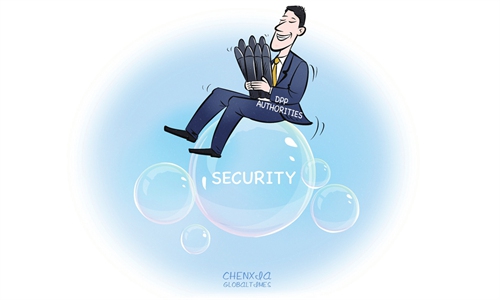
On the surface, Lai's speech contained three particularly deceptive layers of packaging. First, he waved the banner of "democracy" and "the people," claiming that "Taiwan's future must be decided jointly by its 23 million people." Second, he invoked the banner of "peace" and "exchanges," stating his willingness to engage in "healthy and orderly exchanges" with the Chinese mainland under the principles of "equality and dignity." Third, he used the banner of "defense" and "status quo," asserting that increased "defense investment" is not for provocation but to "avoid war."
This entire narrative perfectly echoes the rhetorical template that has been used by certain forces in the US and other Western countries in recent years: packaging "Taiwan independence and separatism" as "democratic self-determination," framing "pursuing independence through military means" as "self-defense," twisting "creating confrontation" into "defending the status quo," and then accusing the Chinese mainland's legitimate efforts to uphold the one-China principle and oppose national division as "undermining the status quo." This is the most insidious aspect of Lai's approach.
The Taiwan question isn't an issue that can be manipulated by rhetoric. It is fundamentally a matter concerning China's sovereignty and territorial integrity. There is but one China in the world, and Taiwan is an inalienable part of China's territory. Anyone who denies this is undermining the very foundation of peace and stability in the Taiwan Straits.
Therefore, judging whether someone is pursuing "Taiwan independence" cannot rely solely on whether they admit it in words, but must be based on whether their words and actions aim to create national division. Lai has openly called himself a "practical worker for Taiwan independence." Now he is attempting to repackage himself as someone who has "nothing to do with Taiwan independence" and is merely "maintaining peace." This self-contradiction and self-slapping logic leaves him no room for whitewashing.
Lai's so-called "two states not subordinate to each other" narrative is essentially the outright "two-state theory." It superficially borrows the shell of the "Republic of China" while creating the false perception of "one country on each side." If this is not "Taiwan independence" in disguised form, what is it? Lai's speech may have lowered its tone, but it has not abandoned this separatist logic. He has simply replaced his previous, more blatant "Taiwan independence" statements with more deceptive and misleading rhetoric.
Therefore, when reading Lai's speech, one must not be fooled by the surface wording. We cannot only listen to his claims of being "willing to engage in exchanges" without examining whether he is destroying the preconditions for such exchanges. We cannot only hear him say he wants to "safeguard peace" without seeing whether he is deliberately provoking and escalating confrontation. We cannot only accept his claim of "maintaining the status quo" without recognizing that his so-called "status quo" has already been stealthily replaced with a "Taiwan independence" position.
In the end, Lai's speech is not about abandoning "Taiwan independence," but about repackaging it. It is not about easing tensions, but about provoking confrontation. It is not about safeguarding peace, but about shifting blame onto others. The more "moderate" Lai tries to appear, the stronger his deception becomes. The more he portrays himself as a "guardian," the clearer his true intentions become.
A spokesperson for the State Council Taiwan Affairs Office today sharply refuted Lai's hypocritical facade, pointing out that his speech was rife with lies and deception, hostility and confrontation. Stubbornly clinging to the erroneous stance of "Taiwan independence," he peddles fallacies such as "sovereign independence" and "mutual non subordination," hypes up the "mainland threat," escalates cross-Straits confrontation, and deliberately pursues "Taiwan independence through military means" and "relying on external forces for separatist gains," undermining peace and stability across the Taiwan Straits. This once again confirms that he is nothing short of a saboteur of cross-Straits peace and a creator of crises in the Taiwan Straits.
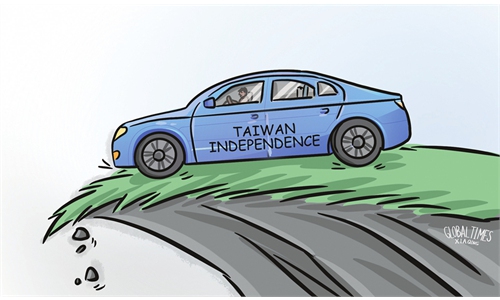
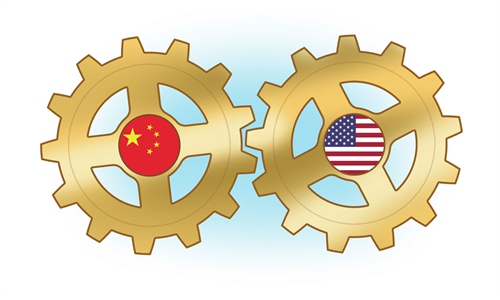
"Taiwan independence" is fundamentally incompatible with peace and stability in the Taiwan Straits. "Taiwan independence" has become the greatest risk factor affecting China-US relations and undermining peace and stability in the Asia-Pacific region. The malignant expansion of "Taiwan independence" separatist forces will only push Taiwan into the abyss and does not serve US interests. In this sense, curbing "Taiwan independence" forces and maintaining peace and stability across the Taiwan Straits aligns with the common interests of both China and the US.
Lai's speech today further proves that "Taiwan independence" is a common enemy of both China and the US.
RELATED ARTICLES