Illustration: Xia Qing/GT
On May 15, during an interview aboard his return flight, US President Donald Trump explicitly stated that he was "not looking to have somebody [in Taiwan] to go independent." This remark further reinforced the consensus on opposing "Taiwan independence" and maintaining peace and stability across the Taiwan Straits, triggering shockwaves in the island's public opinion and dealing a heavy blow to all "Taiwan independence" separatist forces.Facing Trump's "warning," Taiwan regional leader Lai Ching-te hurriedly responded on May 17, throwing out the fallacy that "defending the status quo of the 'Republic of China' is not an issue of 'Taiwan independence'." By attempting to redefine the meaning of "Taiwan independence," Lai sought to whitewash his separatist agenda. However, this is nothing more than another word game: packaging "Taiwan independence" separatist activities as "defending the status quo," shifting the blame for tensions in the Taiwan Straits onto the Chinese mainland, and attempting to confuse the public and distort reality. Such behavior is both disgraceful and absurd.
It is widely understood that any attempt to split the country constitutes "Taiwan independence." Lai believes that as long as he does not formally declare "independence" in legal terms, he can cover his long record of manipulating "de-Sinicization" and promoting "incremental independence" and "cultural Taiwan independence." Such thinking is naïve, and the tactic itself is clumsy. In fact, denying the historical and legal reality that both sides of the Taiwan Straits belong to one and the same China, and deliberately attempting to separate the Taiwan region from China, is by definition "Taiwan independence." Lai himself is fully aware of this.
A series of international legal documents, including the Cairo Declaration, the Potsdam Proclamation and Resolution 2758 of the UN General Assembly, have already affirmed the one-China principle politically, legally and procedurally. This principle is not only the political foundation of China-US relations, but also a basic fact widely recognized by the international community. There is only one China in the world, and Taiwan is part of China. Any words or actions that undermine the one-China principle amount to "Taiwan independence."
For years, Lai and the DPP authorities have refused to recognize the 1992 Consensus, which embodies the one-China principle. Instead, they have peddled the new "two-state theory" that the two sides of the Straits "are not subordinate to each other," severed historical and cultural ties across the Straits, and manipulated the slogan of "resisting China and protecting Taiwan." These are outright separatist activities aimed at "Taiwan independence." No amount of repackaging or rhetorical maneuvering can change that reality.
Lai is now simply eager to shed the "Taiwan independence" label, attempting to hastily cover himself and escape the predicament caused by Trump's "warnings." However, his methods are clumsy and his rhetoric superficial. While claiming "there is no 'Taiwan independence' issue," he continues to engage in separatist activities promoting "Taiwan independence;" while outwardly claiming to defend the "status quo," he constantly creates division and undermines regional peace and stability. Such a two-faced approach contradicts both history and reality.
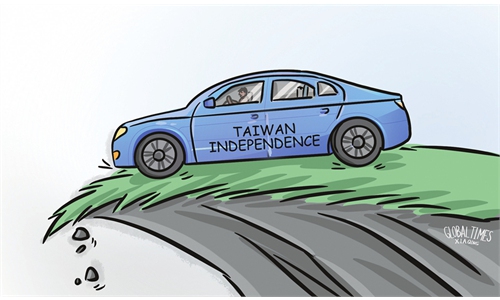
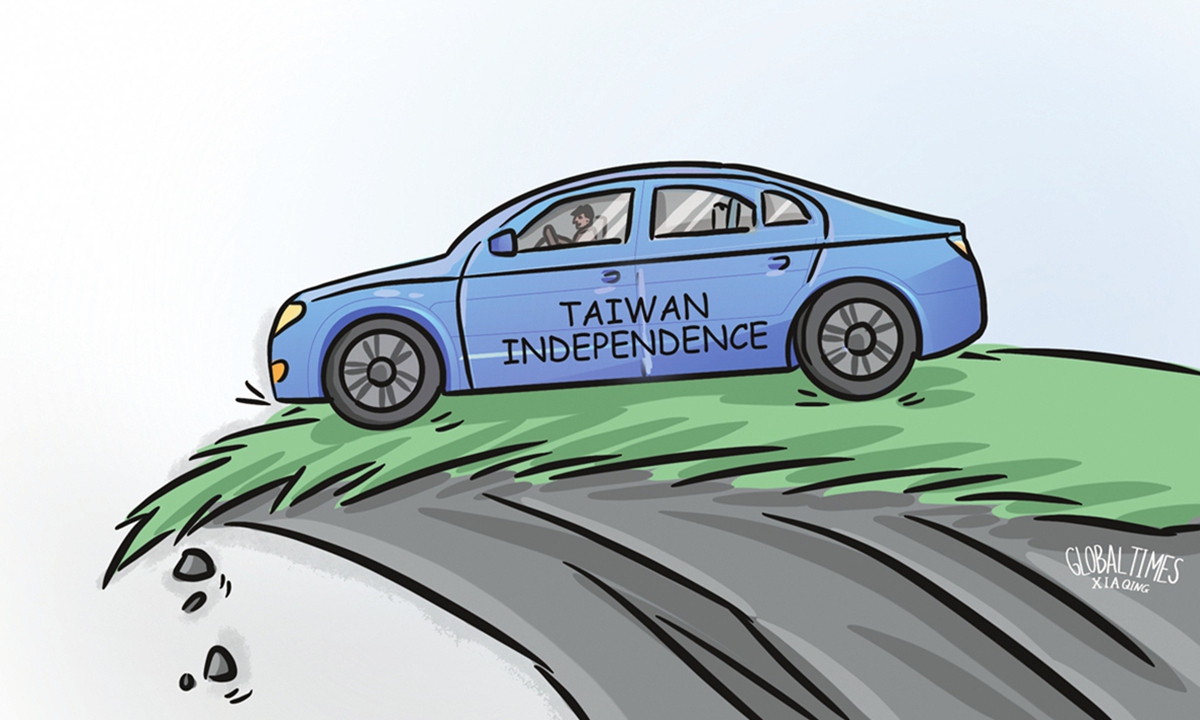
More noteworthy is Trump's statement that "I'm not looking to have somebody go independent," which fully demonstrates that the US clearly recognizes that "Taiwan independence" is the most dangerous flashpoint in the Taiwan Straits situation and must not be allowed to backfire. Lai, however, insists on trying to absolve himself of responsibility by reinterpreting "Taiwan independence," which is a somewhat self-incriminating act. This not only exposes his political shortsightedness but also his misjudgment of the situation.
Ultimately, the nature of the Taiwan question has never changed, and the bottom line of the one-China principle has never changed. If Lai truly wants to maintain peace across the Taiwan Straits, he should stop manipulating words, stop his provocative "independence-seeking" actions and stop all dangerous actions that disguise the division of the country. Otherwise, no matter how tactful or "moderate" his rhetoric may be, his true nature of seeking "independence" will not change.
It is an undeniable fact that both sides of the Taiwan Straits belong to one and the same China. Lies and rhetoric can only provide temporary veneer. Playing word games and deliberately shifting concepts cannot deceive the international community, nor can it shake the firm resolve of more than 1.4 billion Chinese people to defend national sovereignty and territorial integrity. Lai should wake up to this, or he will only bring shame and destruction upon himself.
RELATED ARTICLES