Photo: IC
Thomas L. Friedman is a columnist for The New York Times and the author of the global bestseller The World Is Flat. For many years, he has been a key observer of globalization narratives. Today, amid new shifts in global affairs and technological transformation, Friedman published an article titled "The US and China Have a Common Foe" in The New York Times earlier this month, once again advancing a point worth serious attention: The world has moved from being "interconnected" to being "interdependent," from being "flat" to being "fused." Against this backdrop, while competition between China and the US undoubtedly exists, both also face common threats that cannot be ignored.In Friedman's view, the most important and immediate challenge for China and the US is "managing this new AI species we have conjured up."
The development of AI is lowering the barriers that once allowed only major powers to access certain capabilities, making them available at very low costs to small organizations, extremist groups, criminal networks and even individual actors. This is particularly evident in the field of cyber operations, where the latest generation of agent-based AI models has demonstrated astonishing capabilities in vulnerability discovery, system infiltration and attack facilitation. In other words, future threats to the security of China and the US will not only stem from traditional competition among countries, but also from highly concealed and dangerous non-state actors empowered by AI.
This means that beyond competition, China and the US must seek at least a minimal level of cooperation in AI governance. Otherwise, if AI becomes uncontrollable in terms of security governance, it could disrupt the fundamental order on which human society depends. In a sense, this is no longer a problem any single country can solve alone but a systemic challenge that all humanity must confront together.
Friedman's judgment captures a deeper transformation in today's international politics: technological diffusion and misuse, systemic vulnerabilities, and cross-border cascading effects are generating new global risks. The more interconnected the world becomes, the more synchronized the risks are; the tighter the links, the greater the potential amplification of disruption. For this reason, humanity must operate at the scale of the planet, engaging in higher-level governance, innovation, cooperation and coexistence to address this new era. This also aligns with the cooperative vision advocated by the China-proposed Global Governance Initiative.
If we shift our perspective back to East Asia and the Taiwan Straits, we find another real and urgent common threat between China and the US: "Taiwan independence." From its very beginning, "Taiwan independence" has been the chief disruptor of peace across the Taiwan Straits. It pursues the goal of separating the country, follows a path of creating confrontation, continuously amplifies cross-Straits hostility and undermines the foundation of stability in the region.
In recent years, certain political forces on the island have persistently pushed for "de-Sinicization" and intensified so-called "sovereignty confrontations," attempting to achieve "independence" by relying on external forces or through military means. This has gradually pushed Taiwan into an increasingly dangerous situation, threatening China-US relations and undermining the stability of the world order. Facts have repeatedly proven that "Taiwan independence" means war; there is no peace in division and provocation will only bring disaster.
Both China and the US should take a clear and firm stance against "Taiwan independence" separatist forces. From China's perspective, opposing "Taiwan independence" is an inevitable requirement for safeguarding national sovereignty and territorial integrity. From the perspective of US practical interests, should the situation in the Taiwan Straits spiral out of control, it would trigger not only regional conflict but also disrupt global supply chains, financial markets and the geopolitical order - a situation from which the US would also be unable to remain unscathed. In other words, although China and the US have partly different positions and statements on the Taiwan question, there is a high degree of consensus on the fact that neither side wants "a full-scale war to break out in the Taiwan Straits." "Taiwan independence" separatist forces are precisely the key disruptive factor pushing this common bottom line to the brink of danger.
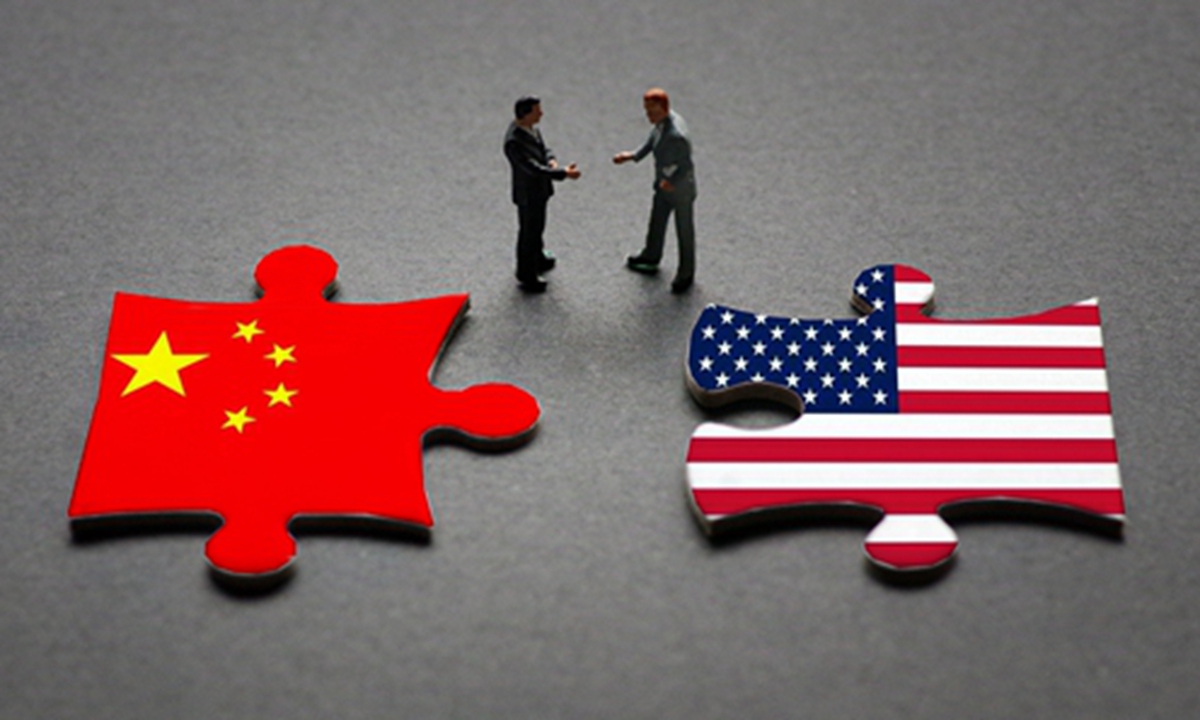
Viewed within a broader historical context, the two common enemies facing China and the US today are, first, the global asymmetric risks posed by the runaway development of AI, and second, the direct threat to peace in the Taiwan Straits and regional stability posed by "Taiwan independence" separatist forces. The former threatens the very foundations of future order for all of human society, while the latter threatens the basis of regional peace and even global security. Although the two differ in nature, they both point to the same reality: In a highly interconnected world, if any party approaches matters solely from a zero-sum perspective while neglecting common security, shared responsibility and a shared future, ultimately everyone will suffer.
As Friedman has noted, in a "fused world," a series of global challenges has intertwined human destinies as never before. Today's humanity no longer exists in isolation; rather, we are embedded within the same network, the same supply chain and the same risk architecture, with our fates intertwined and our security inextricably linked. No single party can remain unscathed in the face of a global crisis. We must either build a complex and adaptive alliance of cooperation to manage risks, guide technology and maintain peace. Otherwise, we will sink together amid mutual exhaustion, miscalculations and systemic chaos. From this perspective, Friedman's assessment of the "fused world" shares an intrinsic consistency to some extent with the concept of a community with a shared future for humanity.
Ultimately, the destinies of humankind are deeply intertwined and inseparable - a reality that transcends human will. Faced with a common enemy, what China and the US need is not an emotional clash, but rather clearer judgment, more responsible governance, a more resolute opposition to "Taiwan independence" separatist forces and a more steadfast commitment to safeguarding world peace and stability.
RELATED ARTICLES