Illustration: Xia Qing/GT
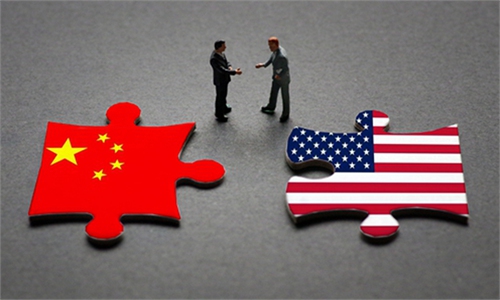
US President Donald Trump's upcoming state visit to China has drawn widespread global attention. A stable China-US relationship not only benefits both countries but also serves the interests of the entire world. To this end, both sides need to properly manage the serious obstacles and challenges in the bilateral relationship, especially the Taiwan question.Objectively speaking, the US unequivocally opposing "Taiwan independence" and stopping arms sales to the island serves the common and long-term interests of both China and the US. As major global powers, respecting each other's core interests is the foundation for ensuring the stability of bilateral relations, and also constitutes the prerequisite for both countries to jointly safeguard victorious outcomes of World War II and promote the constructive evolution of the international landscape.
The status of the Taiwan region has been definitively fixed by a series of international legal instruments, including the Cairo Declaration, the Potsdam Proclamation, Japan's Instrument of Surrender and Resolution 2758 of the UN General Assembly, all of which enjoy firm support from the international community. The "Taiwan independence" separatist forces have denied victorious outcomes of World War II, rejected the international legal validity of the one-China principle and resisted the tide of economic globalization. Aligning with such forces would undermine the legitimacy of US foreign policy and tarnish Washington's international image.
The "Taiwan independence" separatist forces undermine China's sovereignty and territorial integrity, violate the purposes and principles of the UN Charter, and challenge the broad international consensus and basic norms governing international relations. They also pose a major challenge to America's economic revitalization and growth in strength.
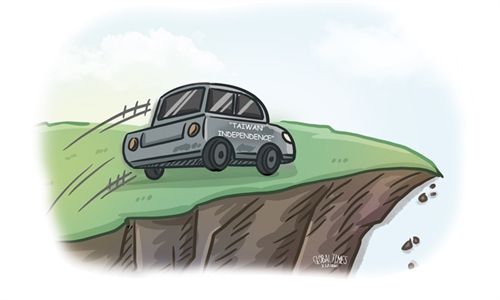
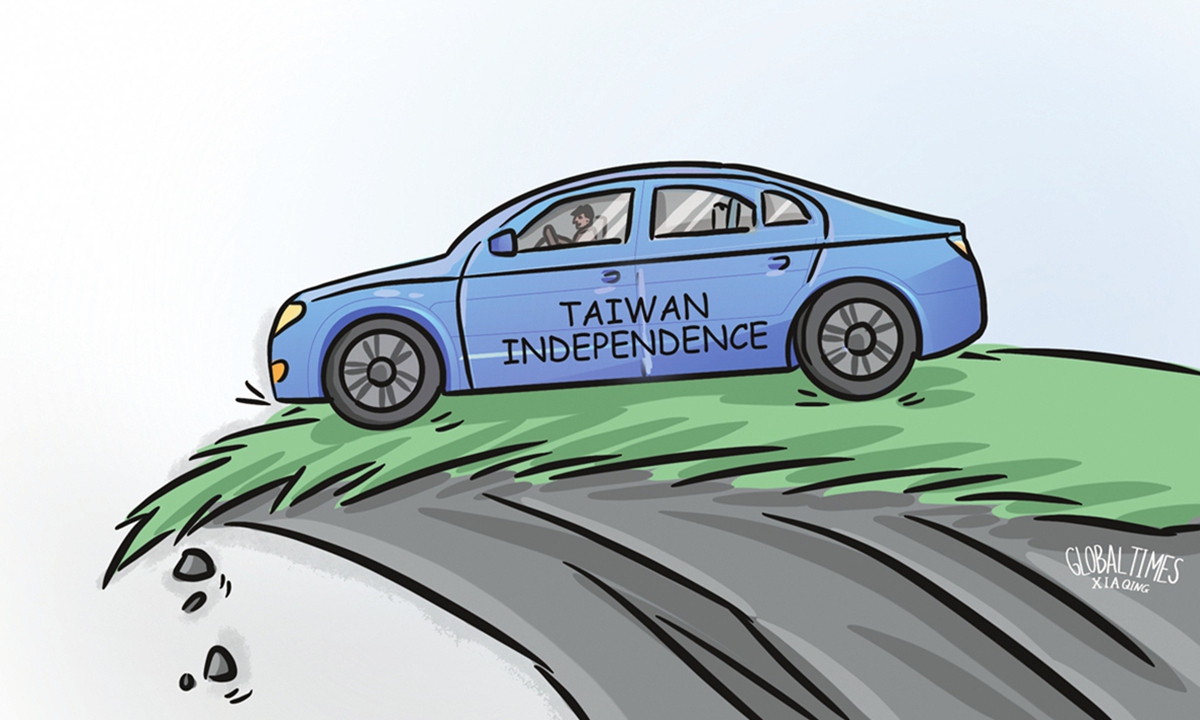
"Taiwan independence" separatist forces can be described as one of the greatest disruptors in today's world, where security and economic interests are deeply intertwined. These forces continuously provoke the Chinese mainland, attempt to stir up hostility toward the mainland among Taiwan compatriots, push the US to increase arms sales to the region, and stimulate confrontation between China and the US in pursuit of their misguided agenda of "seeking independence by relying on external forces" and "resisting reunification by force." These forces, which gamble on provoking great-power rivalry and cross-Straits confrontation, will ultimately become a burdensome liability that the US will find difficult to manage.
Even more alarming, these "Taiwan independence" separatist forces, driven by their own self-interests, have attempted to provoke potential conflicts between China and the US to advance their hidden agenda of independence, disregarding the fact that such conflicts would bring catastrophic consequences to global finance, trade, industrial and supply chains, and the international political environment, which would not serve the common interests of either China or the US.
Faced with incessant provocations by the "Taiwan independence" separatist forces, China and the US must step up cooperation, effectively contain these forces, and prevent unforeseen and uncontrolled situations across the Taiwan Straits.
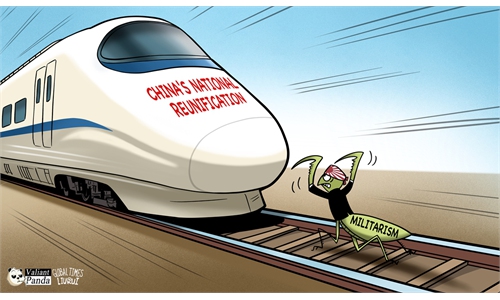
The US side should abide by the spirit of the three China-US joint communiques, especially the August 17 Joint Communique, stop arms sales to Taiwan region and terminate any military ties between the US and the region. Arms sales to Taiwan will only send wrong signals, encouraging the "Taiwan independence" forces to stubbornly cling to the illusion of "seeking independence by force," and turning Taiwan into a powder keg in the Taiwan Straits. The US should explicitly state its opposition to "Taiwan independence" and support for China's peaceful reunification, demonstrating its commitment to the one-China principle and its clear opposition to separatist acts, so as to align its position with China's on the Taiwan question.
As two major global powers, both China and the US bear the responsibility to firmly oppose "Taiwan independence" and safeguard the outcomes of World War II and the cornerstone of the post-war international order.
At this critical juncture when China-US relations are entering a new stage, containing and opposing "Taiwan independence" should and will inevitably become a core issue in China-US cooperation. We believe that under the strategic guidance of the two heads of state, China-US relations will continue to overcome difficulties and move forward in the direction eagerly anticipated by both countries and the wider international community.
The author is a professor at the Institute of International Relations of the China Foreign Affairs University. opinion@globaltimes.com.cn
RELATED ARTICLES