China’s call for revitalizing, strengthening UN wins support
‘Five proposals show commitment to multilateralism, global governance vision’
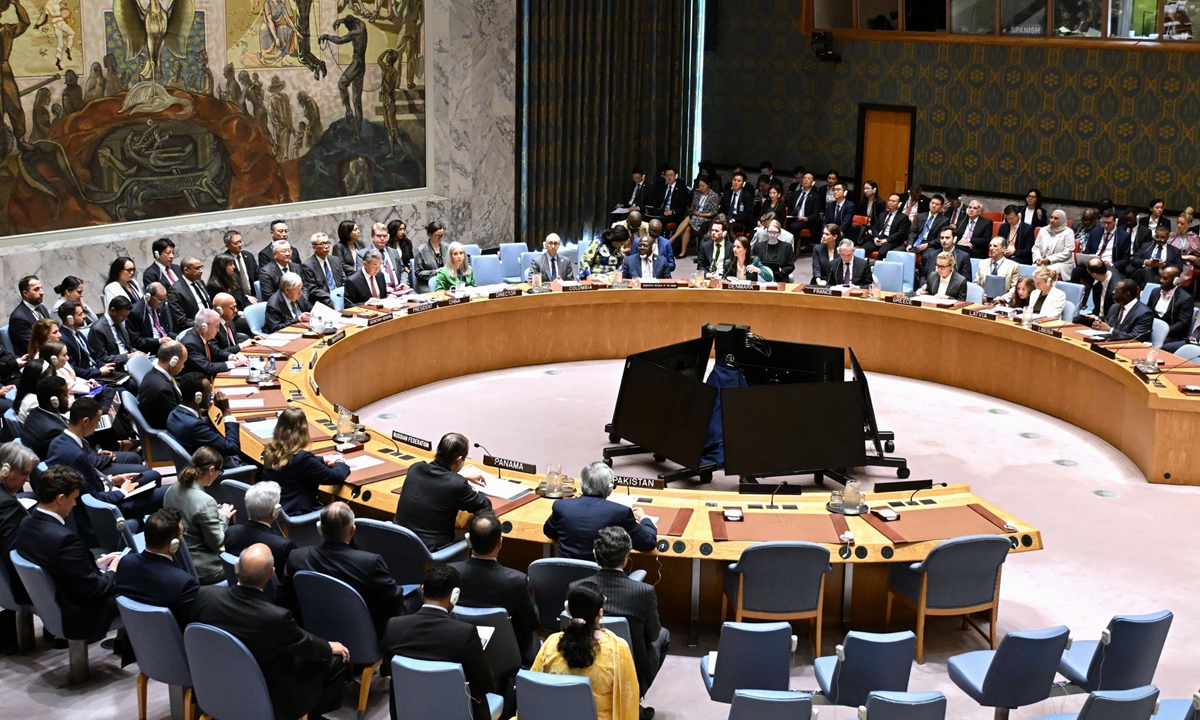
The UN Security Council, of which China is the rotating president for May, holds a high-level meeting on strengthening the international system at the UN headquarters in New York on May 26, 2026. Photo: VCG
As mounting conflicts, geopolitical divisions and humanitarian crises continue to test the postwar international order, China has reiterated its firm support for the UN Charter and multilateralism at a high-level United Nations Security Council meeting, where the country has also called for revitalizing the UN-centered international system and strengthening global governance mechanisms.
China's consistent emphasis on defending the UN framework has drawn wide support, with Chinese observers noting that the international community is increasingly looking for stability and support for a more just and equitable global governance system.
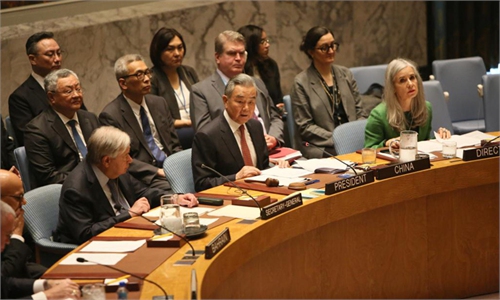
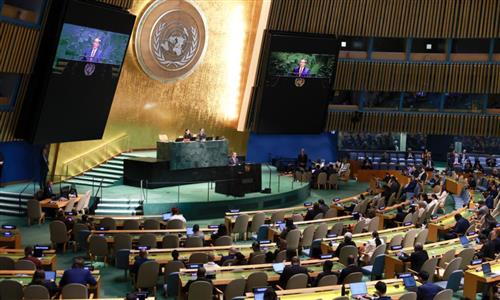
The stance was reflected during the United Nations Security Council High-Level Meeting themed "Upholding the Purposes and Principles of the UN Charter and Strengthening the UN-centered International System" held Tuesday at UN headquarters in New York.
Chairing the meeting, Chinese Foreign Minister Wang Yi, also a member of the Political Bureau of the Communist Party of China Central Committee, put forward five proposals, calling on the international community to stand united and act together to defend, revitalize and strengthen the UN.
Together with China's previously proposed global governance initiative, Beijing's advocacy for multilateralism and support for the UN-centered system also received backing from figures including UN Secretary-General António Guterres and foreign ministers from multiple countries.
Reinvigorating the UN system
"We are gathered here at a time when the international situation is undergoing the most complex and profound changes since the end of World War II. The dark clouds of war keep gathering and the law of the jungle is resurging. The giant ship of human civilization is sailing into dangerous waters, and world peace and development is at a crossroads," Wang said at the UN Security Council meeting in New York, according to the Chinese Foreign Ministry release posted on its website on Wednesday.
Wang stressed that the challenges confronting the world today test the international community's conviction to safeguard peace, its resolve to uphold justice, and its courage to pursue reform and innovation. "We must stand united and act together to defend, revitalize and strengthen the UN," he said.
Against the backdrop of intensifying global tensions, Wang made five proposals, calling for revitalizing the UN Charter to demonstrate stronger leadership, revitalizing the authority of the Security Council to demonstrate stronger capacity for action, revitalizing global development cooperation to harness stronger mobilization capabilities, revitalizing global governance platforms to foster stronger execution capabilities, and revitalizing the effectiveness of the UN system to cultivate greater vitality.
He also said the root cause of the chaos in today's world is not that the Charter's spirit is outdated, but that the international order and the basic norms governing international relations, both set out in the Charter, are not being effectively upheld and observed.
Certain countries have successively withdrawn from multiple international organizations, raising widespread concerns that international legal norms and the existing international order are facing the risk of fragmentation. Against such a backdrop, China, as a key pillar of multilateralism, has proactively taken up the banner of safeguarding multilateralism and revitalizing the authority of the United Nations, Mao Ruipeng, a Senior Research Fellow of Shanghai Institutes for International Studies, told the Global Times on Wednesday.
This not only reflects the common expectations of the international community, but also demonstrates China's commitment to fulfilling its responsibilities as a major country, Mao Ruipeng added.
Mao Ruipeng said China's five proposals at the United Nations clearly outlined China's position and approach regarding the role of the UN. Reaffirming and strengthening the authority of the Security Council at the current moment, he noted, is aimed at calling on the international community to uphold principles such as multilateralism and non-interference in internal affairs, while improving global governance and resolving disputes through peaceful means and safeguarding regional and global peace and stability.
Wang's remarks come at a time of heightened international turbulence and escalating conflicts worldwide. Speaking at the same meeting, Guterres warned that "we are witnessing a dangerous erosion of respect for international law," adding fundamental principles such as sovereignty, territorial integrity and the prohibition on the use of force being "challenged or ignored." He also cited the highest number of conflicts since the founding of the United Nations.
Guterres' concerns echo ongoing crises across multiple regions. The conflict in the Middle East, which began in February, and the Russia-Ukraine conflict, which erupted in 2022, remain unresolved.
Whether it is the conflict in the Middle East, the Russia-Ukraine conflict, terrorism, climate change or public health crises, all these issues ultimately need to return to the framework of the United Nations and international law for effective resolution, which requires strengthening the UN while opposing power politics, unilateralism and exclusive alliances that treat might as right, Li Haidong, a professor at the China Foreign Affairs University, told the Global Times on Wednesday.
Even as Guterres voiced his concerns at the UN, conflicts and humanitarian crises continued unfolding across the world. According to reports from France 24 and Al Jazeera, Israeli attacks on southern Lebanon on Tuesday killed 31 people and wounded 40 others, while intensified strikes and forced displacement warnings targeted towns and villages in the south and east.
Meanwhile, disease outbreaks and armed conflict are also ravaging parts of Africa. The BBC reported Wednesday that the World Health Organization (WHO) warned Ebola-hit DR Congo faces a "catastrophic collision" of disease and conflict. WHO Director-General Tedros Adhanom Ghebreyesus said eastern DR Congo had become the center of a "catastrophic collision of disease and conflict" amid the Ebola outbreak in Ituri province, noting that WHO "cannot build community trust or isolate the sick while bombs are falling."
Facing such challenges, foreign ministers attending Tuesday's meeting also stressed the need to defend the UN system and peaceful dispute resolution.
Russia's Ambassador Vassily Nebenzia said, "Our duty is to cherish the Charter," while also pointing to what he described as "remilitarization" in certain countries. He said the countries defeated during the World War II are now seeking "plausible pretexts for rewriting its outcomes."
Mohammad Ishaq Dar, Pakistan's minister for foreign affairs, described the UN Charter as the "moral foundation of the international order" and called for peaceful settlement of disputes. "Diplomacy is not weakness," he insisted, noting that "peaceful settlement is not an option of last resort."
Concrete actions
The Chinese foreign minister noted that over the 55 years since the restoration of the lawful seat of the People's Republic of China in the United Nations, China, as a permanent member of the Security Council, has actively participated in and advanced the cause of the UN.
"Amid international turbulence and transformation, China holds its banner high. Amid global development impasse, China empowers and enhances. Amid major public crises, China races to help. When multilateralism runs into headwinds, China steps up to its responsibility," Wang said at Tuesday's meeting.
He noted that China has translated its commitment to multilateralism into concrete action worldwide, including assisting Africa in combating Ebola, promoting peace talks amid frequent global conflicts, and initiating mechanisms such as the International Organization for Mediation and the World Data Organization.
Such contributions, observers noted, are increasingly recognized by the international community. During his meeting with Wang, Guterres expressed his gratitude to China for its consistent commitment to upholding the UN Charter and international law.
The UN chief also noted that China is the most reliable partner for sustainable development and a robust contributor to UN peacekeeping operations, adding that the UN commends the series of global initiatives put forward by China in fields such as security, peace and development, and looks forward to working together to resolve conflicts, to ensure that peace, international law and multilateralism prevail, according to the Xinhua News Agency.
Such recognition is not isolated. During his meeting with Wang, Thai Deputy Prime Minister and Foreign Minister Sihasak Phuangketkeow thanked China for its efforts in mediating the border dispute between Thailand and Cambodia. They added that the world needs rules rather than unilateralism, and stressed the urgent need to jointly safeguard UN's authority.
According to the Chinese Foreign Ministry latest data, the Global Development Initiative put forward by China has mobilized funds amount to over $23 billion, supported over 1,800 cooperation projects, delivered over 10,000 capacity building programs for developing countries, and trained over 200,000 professionals in different fields, giving a strong boost to the development and vitalization of the Global South.
"Over the past 55 years, as the permanent member of the UN Security Council, China has been actively participating in and advancing the cause of the UN. At the new historical starting point, China will continue doing more things for greater good, championing multilateralism and pursuing greater solidarity to build a more just and equitable global governance system and move towards the goal of building a community with a shared future for humanity," Chinese Foreign Ministry spokesperson Mao Ning said at a regular press briefing on Wednesday.
Mao Ruipeng said China has continued to use its major initiative as a platform to advance international development cooperation, which also explains Beijing's emphasis on revitalizing global development cooperation at the UN meeting.
As the primary channel for global governance, the United Nations remains central to such efforts, Mao Ruipeng said, adding that China's call to reinvigorate global governance platforms and enhance the effectiveness of the UN system sends a clear message of support for UN reform, stronger international cooperation and its global governance vision.
RELATED ARTICLES