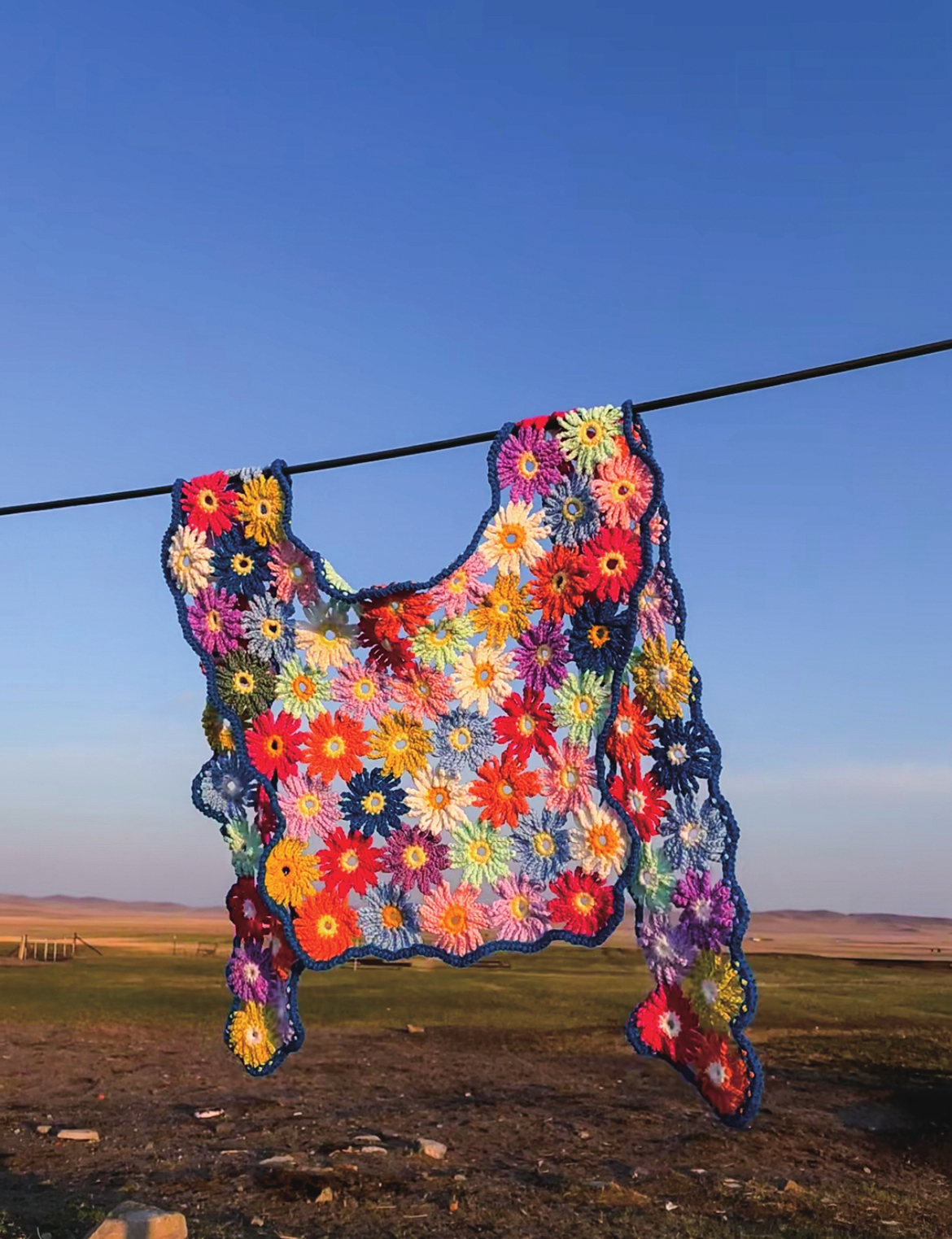
A hand-knitted shawl made by Chen Ru Photo: Courtesy of Chen Ru
In Hangzhou, East China's Zhejiang Province, a "sewing study room" is run by Yang Shuoqing, a local born in the 1990s who transformed her family's clothing repair shop into a self-study studio where customers learn to make their own bags, scarves, pet beds and jackets."Most of our students used to be elderly residents from nearby communities who wanted to repair clothes," Yang told the Global Times. "But now more and more young people come in carrying sketches and patterns, hoping to create their own DIY designs."
On the walls of the studio hang crocheted decorations and handmade fabric works. The courses, once focused on simple sewing techniques, now teach pattern drawing and garment design as younger customers seek increasingly personalized creations.
On Chinese lifestyle platform Xiaohongshu, or RedNote, the number of posts under the topic "sewing beginners" has surpassed 131,000, generating over 30 million views. In general, knitting-related content has attracted nearly 6.4 million posts and 1.9 billion views.
Why has DIY sewing sparked a cross-generational craze, despite the considerable time involved and the fact that handmade garments may not necessarily look better than ready-made products?
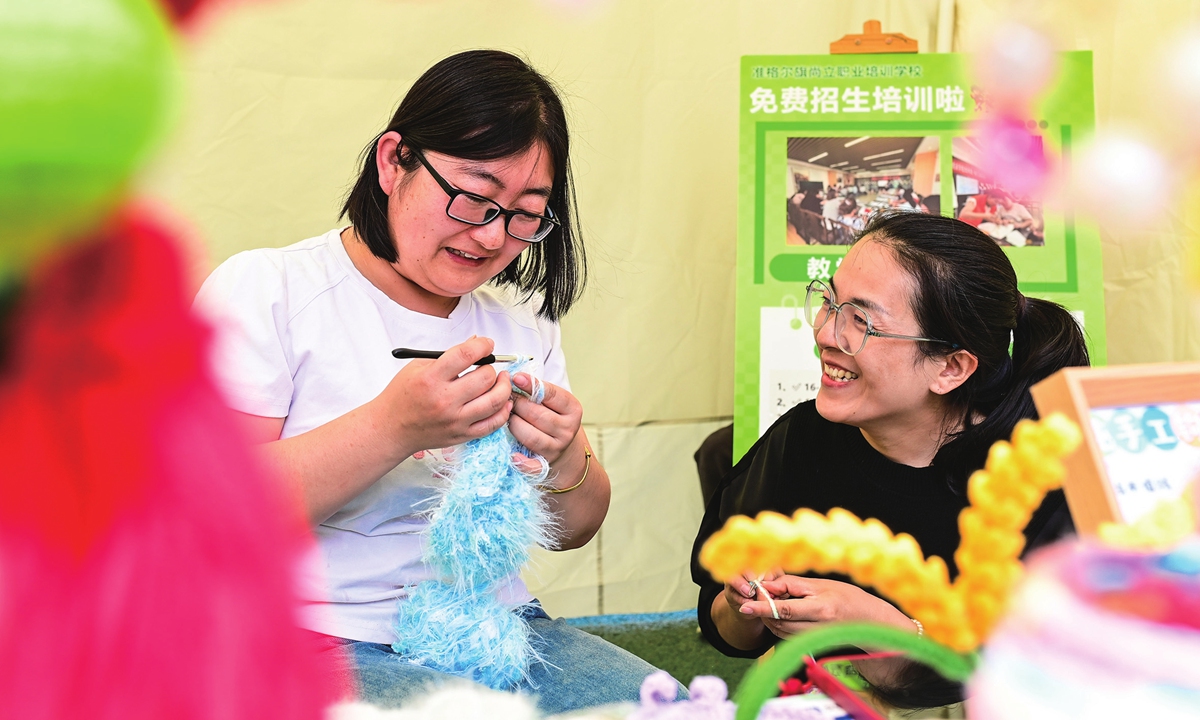
Tourists try handmade wool crochet on a culture street in Ordos, North China's Inner Mongolia Autonomous Region, on May 1, 2026. Photo: VCG
Feelings over functionThe trend extends far beyond Hangzhou. Similar sewing studios have emerged in cities including Shanghai, Beijing, Wuhan, in Central China's Hubei Province and Yinchuan, in Northwest China's Ningxia Hui Autonomous Region. Social media posts shared by studio owners reveal a common formula: compact but minimalist spaces, several instructors, and a customer base made up largely of retirees and young urban consumers.
"Most of the shop owners I've met who are doing the same thing started out helping their families run clothing repair and alteration shops. After seeing a growing number of requests online and offline from people looking for handmade knitting and sewing services, they gradually transformed their stores into self-study studios. To their surprise, more and more young people come in to DIY their own creations," Yang said. She noted that she originally worried an hourly rate of 80 yuan ($12) would discourage customers.
"Our studio is about 50 square meters, and experienced teachers are expensive," she said. "At first, I thought young people would find it too costly. But many of them came in with tutorials and pictures they found online and wanted to learn how to make things themselves."
One of the studio's retired sewing instructors, surnamed Xia, said he once would spend more than 10 hours a day operating industrial sewing machines and had assumed he would never touch them again after retirement.
"With today's industrial textile production, everything is faster and more refined," Xia told the Global Times. "I didn't think hand sewing still had much social demand."
That perception changed after a college student came to the studio determined to create an embroidered lace bag with raised multicolored patterns.
"I told her it would be troublesome and the visual effect might not even be obvious," Xia said. "But she insisted because she wanted something unique." To Xia, younger customers care less about efficiency or cost and more about individuality and aesthetics. "They only ask whether it looks good, whether it feels personal and whether it reflects their own style."
According to a report from iiMedia Research, China's emotional economy market reached 2.71 trillion yuan in 2025, and is projected to exceed 4.6 trillion yuan by 2029, giving three types of consumption: Social-oriented, Self-pleasing, and Addictive.
DIY sewing is self-pleasing form of consumption, Zhang Yi, CEO of the iiMedia Research Institute, told the Global Times, adding that in the past, people bought products mainly for function, but now they are buying emotion, identity and experience."
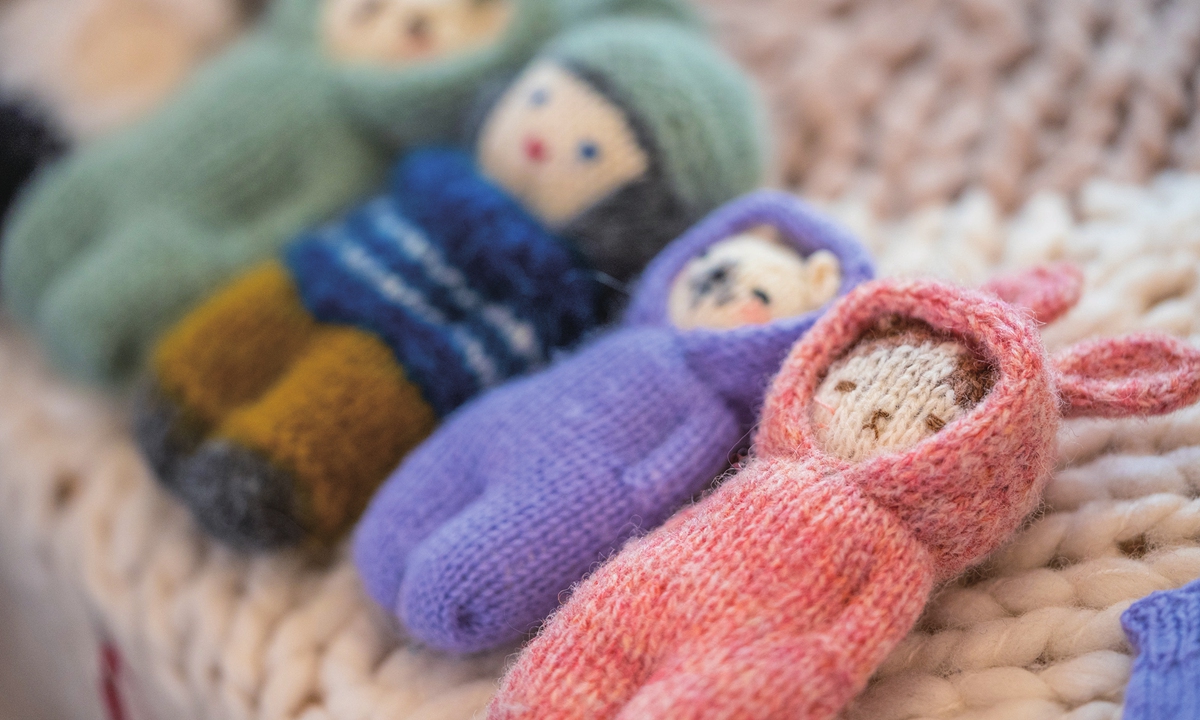
Items made by young people during a knitting session in a coffee shop in Shanghai Photo: VCG
Original styleThe rise of sewing studios has also encouraged more original design creation. Yang said many visitors now bring their own fabrics, yarn and design sketches instead of simply asking instructors how to make basic clothes or bags.
Chen Ru, an office worker and vintage fashion enthusiast, said she became interested in DIY clothing after exploring second-hand fashion and observing independent brands promoting sustainability and natural aesthetics.
"People used to think environmental-friendly fashion only meant recycling old items," Chen told the Global Times. "But now many want to design things themselves and express originality through handmade work."
Chen said she enjoys researching fabrics, patterns and sewing methods before sharing her designs online with fellow craft enthusiasts.
"There's a real sense of achievement in taking apart old materials and turning them into something new," she said.
After discovering sewing studios, Chen began making scarves, clothes and even pet products such as cat beds and cushions. "Things you make yourself fit your own aesthetic better," she said. "And they feel more meaningful."
Shi Jiajia, director of a psychological counseling center, said activities such as sewing and knitting function as a form of mindfulness practice.
"When people focus on textures, colors and details during the creative process, they temporarily step away from the pressures of daily life," Shi said. "Handmade crafts are relatively low-cost, but they stimulate creativity and generate a strong sense of fulfillment and self-worth."
For many young consumers, the appeal also lies in self-expression online. Chen said that DIY clothes are like vintage items, which are one of a kind. "By understanding my own body and preferences, I can create designs I truly like and share them online. In some ways, it feels like becoming an independent fashion designer or content creator."
This enthusiasm has inspired Yang to think even bigger, as she noted sewing machines evolving from foot pedals to smart systems. "Maybe one day there will be AI-powered sewing machines that lower the barrier even further."
"Perhaps someday I'll even have my own environmentally friendly fashion brand with customers from around the world," Yang added. "And it may not be any less influential than vintage labels or luxury brands."
RELATED ARTICLES