FM makes first Canada visit in 10 yrs; trip signals growing interest from both sides in stabilizing ties: Chinese expert
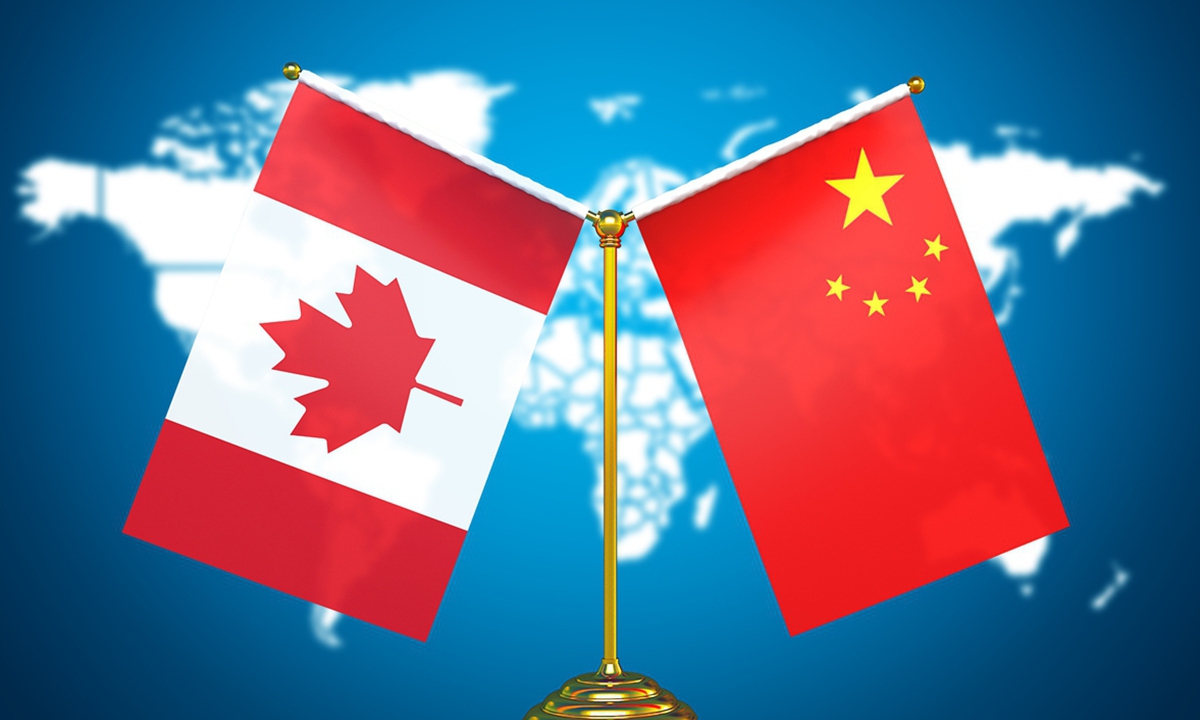
China and Canada Photo: VCG
Chinese Foreign Minister Wang Yi is expected to begin a three-day visit to Canada from Thursday to Saturday at the invitation of Canadian Foreign Minister Anita Anand, a trip that has drawn wide attention from Canadian political and media circles amid improving bilateral ties.
The visit marks the first trip to Canada by a Chinese foreign minister in a decade, which a Chinese expert believes shows growing interest in stabilizing and expanding China-Canada relations at a time of shifting global trade dynamics.
At the invitation of Canada's Minister of Foreign Affairs Anita Anand, Foreign Minister Wang Yi will visit Canada from May 28 to 30, according to an earlier announcement of the Chinese Foreign Ministry.
Canadian Prime Minister Mark Carney told reporters Wednesday that he looks forward to the Chinese minister's visit and will meet with him personally. He said the visit will offer a "valuable exchange of views", the Canadian Press reported Wednesday.
Canadian International Trade Minister Maninder Sidhu said Tuesday that the planned visit offers a positive sign on the state of the Canada-China relationship, according to the report.
"It shows that our relationship is growing in the right direction," Sidhu told The Canadian Press.
Canadian media have also highlighted the economic dimension of the visit. According to a report by the Globe and Mail, the Chinese and Canadian foreign ministers are expected to discuss expanding two-way trade during the visit, including progress in the opening of the Canadian market to 49,000 Chinese-made electric vehicles this year, citing a Canadian source familiar with the trip.
The media outlet also noted that their meeting "is a sign of blossoming relations between Canada and China under Carney, who is trying to diversify foreign trade away from the increasingly protectionist US."
"The Chinese Foreign Minister's Canada visit is expected to further implement a series of outcomes achieved following high-level exchanges between the two sides," Huang Zhong, deputy dean of the Academy of International and Regional Studies at Guangdong University of Foreign Studies, told the Global Times on Thursday.
Huang added that since taking office, Carney has promoted "middle power multilateralism," and closer cooperation with China could help Canada broaden its diplomatic options, enhance its international standing, and further advance its foreign policy agenda.
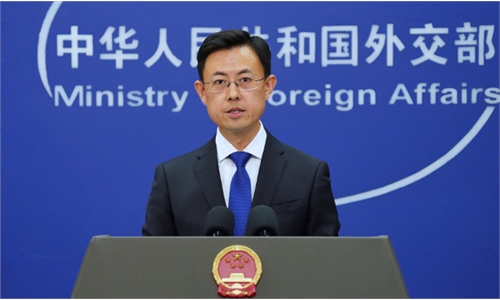
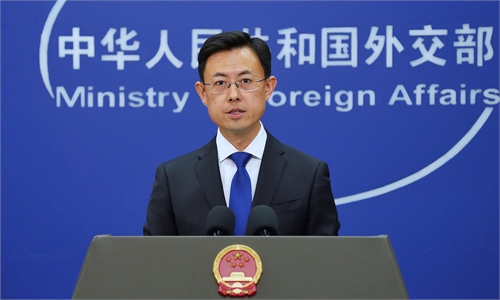
At a regular press briefing last week, Chinese Foreign Ministry spokesperson Guo Jiakun announced Wang's visit and said that during the visit, Wang will have in-depth exchanges with the Canadian side on how to implement the important common understandings at the leadership level and the outcomes of Prime Minister Mark Carney's recent China visit in January, and how to build a truly substantive China-Canada new strategic partnership, as well as international and regional issues of mutual interest.
Huang said that China and Canada are currently advancing efforts to build a China-Canada new strategic partnership, adding that cooperation in areas such as electric vehicles and agricultural products is expected to deepen following Wang's visit.
"At the same time, China and Canada are also expected to pursue deeper cooperation in artificial intelligence, academic exchanges and institutional cooperation," Huang said.
Beyond trade and technology, Huang noted that China and Canada hold similar positions on issues including non-traditional security challenges, climate change, opposition to unilateralism, and support for free trade, creating further room for bilateral cooperation.
According to a release issued by Global Affairs Canada on May 22, the ministers will meet in Ottawa to advance pragmatic engagement and the implementation of the updated Canada-China Strategic Partnership, including on trade and investment, global security, as well as respective bilateral issues.
The release also highlighted the extensive ties between the two countries, stating that strong people-to-people ties link Canada and China. Over 1.7 million Canadian residents are of Chinese origin. Tourism flows and ongoing cultural exchanges enrich bilateral linkages.
It further noted that China remains an important commercial market for Canadian businesses, with two-way bilateral merchandise trade in 2025 totaling $125.1 billion, representing a 5.2 percent increase over 2024.
Canadian scholars and analysts have also expressed expectations for the meeting between the two foreign ministers. Jeff Mahon, former deputy director at Global Affairs Canada's China Division, described the meeting as "a natural milestone in the path to not only normalizing but also deepening bilateral relations," according to the Institute for Peace & Diplomacy, a North American non-profit and non-partisan international affairs think tank.
Mahon also said that "increasing trade with China and determining for itself the nature of its relationship with China will be key to maintaining real autonomy and sovereignty."
Chinese Foreign Ministry spokesperson Guo also expressed hopes for the visit's broader significance for bilateral ties. It is our hope that through this visit, the two sides could enhance political mutual trust, expand mutually-beneficial cooperation, properly manage differences, and ensure that bilateral ties will continue to move forward on the track of sound, steady, and sustainable development to deliver more benefits to both peoples, Guo said.
RELATED ARTICLES