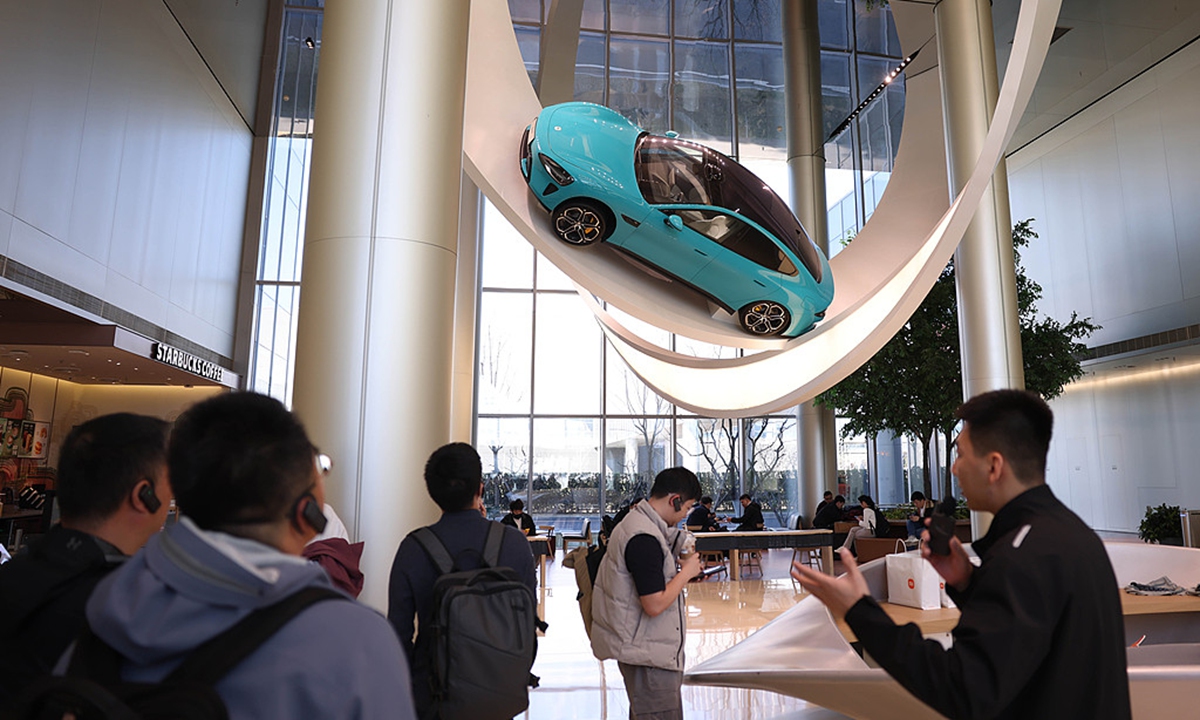
Tourists visit Xiaomi's auto factory in Beijing on March 24, 2025. Photo: VCG
China's Ministry of Culture and Tourism, together with six other government departments, has issued a notice encouraging enterprises in the aerospace, shipbuilding, automotive and robotics sectors to develop themed visitor factories under the premises of safety and confidentiality, aiming to further expand the nation's cultural tourism formats and scenarios.
The notice encourages enterprises in equipment manufacturing, consumer goods and e-commerce logistics to innovate with projects such as production process observation, simulated operations, hands-on experiences and product customization, building visitor factories with distinct themes.
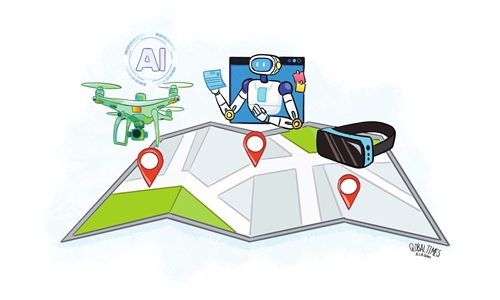
It supports the use of digital technologies and devices such as the BeiDou Navigation Satellite System, artificial intelligence, ultra-high-definition video, virtual reality and autonomous driving to create immersive and intelligent industrial tourism experiences.
The notice also calls on local authorities to strengthen research and interpretation of the region's industrial history, craftsmanship, corporate archives and well-known industrial brands, distilling the spirit of craftsmanship, entrepreneurship and innovation. For industrial heritage sites, the notice encourages revitalization through creative design, business integration and architectural refurbishment.
The release of this notice aligns with the Outline of the 15th Five-Year Plan (2026-30) for National Economic and Social Development of China, which stated that "we will develop red tourism, rural tourism, health tourism and industrial tourism according to local conditions."
Industrial tourism is not merely about observing production processes. Its core value lies in linking the public with brands and technology, allowing visitors to gain a more direct understanding of the development level and technological progress of China's manufacturing sector, Jiang Yiyi, dean of the School of Leisure Sports and Tourism at Beijing Sport University, told the Global Times on Friday.
Some examples have already emerged. According to the Xinhua News Agency, Xiaomi's auto factory in Beijing opened to the public in January 2024 and welcomed over 130,000 visitors in 2025. An industrial heritage park in Chengdu, Southwest China's Sichuan Province, called Dongjiao Memory, originally established in 1958 as a state-run electron tube factory, was transformed in 2012, and has evolved into a cultural park integrating performance art, digital creative industries and trendy commerce, attracting over 17 million visitors annually.
To date, China has 142 national industrial tourism demonstration bases. Industry research institutions forecast that between 2024 and 2029, China's industrial tourism sector will maintain an average annual growth rate of 18 percent, with the market size expected to exceed 300 billion yuan ($44.33 billion), said the Xinhua report.
Jiang emphasized that this model fundamentally leverages China's robust industrial base and extends it into the cultural tourism sector, generating industrial value spillovers and enhanced visitor experiences.
"Through direct visits and immersive experiences, the public can more intuitively appreciate the scale and technological capabilities of China's advanced manufacturing, further strengthening recognition and pride in the nation's development achievements," she said.
RELATED ARTICLES