Shangri-La Dialogue kicks off amid mounting security challenges
China’s constructive endeavors sustain long-term peace, stability and progress in the Asia-Pacific: experts
By Guo Yuandan, Su Yaxuan in Singapore and in Beijing Published: May 29, 2026 11:19 PM

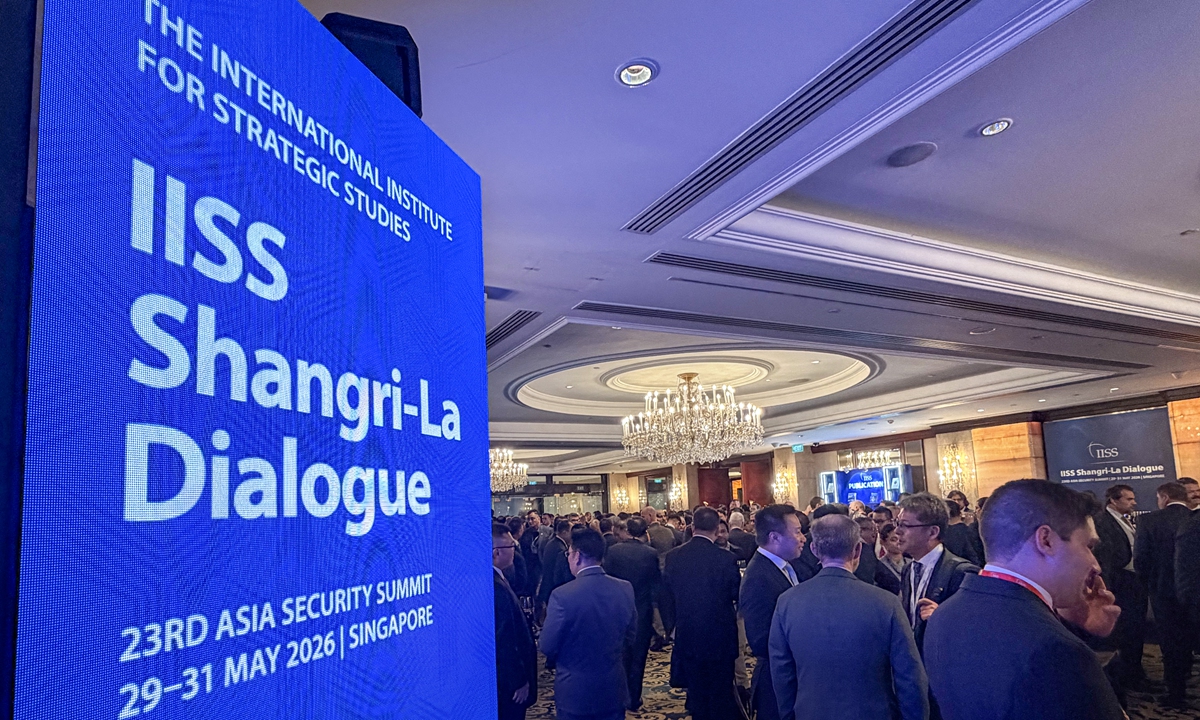
Participants attend the 23rd Shangri-La Dialogue in Singapore on May 29, 2026. Photo: Su Yaxuan/GT
The 23rd Shangri-La Dialogue (SLD), which runs from Friday to Sunday, officially opened in Singapore on Friday evening, bringing together defense officials and scholars from 44 countries and regions to discuss regional and global security issues.With multiple pressing challenges facing the Asia-Pacific, experts attending the gathering reached by the Global Times called on all regional parties to enhance mutual trust, instead of stoking confrontation and division. Against such a backdrop, China's engagement carries profound significance for safeguarding enduring peace, stability and common development across the region, they said.
According to China's Ministry of National Defense (MND), China's delegation to the SLD this year is led by professor Meng Xiangqing from the National Defense University, with members comprising experts and scholars from the National Defense University of China, the Academy of Military Sciences and the Navy.
Jiang Bin, an MND spokesperson, said on Thursday that China attaches great importance to defense and security cooperation in the Asia-Pacific region. Upholding the vision of openness and inclusiveness, China actively participates in all constructive dialogues.
"The participating experts and scholars will elaborate on China's concepts and initiatives in depth, work to enhance mutual trust, dispel misgivings, build consensus and deepen cooperation, and contribute wisdom and efforts to safeguarding peace and stability in the Asia-Pacific," Jiang said.
Standing at inflection point
According to the introduction by Singapore's Ministry of Defense, organized by the International Institute for Strategic Studies (IISS), the 23rd Shangri-La Dialogue (SLD) will see 44 countries and regions in attendance, with 54 ministerial-level delegates and more than 42 Chief of Defense Forces-level delegates and senior defense officials, as well as prominent academics.
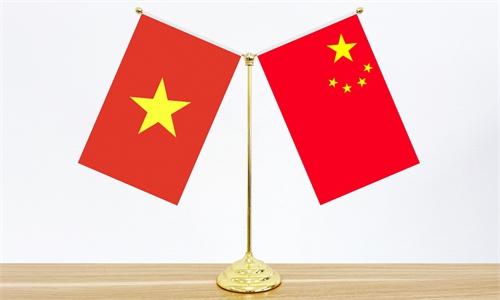
In his opening remarks on Friday evening, Vietnam's top leader To Lam said the world is beset with multiple risks and uncertainty, which include an erosion of international rules and law, a crisis of development models including slowing growth and climate change, and a crisis of trust among nations, Reuters reported.
He called for reinforcing international law, setting up inclusive and sustainable growth drivers, as well as initiating dialogue and transparency.
On the agenda of the SLD released on the official website of the IISS, words such as "disorder", "threats", "tensions" and "fragmenting" frequently appear in the topics.
Channel News Asia said that the conflict in the Middle East, uncertainty over US commitments in Asia and rising tensions over Taiwan region are expected to dominate the agenda.
Chong Ja Ian, a political scientist at the National University of Singapore, told Reuters that there will likely be some continued anxiety over the unpredictability and volatility of US policy, and the consequences for stability. He said the most pressing issue for Asia would be the US-Israel conflict with Iran and its effects on energy supply.
The Asia Times stated that this year's SLD arrives at a precarious inflection point.
"The primary anxiety animating this year's dialogue is whether a distracted Washington can simultaneously underwrite security in Europe, the Middle East and Asia," the media outlet said. "The inconclusive fallout from the recent Iran conflict has only sharpened those doubts."
In addition to factors regarding the US, the Asia Times also mentioned Japan. While China remains the focal point of Western rhetoric at the forum, "the deepest strategic headache" at SLD may "actually be Tokyo," Eric Olander, editor-in-chief of the China Global South Project, was quoted as saying.
Japan has recently stepped up its moves in military expansionism through the revision of security documents, loosening of weapons controls, and reform of its intelligence system, along with provocations against China over the Taiwan question.
The Asia Times reported that there is rising concern in Beijing that Japan is moving "aggressively to occupy the geopolitical vacuum" left by an inconsistent US, positioning itself as the new, assertive anchor of a post-American security architecture in the Asia-Pacific.
The Global Times reporter tried to capture firsthand views from scholars and experts present at the event. However, one Japanese representative turned down our interview request as soon as we introduced ourselves. Another Japanese scholar agreed to speak, but refused to reveal his name and identity.
"While concerns related to security competition, territorial disputes, and geopolitical rivalry have become increasingly prominent in recent discussions, I sometimes wonder whether the frequent emphasis on terms such as 'threat', 'tension', and 'division' fully reflects the broader aspirations of the region," U Ko Ko, Chairman of Myanmar Narrative Think Tank, told the Global Times on Friday, on the sidelines of the SLD.
"Sustainable security is built through mutual respect, dialogue, trust-building, and win-win cooperation. Regional discussions should therefore focus not only on challenges, but also on common interests and opportunities for cooperation that can contribute to lasting peace and shared prosperity," he said.
Participants should come not merely with their own agendas or narrow national interests, but with a genuine commitment to constructive engagement, mutual respect, and cooperation, the expert added.
Eyes on Beijing
Ahead of the official opening of the SLD, professor Meng Xiangqing, who leads the Chinese delegation, held separate meetings with Regis Savioz, regional director for the Asia-Pacific International Committee of the Red Cross (ICRC), and representatives from UK's Ministry of Defense.
Global Times reporters at the scene noticed that experts from some other national delegations took the initiative to greet the Chinese delegation during the event.
Certain media outlets focus on the scale and rank of the Chinese delegation, playing up alleged "threats" from China over the South China Sea, the Taiwan Straits and its military development. The Associated Press also noted that US Defense Secretary Pete Hegseth will highlight the US "Indo-Pacific strategy" at this year's SLD, a framework that puts regional competition ahead of cooperation.
Nevertheless, some other media and scholars acknowledge China's potential to deliver constructive contributions as a major regional power safeguarding peace and stability amid global unrest.
"At a time when perceptions of US leadership are falling, Beijing could soothe some jangled nerves in the region," said the Interpreter, published by the Lowy Institute, on May 27.
"For many Southeast Asia states, strategic neutrality and working with willing partners are central to national security and prosperity. Being forced to choose sides would be counter to these interests," reads a commentary piece by Channel News Asia.
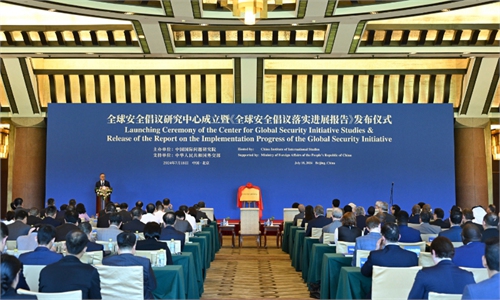
"China is a regional and global power, and it remains one of the centers of global development. China currently has many initiatives aimed at promoting global cooperation, development, and security, including the Global Security Initiative, which promotes regional and global security," Duong Van Huy, a senior research fellow with the Institute of Asia-Pacific Studies, Vietnam Academy of Social Sciences, told the Global Times.
"China is fully capable of acting as a responsible power in promoting security and stability in the region. At the same time, the development of economic cooperation between China and countries in the region will undoubtedly boost security cooperation between China and these countries in the future," he added.
China plays a vital role in regional security and development. As a major power and one of the world's largest economies, China has made significant contributions to regional prosperity through trade, infrastructure development, connectivity, and economic cooperation, according to the Vietnam expert.
According to Wang Dong, executive director of the Institute for Global Cooperation and Understanding at Peking University, as one of the most important and influential security forums in the Asia-Pacific, the SLD is notably characterized by a Western-centric agenda and discourse system. Consequently, forum discussions are often dominated by Western perspectives, including groundless criticisms and accusations against China.
"As an international venue for strategic interactions, SLD carries important practical significance, and that's why China will take part in it in a pragmatic manner," Wang remarked. "We will refute fallacies with facts and rational arguments. We will also take this opportunity to share China's development vision and present its true image as a responsible major power."
RELATED ARTICLES