Scholars’ Perspectives: Modernization of agriculture, rural areas and farmers lays important foundation for Chinese modernization: Chinese professor
By Zhang Han and Published: May 31, 2026 10:55 PM Updated: May 31, 2026 11:45 PM


Li Xiaoyun, chair professor of China Agricultural University
Editor's note:
On May 27, the 2026 Global Poverty Reduction and Development Forum was held in Beijing. At the forum's opening ceremony, the Global Partnership for Poverty Alleviation and Development was officially launched. The partnership, jointly initiated by China, 53 other countries and nine international organizations, marks a milestone in global poverty reduction endeavors.
This year marks the first year that China has transited to regular assistance programs following the conclusion of the transition period from poverty-alleviation campaigns to a longer-term strategy aimed at consolidating gains and advancing rural revitalization across the board.
The 2026 Government Work Report emphasizes we will continue to consolidate and expand our poverty alleviation gains and carry out regular assistance programs under the rural revitalization strategy in conjunction with relevant initiatives, so as to guard against any large-scale lapse or relapse into poverty.
The outline of the 15th Five-Year Plan (2026-30) for national economic and social development also calls for coordinated efforts to establish regular mechanisms for preventing rural residents from lapsing or relapsing into poverty, providing well-targeted assistance, strengthening support to help those most in need, ramping up development-based assistance, and boosting internal impetus for development.
From the poverty elimination to the comprehensive rural revitalization, China's "development-based assistance" approach has provided an innovative solution to a common challenge faced by countries around the world.
President Xi Jinping, also general secretary of the Communist Party of China (CPC) Central Committee, attached great importance to consolidating and expanding poverty alleviation gains. Xi Jinping: The Governance of China incorporated General Secretary Xi's important remarks in this regard.
In "Speech at the National Conference to Review the Fight Against Poverty and Commend Outstanding Individuals and Groups" in Volume IV, Xi noted "targeted poverty alleviation has proved to be the 'magic weapon' for winning the battle against poverty, while the development-driven approach has emerged as the distinctive feature of China's path to poverty reduction." He also emphasized "we must take concrete steps to consolidate and expand upon the outcomes of the fight against poverty as part of our effort to promote rural revitalization, so that the foundations of poverty eradication are more solid and the effects are more sustainable."
With eight years of anti-poverty campaign, five years of transition period, the valuable experience China has gained in poverty reduction and prevention of people's lapse or relapse to poverty belongs not only to China but also to the world, offering new perspectives for global anti-poverty endeavors.
In the 24th installment of the special series "Decoding the Book Xi Jinping: The Governance of China," the Global Times, along with the People's Daily Overseas Edition, continues to invite Chinese and foreign scholars, translators of Xi's works, practitioners with firsthand experience, and international readers to conduct in-depth discussions on the practical value of China's poverty alleviation practices and rural revitalization strategy, as well as their implications for the world.
In the 22nd article of the "Scholars' Perspectives" column, Li Xiaoyun, chair professor of China Agricultural University, shares with the Global Times his insights on the importance of rural modernization, as well as its domestic and international significance.
GT: President Xi Jinping, general secretary of the Communist Party of China (CPC) Central Committee, has long attached great importance to work concerning agriculture, rural areas and farmers. In Volume IV of Xi Jinping: The Governance of China, he stressed the need to "consolidate and expand our achievements in poverty elimination, comprehensively promote rural revitalization, and speed up agricultural and rural modernization. This is a major issue of overarching importance that requires attention from the whole Party." Can you further explain the significance of accelerating agricultural and rural modernization based on current domestic and international circumstances?
Li Xiaoyun: Agricultural and rural modernization constitutes a vital part of Chinese modernization, and to some extent determines its overall quality.
First, safeguard the lifeline of food security. Any fluctuation in grain supply will not only destabilize China itself with over 1.4 billion people, but also deal a heavy blow to the global food system. Second, build pleasant homelands suitable for living and working. Raising farmers' income and narrowing gaps in public services and infrastructure between urban and rural areas are essential for sustainable agricultural development. Rural development shall be steadily promoted to build harmonious and livable villages. Third, fortify the major shield for ecology and security. Rural areas serve not only as bases for grain production, but also as a key guarantee for ecological and territorial security.
Revitalizing rural functions, boosting agricultural productivity and rural development via the all-round rural revitalization to advance agricultural and rural modernization serves as a key approach to improving Chinese modernization. This process addresses weak points in domestic development while also contributes to global development and food security.
Historically, Western countries, in the industrialization process, secured global agricultural resources through colonization to fuel development. By contrast, China resolves food issues relying on self-reliance and domestic agricultural modernization. This embodies China's commitment to rejecting hegemony and colonial expansion, and marks its evolving way of contributing to global food security within the global responsibility frameworks.
Enhanced agricultural and rural modernization can not only better meet China's domestic demands, but also facilitates cooperation of the Global South through sharing technology, experience and production capacity, carrying far-reaching implications for supply side and global governance. Hence, agricultural and rural modernization is not merely a domestic development issue, but an integral component of Chinese modernization amid globalization, bridging domestic growth and global responsibilities.
GT: At the Central Economic Work Conference held in December 2025, General Secretary Xi emphasized "We should still take rural revitalization and the development of the work concerning agriculture, rural areas and farmers as the foundation of Chinese modernization." How should we understand this statement? Common prosperity is an essential requirement of socialism, what is the relations between rural revitalization and common prosperity?
Li: Since the reform and opening up, issues concerning farmers' income and urban-rural disparity have gradually emerged, accompanied by social challenges such as left-behind children, left-behind women and migrant workers' rights protection. Economically, excessive inequality curbs long-term growth. Sociologically, it weakens social cohesion. Effectively tackling such problems has become a daunting development bottleneck for numerous nations, hinging largely on institutional governance capacity.
Taking a historical perspective, Western countries endured severe and prolonged inequality in the course of industrialization. Britain took roughly 200 years to complete industrialization starting from the 18th-century Industrial Revolution, during which widespread poverty, pollution and social division prevailed. Even today, these developed nations still fail to eradicate poverty thoroughly, with striking regional income gaps remaining. Fundamentally, capital-dominated institutional frameworks have inherent flaws in income distribution. Meanwhile, political systems in developed economies and competitive electoral mechanisms in some developing countries hinder institutional efforts to narrow disparities.
In contrast, Chinese modernization advances under the leadership of the CPC and has distinctive institutional strengths. Rooted in the essence of socialism and aiming at common prosperity, it leverages institutional arrangements to actively rectify developmental imbalances, equipping the country with capacity to address relevant problems.
Therefore it should be made clear strategically that common prosperity represents an essential demand of socialism and an inherent goal of Chinese modernization. If modernization only enriches a handful of people instead of enabling all people to share the fruits of development, it is unsustainable and devoid of fundamental value.
In practice, agriculture and rural areas stand as the core and difficult front in advancing common prosperity. Comparative benefit between agriculture and industry, together with long-standing gaps in income, infrastructure, public services and industrial development between urban and rural regions, pose major hurdles to common prosperity. Work related to agriculture, rural areas and farmers, as well as the rural revitalization strategy, serve as the key solutions to narrow those disparities and gaps.
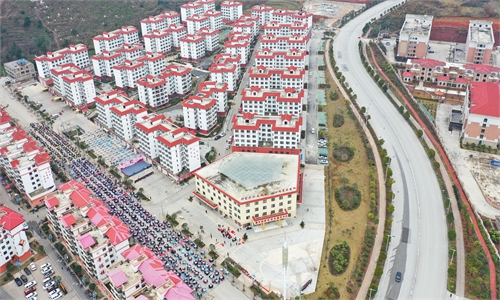
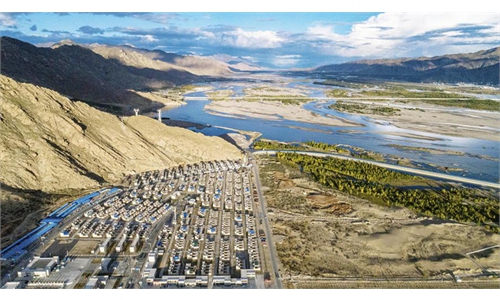
Modernization of agriculture, rural areas and farmers lays important foundation for Chinese modernization, and rural revitalization acts as its primary pathway. By revitalizing rural industries, talent, culture, ecology and organizations, we can comprehensively elevate rural development, effectively raise farmers' earnings, improve living and working conditions, and bridge urban-rural divides.
China's development model features strong government guidance, with issues concerning agriculture, rural areas and farmers always prioritized in policymaking. China's annual "No. 1 central document" centers on rural development, and medium and long-term plans set clear goals for agricultural and rural modernization covering increasing farmers' income, improving rural construction, developing rural industries and enhancing public service.
It is a vital part of Chinese modernization to integrate urban-rural integrated development, pursuing coordinated, synchronized and harmonious progress across urban and rural spaces. Only by cementing the "foundation" of agriculture and rural areas, continuously narrowing urban-rural gaps can we deliver common prosperity and bolster steady advancement of Chinese modernization.
GT: In article "Build a just world of common development" compiled in the Volume V of Xi Jinping: The Governance of China, General Secretary Xi noted that "China's story is proof that developing countries can eliminate poverty and a weaker bird can start early and fly high, when there is the endurance, perseverance, and fighting spirit that enables water drops to penetrate rocks over time and turns blueprints into reality. If China can make it, other developing countries can make it too. This is what China's battle against poverty says to the world." From the eight-year poverty alleviation campaign, to five-year transition period, and to accelerating the pace of agricultural and rural modernization journey in the 15th Five-Year Plan period (2026-30), what inspiration does China's experience bring to the world?
Li: In terms of development philosophy, China emphasizes the development potential and endogenous capacity of developing countries. Concepts such as "weaker bird can fly first" and "overtaking on a curve" are expressions distilled from practice. China's poverty alleviation - from the eight years of intensive anti-poverty campaign, to the subsequent five-year transition period, and then to the establishment of long-term institutional mechanisms - essentially reflects a comprehensive and institutionalized poverty reduction system.
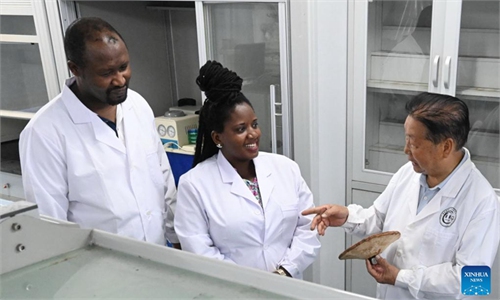
This experience is also being studied and adapted by other developing countries. For example, countries such as India and Indonesia are exploring targeted poverty alleviation and digitalized governance systems, while some African countries have achieved economic growth through the development of labor-intensive industries. To a certain extent, these practices share similarities with the logic underlying China's experience.
For instance, the rapid development of countries such as Rwanda and Ethiopia in recent years is closely related to their introduction of labor-intensive industries and efforts to kick-start industrialization. This path bears certain similarities to China's early experience of using township enterprises and labor-intensive industries to drive employment and reduce poverty.
Therefore, from a broader macro perspective, China's development experience is not an unrepeatable "special path," but rather a development logic with broad reference value under different national conditions. Its core lies not in the simple transplantation of specific institutional forms, but in how countries can combine their own conditions to achieve effective institutional arrangements and organize development momentum. For this reason, Chinese modernization is not only China's own development practice, but also provides an important developmental reference for countries of the Global South.
RELATED ARTICLES