OPINION / GLOBAL MINDS
Europe at a crossroads in an era of US uncertainty

Photo: Courtesy of Richard D. Wolff
The decline of the US empire, still not admissible publicly in the discourse of US politicians, nonetheless lurks everywhere in widespread feelings of lost national direction and prevalent social woes.The forcible seizure of President Nicolas Maduro from Venezuela in January, along with US-Israel operations against Iran, is also part of the same political theater. They serve as media distractions: not just from the hovering Epstein scandals or the deeply troubled inequalities of the domestic US economy, but from the deeper threats posed by a declining empire. Thus, a reaction formation type of neo-colonialism infuses many of the US' favorite distractions. When charged with violating international law and undermining the entire United Nations project, Washington proudly rebrands both actions as bold signs of US strength.
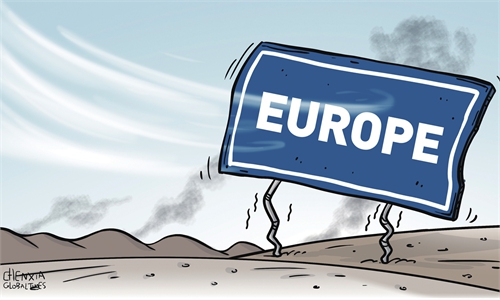
As in 1945, Western Europe and the US once again find themselves at a crossroads. The declining empires back then were Europeans. Now, in 2026, it is the decline of the US empire that has become both the US' and Europe's problem. In its desperate attempts to slow or stop that decline, the US has turned on its subordinated, very junior European partners. That problem and that turning derive from this ongoing historical moment of empire decline.
Currently, Washington has withdrawn much of its support for Ukraine in its war with Russia, weakening the Ukrainian side and leaving a militarily underdeveloped Europe to rely even more on economic sanctions against Russia. As a result, Europe has lost access to cheap Russian oil and gas. High energy prices have driven up European export prices, extinguishing its competitiveness. Meanwhile, deindustrialization is deeply disturbing Europe's economies.
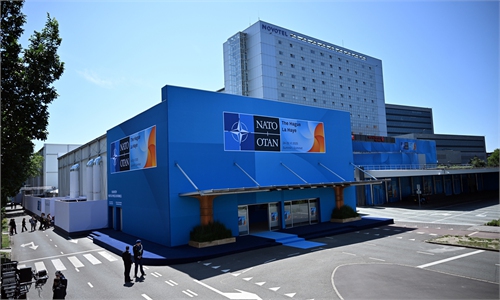
The global economy looks increasingly like a great contest between China and the US, with Europe increasingly out of the picture or merely a footnote to it. The US' massive tariffs and demands for tribute from Europe combine both abandonments and assaults by the US on its allies. NATO trembles and faces growing forces of dissolution. The US demands that European nations fund their own defenses in part because the declining US empire needs to enlarge its own military as the possible offset to the empire's decline. Moreover, already heavily indebted, the US needs to worry about its future creditworthiness unless it cuts its annual budget deficits.
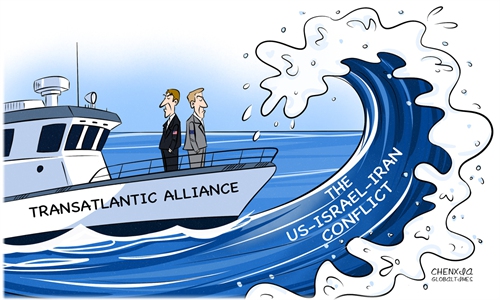
The Europeans are stuck in that proverbial room where the walls are closing in on them. Their subordination is reflected in their passage from junior partners in US-led "coalitions of the willing" to the 2026 Iran war's "coalition of the unraveling," as Spain and Italy refuse to participate and even the UK waffles. The US openly threatens to leave NATO. The employer classes of Europe are most worried about the combination of no longer having US-funded defense protection via NATO and the compensatory need to fund expanded European military spending. That will mean reducing European spending on its social welfare model of capitalism. Employers who do so risk triggering massive opposition from the left.
So far, Europe's employer classes have tried to cope with this situation through a quasi-hysterical campaign to demonize Russia as a threat to invade and conquer its European neighbors. Europe's mostly low-polling government leaders position themselves as great bulwarks against the Russian danger. This strategy aims to justify increased spending on defense, which in turn necessitates reduced government welfare spending. The latter is rationalized as the whole society's necessary sacrifice for safety from Russia. The employer classes hope that this approach to retain their wealth, income and power will not become the explicit political issue of our times (rather than the "great Russian danger" that requires budget "adjustments").
While the "Russian danger" discourse might secure Europe's employer classes a few more years of sitting atop Europe's wealth and power distributions, it fails to address Europe's long-term decline, which will continue and possibly accelerate because little is being done in Europe to directly oppose that trend. Indeed, the disagreements inside Europe on whether to join the US-Israel operations against Iran, coupled with anxiety about being singled out for retaliation by the US, heightened the competitive pandering among Europeans to curry favor with Washington. Such divisions have always weakened European unity. The latter is surely a necessary, albeit insufficient, component of any imaginable rescue of Europe from its deepening decline.
The author is an American economist and professor emeritus of economics at the University of Massachusetts Amherst. opinion@globaltimes.com.cn
RELATED ARTICLES