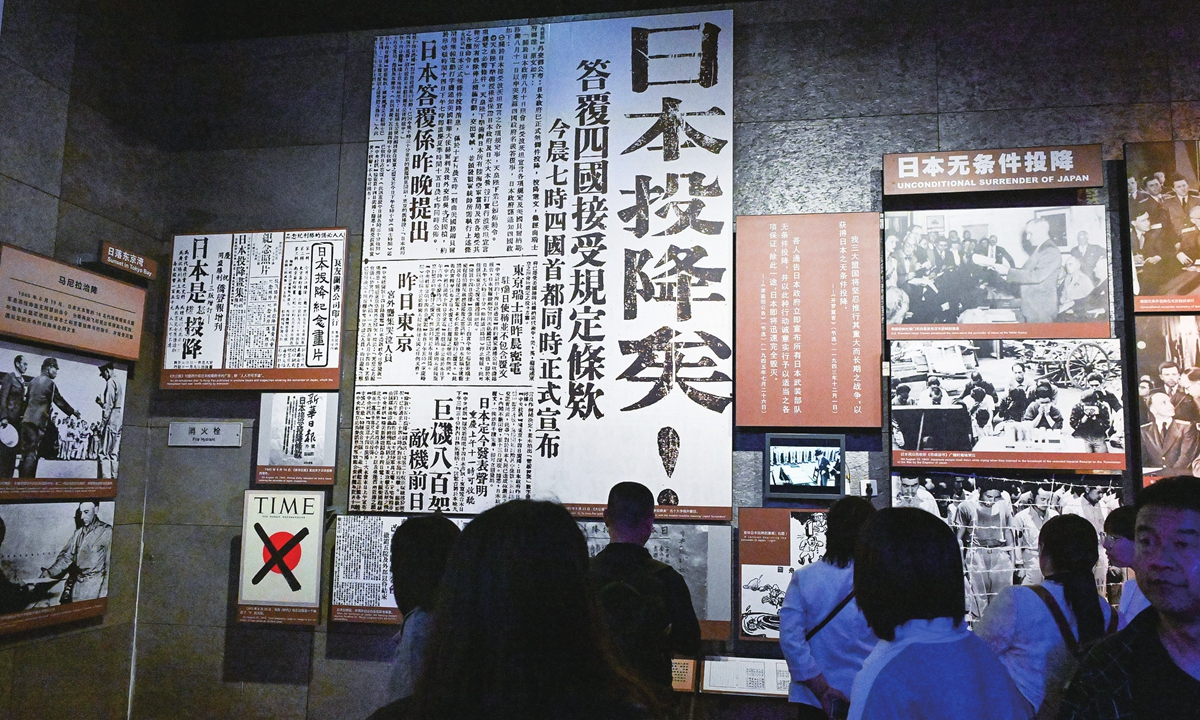
People gather at the Memorial Hall of the Victims in Nanjing Massacre by Japanese Invaders to mourn the deceased and pay their respects amid the 80th anniversary of the opening of the Tokyo Trial on May 2, 2026. Photo: VCG
Editor's Note:An international symposium commemorating the 80th anniversary of the opening of the Tokyo Trial was recently held in Shanghai and Nanjing. Experts and scholars from various countries engaged in in-depth discussions on the historical value and contemporary significance of the Tokyo Trial across three major dimensions: history, international relations, and international law, striking a deep chord among participants. The Global Times has selected highlights from the insights of three prominent scholars.
Raising awareness of the significance of the Tokyo Trial
Cheng Zhaoqi, director of the Center for the Tokyo Trial Studies of Shanghai Jiao Tong University
Today, our firm commitment to defending the achievements of the Tokyo Trial is because the event is closely intertwined with current international political realities, Japan's future national trajectory, and the peace and stability of Asia and the world at large. From the perspective of Japan's long-standing domestic debates and its recent political trends, defending the achievements of the Tokyo Trial appears particularly necessary today.
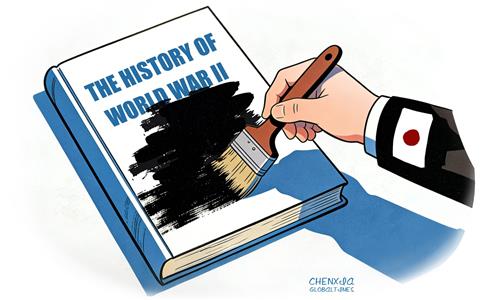
First, arguments denying the Tokyo Trial have a long history in Japan. In recent years, Japanese political figures have broken taboos by publicly singing the same tune as right-wing forces. Whether Japan restores the "glory" of its history, or breaks free from the constraints of a "peace-loving nation" to transform into a "normal country," the Tokyo Trial has become a stumbling block that some Japanese politicians intend to remove.
Second, defending the Tokyo Trial is an inevitable requirement for safeguarding the stability of the postwar international order. For Japanese right-wing forces, the ultimate goal of denying the trial is to fundamentally dismantle the international legal framework that Japan accepted upon its defeat, thereby clearing the path for Japan to resume as a military power. Therefore, defending the Tokyo Trial today means defending the outcomes of WWII victory and safeguarding the postwar international order centered on the UN Charter.
Furthermore, it must be recognized that, to this day, the Japanese government has not officially denied the Tokyo Trial. This is because the post-WWII international landscape and treaty obligations have created institutional barriers. Accepting the judgments of the war crimes tribunals of the Allied Powers is an international obligation that Japan must fulfill. This is the primary reason why the Japanese government has thus far not officially denied the Tokyo Trial.
As the most important victorious nation and victim in the East Asian theater of WWII, China has a responsibility and an obligation to righteously defend the justice and legitimacy of the trial on the international stage. It must clarify various fallacies surrounding the trial and let more people understand its truth and significance.
Distorting historical facts will eventually boomerang on Japan
Takakage Fujita, secretary-general of the Association for Inheriting and Propagating the Murayama Statement
At this historic moment of the 80th anniversary of the opening of the Tokyo Trial, holding relevant commemorative activities and international symposia is of paramount importance. This carries invaluable significance for the future peaceful coexistence of Japan with China, Asia and the world at large. Before his passing, former prime minister Tomiichi Murayama cautioned that the key to building peaceful and friendly relations between Japan and China, Asia, and the world lies in drawing lessons from history, using it as a mirror, and facing the future.
Following the Murayama Statement, some high-ranking figures in the Japanese government and ruling party have continuously issued erroneous remarks that revise and distort history. Before taking office as prime minister, Sanae Takaichi published remarks in right-wing magazines claiming the wars Japan fought were wars of "self-defense" and "self-preservation." Overall, Takaichi is the most ultra-right figure in terms of historical perception among all post-WWII Japanese prime ministers, who distorts history and refuses to face the true history.
Following Japan's defeat and surrender in 1945, the Tokyo Trial exposed many war crimes that had been concealed by the Japanese government during the war of aggression, including the Nanjing Massacre and the Japanese military's mistreatment of prisoners of war. It was also through the trial that the Japanese public learned the truth of these facts.
In Japan, right-wing forces claim that the Tokyo Trial was "victor's justice" and "unjust." I strongly criticize these erroneous statements.
Since Japan has acknowledged the Tokyo Trial to the world, the fact that some people are now raising objections will damage Japan's credibility. Some conservative and ultra-right groups within Japan attack the reflection on history as a "masochistic view of history," and this is a grave error.
Regarding how Japan should face the Tokyo Trial, I believe that Japan must solemnly accept it. In order to never instigate a war of aggression again, and for the peace and prosperity of Asia and the world, Japan must do its utmost as a peace-loving nation. This is the only path it can take.
Bringing war criminals to visible justice through fair trials
Wang Xiumei, professor and doctoral supervisor at the Law School of Beijing Normal University
The Tokyo Trial is a precious legacy left to humanity.
First, the purpose of establishing the International Military Tribunal for the Far East was to address the heinous crimes committed by Japanese war criminals during WWII, using modern civilized principles, judicial means and visible justice to judge the war criminals.
Second, the Tokyo Trial was not merely a straightforward reckoning with aggression and war criminals; it was a concrete manifestation emphasizing legal principles and promoting the rule of law.
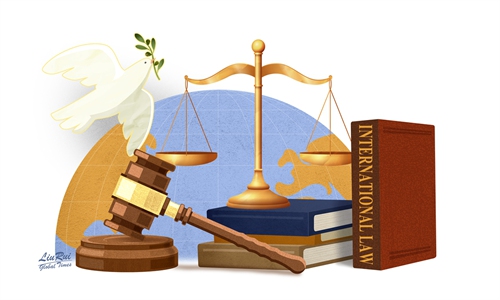
The core legacy of the Tokyo Trial lies in the development of legal principles for international criminal justice and its embodiment of the pursuit of peace and justice. Together with the Nuremberg trials, it marked the first time in human history that the fundamental principle that "aggressive war as an international offense" was established through international judicial means. It clarified legal concepts such as "crimes against peace" and "crimes against humanity," and affirmed that individuals must bear criminal responsibility for war atrocities. It made clear that any official position held by the defendant does not shield them from responsibility, and affirmed the principle of command responsibility.
Therefore, the Tokyo Trial laid a legal foundation for the postwar international order, promoted the development of international law and especially led the development of international criminal law. It set a benchmark for upholding the rule of law, abiding by the purposes and principles of the UN Charter.
The Tokyo Trial legally exposed fascist crimes in war and serves as a reminder for future generations. Its significance reveals the core value of the rule of law in global governance, especially amid rising unilateralism and geopolitical conflicts.
Respect for the UN Charter and multilateral development mechanisms, and the promotion of the rule of law, peace and justice, are the pillars for building a community with a shared future for humanity. Revisiting the Tokyo Trial reaffirms that peace without the rule of law is fragile, and development without peace is impossible.
RELATED ARTICLES