China hopes for sound atmosphere to boost China-UK ties, deepen cooperation: Chinese FM
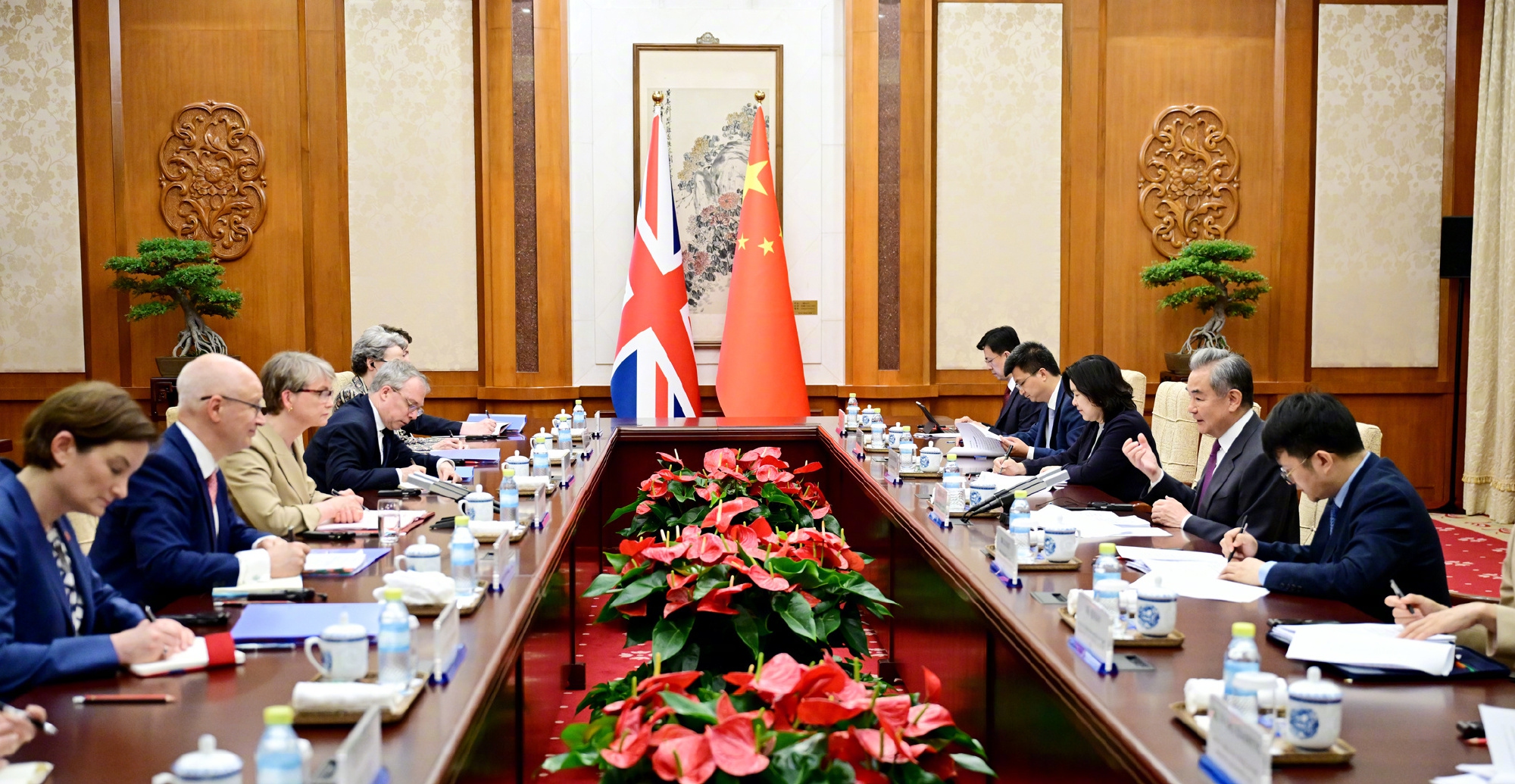
Chinese Foreign Minister Wang Yi meets with UK Foreign Secretary Yvette Cooper in Beijing on June 2, 2026. The two sides held the 11th China-UK Strategic Dialogue on the same day. Cooper is visiting China from June 1 to 3, with stops in Beijing and Shenzhen, South China's Guangdong Province, including a program focused on science and technology cooperation. Photo: Chinese Foreign Ministry
Wang, also a member of the Political Bureau of the Communist Party of China Central Committee, made the remarks when holding the 11th China-UK Strategic Dialogue with UK Foreign Secretary Yvette Cooper in Beijing.
Noting that the leaders of both sides agreed to develop a long-term and consistent comprehensive strategic partnership when British Prime Minister Keir Starmer visited China at the beginning of this year, Wang said that at present, exchanges and cooperation in all fields between the two countries have been fully restored and are gradually getting back on track.
As permanent members of the United Nations Security Council, China and the UK should take the lead in following the right and impartial path, safeguard the fruits of victory in World War II, abide by the UN Charter, adhere to true multilateralism, and jointly promote the building of a more just and reasonable global governance system, Wang noted.
Cooper said that the long-term and consistent comprehensive strategic partnership is of great significance and in line with the interests of both sides. At a time when the international situation is turbulent and complex, it is more important than ever for the UK and China to strengthen dialogue and cooperation to jointly address global challenges, she added, according to Xinhua.
Since the establishment of diplomatic relations with China, the policy pursued by the UK on the Taiwan question has remained unchanged and will not change, Cooper said, adding that the British side is willing to continue to engage in candid dialogue with the Chinese side, handle differences constructively and properly, and promote the healthy and stable development of UK-China relations.
Cooper's visit is widely seen as a follow-up to the consensus reached by the leaders of the two countries during Starmer's visit to China in January, with the aim of translating political understandings into concrete outcomes, Li Guanjie, a research fellow at the Shanghai Academy of Global Governance and Area Studies under the Shanghai International Studies University, told the Global Times on Tuesday.
"Economic and trade cooperation remains the cornerstone of China-UK relations. Bilateral trade has remained steady in recent years, but maintaining that scale has become increasingly challenging amid global economic uncertainties. Against this backdrop, both sides are expected to focus on consolidating existing cooperation while exploring new growth areas, like science and technology cooperation, as the UK seeks to gain a better understanding of China's technological development and identify potential areas for future collaboration, Li said.
British media have also closely followed Cooper's visit. In a report published on Monday, the Independent said that Cooper had arrived in Beijing for in-depth talks on global security as the UK seeks to strengthen diplomatic relations with China.
Cooper's trip, which runs from Monday to Wednesday, includes visits to Beijing and Shenzhen in South China's Guangdong Province for a program focused on science and technology, according to Reuters. Cooper's visit is a "trip to focus on tackling global challenges," Reuters said.
Cooper's trip is understood to be aimed at building on previous Government visits with the most extensive senior foreign policy discussions since Labour came to power, said the Independent.
In another article published on Tuesday, the Independent noted that the UK government "sees engagement with major economies like China as key to protecting Britain's security at a time of heightened global instability, insisting the UK will cooperate where it can and challenge where it must."
At a time when geopolitical tensions, regional conflicts and protectionist tendencies continue to create uncertainties worldwide, maintaining dialogue and expanding areas of consensus between major countries could contribute to international stability, which is important for countries like China and the UK, Li said, adding that issues such as climate change, artificial intelligence and multilateral governance are likely to become important areas where the two sides can further deepen cooperation in the future.
RELATED ARTICLES