Shaoxing's textile-making, rice wine brewing and soy sauce fermentation sites are transformed to cultural tourism icons
Shaoxing’s traditional industrial sites are transformed to cultural tourism icons
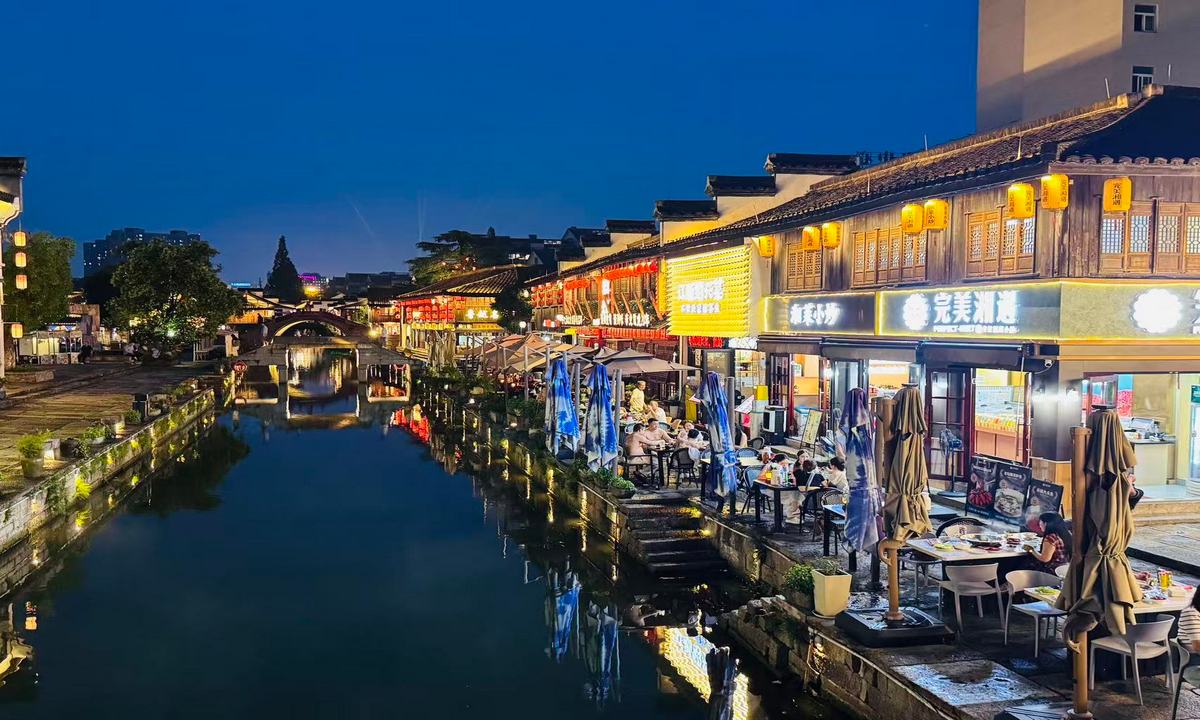
A night view of Keqiao ancient town in Shaoxing, East China's Zhejiang Province, on June 3, 2026 Photo: Chi Jingyi/GT
"When I was young, elders rowed black-awning boats to sell cloth, which were known as mobile cloth stalls on waterways in Keqiao district of Shaoxing city, East China's Zhejiang Province. It was hard to imagine how it could evolve into today's well-known scenic spots," Chen Jiangang, chairman of Zhejiang Alice Dyeing & Finishing Co, told the Global Times on Wednesday.
Today, the boats have become tourist rides around the Keqiao ancient town, or the Keqiao historical and cultural block, a shopkeeper selling milk tea made with huangjiu, or rice wine, a Shaoxing specialty, told the Global Times on Wednesday.
They were witnesses of how factories and other industrial relics in Shaoxing have been turned into tourist attractions, with the integrated development of industry and distinctive cultural tourism emerging as new engines of economic growth.
Industrial transformation
Known as Shaoxing's "three vats," huangjiu (rice wine) brewing, soy sauce fermentation, and cloth dyeing form the backbone of the city's traditional industrial economy, thriving alongside the region's intricate waterway system.
Keqiao ancient town stands as the birthplace of China Textile City. Back in the 1980s, a 400-to-500-meter-long cloth market sprouted on waterways and along the riverside streets. Black-awning boats loaded with fabrics shuttled between docks, forming a famed floating cloth bazaar that later evolved into the China Textile City.
China Textile City, founded in October 1988, is currently the largest professional wholesale textile market in Asia with the highest transaction volume, Pan Jianhua, chairman of Zhejiang China Textile City Group, the operator of the textile market, told the Global Times on Tuesday.
Guided by national policies supporting heritage preservation and tourism development, Shaoxing started to restructure its outdated industrial mix. Starting in 2014, Keqiao district invested nearly 3 billion yuan ($443 million) to renovate the Keqiao historical and cultural block under the positioning of "a vintage snapshot of Keqiao, a new urban living room."
Just like milk tea made from huangjiu sold in the Keqiao ancient town, wine distilleries spread across Shaoxing have explored a unique way to combine tourism with traditional industry.
For example, a huangjiu town in Keqiao revitalized an old distillery by opening brewing workshops for tourists to experience first-hand wine-making.
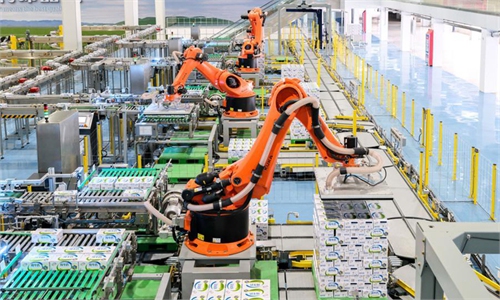
Mount Kuaiji Huangjiu Town, operated by the cultural subsidiary of rice wine brand Kuaijishan Shaoxing Rice Wine Co in Keqiao's Hutang sub-district, has a dedicated museum for rice wine, a digital winery chateau - a workshop showcasing an automatic bottling and canning production line for public viewing, and several other related travel spots, the Global Times observed.
Zhang Guoping, a representative of the cultural subsidiary, told the Global Times on Thursday that they received about 30,000 tourists in 2025 and they expect to welcome more tourists, especially young people, to visit the rice wine town this year.
The town is located on the northern bank of Lake Jianhu in Hutang sub-district, and the lake's water is one of the most important resources for Shaoxing rice wine production, Zhang said.
"We are planning to build our old industrial park on the southern bank of Lake Jianhu into a wine-themed tourism area, with supporting services ranging from homestays to cultural merchandise," said Zhang.
Meanwhile, centuries-old soy sauce workshops in Shaoxing's Anchang ancient town have opened their open-air fermentation yards to sightseers, showcasing age-old sun-dried brewing techniques, according to media reports.
By transforming obsolete production sites into diversified service-oriented tourism sites, Shaoxing has blazed a distinctive transformation path for revamping traditional industries, setting a replicable benchmark for industrial upgrading.
Heated factory travels
Beyond Shaoxing's time-honored "three vats" renewal program, China has seen a nationwide boom in industrial tourism featuring two distinct transformation paths: repurposing abandoned aged factory sites into cultural landmarks and opening old factories to public tours.
A standout benchmark is Beijing's century-old Shougang Industrial Park, a former sprawling steel production base that ceased on-site steelmaking after the relocation of its production facilities to neighboring North China's Hebei Province.
Derelict blast furnaces, towering cooling towers and rusted steel pipelines have been well preserved instead of being demolished. The iconic Big Air Shougang, built atop original industrial facilities, hosted ski events during the 2022 Beijing Winter Olympics and now operates as a signature sports and sightseeing spot.
The No.1 blast furnace there has been renovated into an immersive XR sci-fi theme park, while former raw material silos have been turned into digital art museums and boutique cafes, blending rugged industrial aesthetics with futuristic digital experiences. And, previously polluted industrial cooling ponds have been ecologically restored into scenic urban lakes.
Meanwhile, modern intelligent factory sightseeing has risen rapidly across the country as a fresh travel trend.
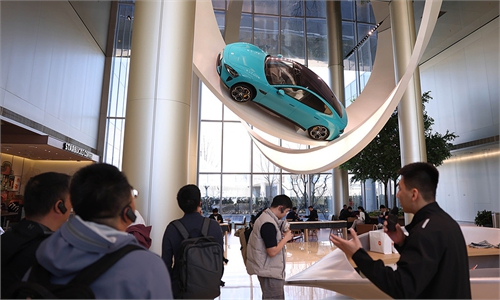
For example, the Xiaomi car factory, located in the Beijing Economic-Technological Development Area, covering 718,000 square meters, was selected as a Beijing Industrial Tourism Demonstration Site in 2024. Serving as a production and research base for new-energy vehicles, the factory is open to the public for technology displays and production observation experiences, a Xiaomi employee surnamed Wang told the Global Times.
In Qingdao city, East China's Shandong Province, Tsingtao Beer Museum, rebuilt from a century-old brewery, integrated brewing process tours, immersive role-play games and peripheral cultural merchandise shopping. In Liuzhou, South China's Guangxi Zhuang Autonomous Region, local luosifen manufacturers have opened transparent production corridors, enabling guests to observe the entire production process and join DIY experience sessions on-site.
These diversified cases echo Shaoxing's "three vats" renovation logic, proving that industrial heritage and active production workshops can be transformed from rusty manufacturing plants into new growth drivers for the tourism economy.
RELATED ARTICLES