ARTS / CULTURE & LEISURE
New center in the middle of Yangtze revives 800-year-old military island through preservation
Fortress on the river
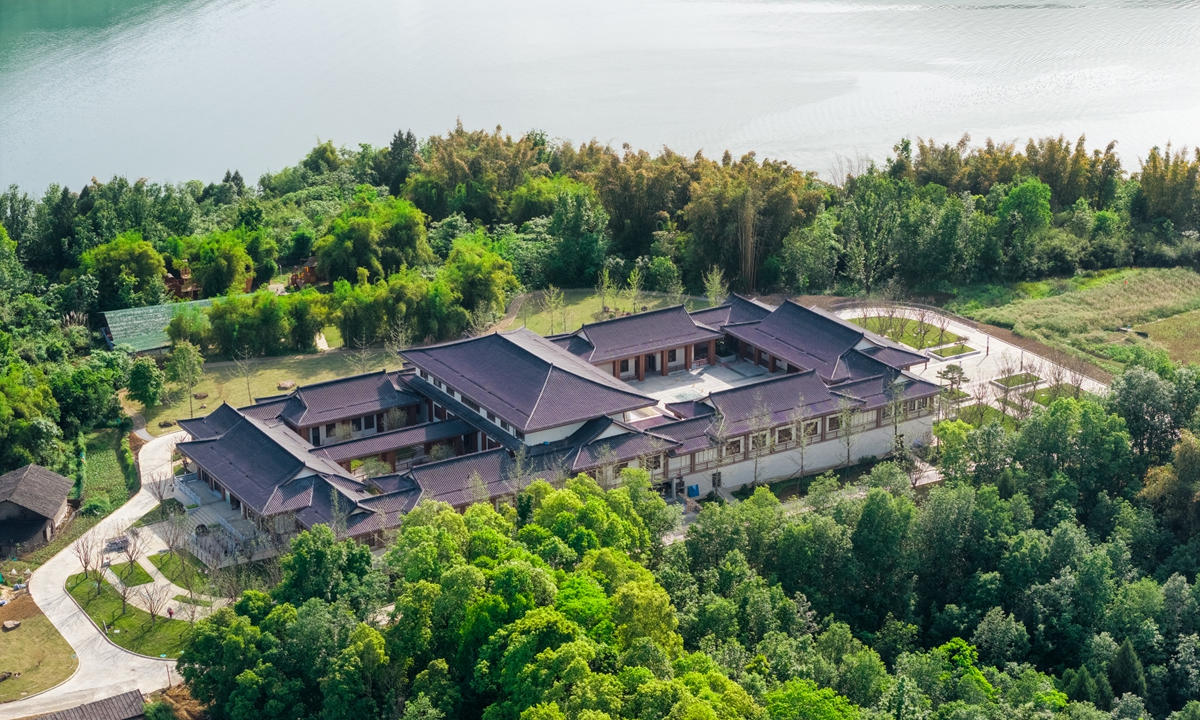
The main building of the archaeological exhibition center of the Huanghuacheng site in Zhongxian, Chongqing Municipality Photos: Courtesy of the archaeological exhibition center of the Huanghuacheng site
Surrounded by water on all sides and covered in dense greenery, the archaeological site of Huanghuacheng in Zhongxian county, Chongqing, carries a touch of mystery.Also known as "Huanghua island," the site is a completely isolated small island in the middle of the Yangtze River. With a history dating back more than 800 years, the site covers 8,000 square meters.
In ancient times, this island was far from barren. Instead, it stood as a "fortress on the river" with a complete military defense system.
During that time, it witnessed the historical Song-Yuan battle, where the Southern Song Dynasty (1127-1279) was conquered through the maneuverings of Yuan Dynasty (1279-1368) Emperor Kublai Khan.
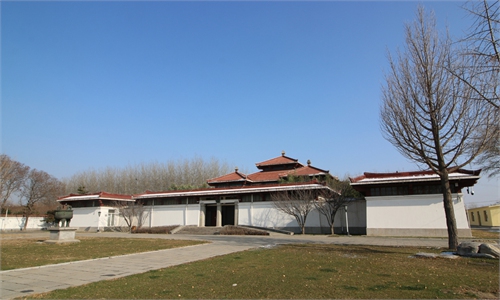
Today, it has transformed into a modern cultural hub open to the public, because just recently, the archaeological exhibition center built around it finally opened.
The center is the very first such site in the Three Gorges Reservoir region.
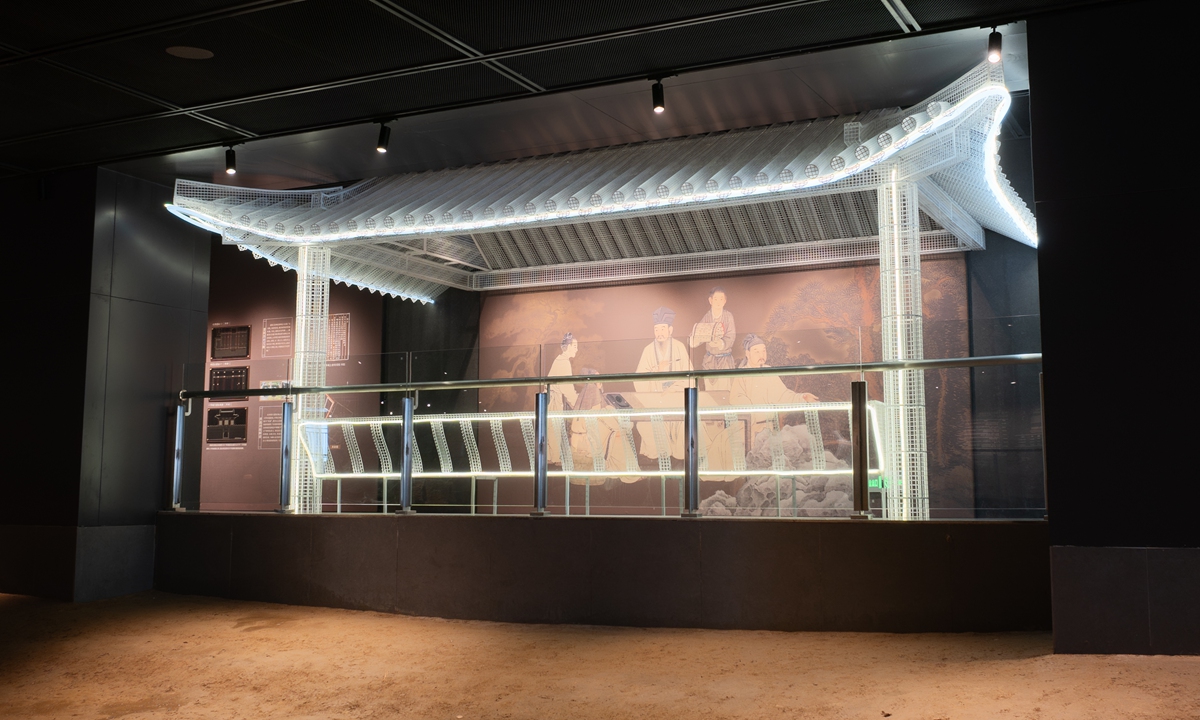
A model temple on display at the Huanghuacheng archaeological exhibition center in Chongqing
The one and only island fortressThe Three Gorges Reservoir region has never lacked archaeological treasures, be it the Neolithic Daxi site, or the Mingyueba site, which showcases the charm of a Tang Dynasty (618-907) town.
But why does the Huanghuacheng site deserve its own exhibition center? Zeng Yan, director of the Zhongxian county cultural relics protection center, told the Global Times that it is because it has "unique characteristics."
Compared with other defensive military sites, such as the mountain-based Diaoyucheng site in Chongqing, the Huanghuacheng site is not only located in water, but also has a masterfully crafted layout: a ring of wetlands, a slope of dense forest and a stretch of farmland all on one island.
This unique layout served as a natural barrier. The wetlands surrounding the island hindered enemy landings, while the dense forest between the wetlands and the inner city provided cover for concealment and ambushes.
Yet, what truly ensured the core defense of the garrison was the farmland that provided food reserves for the soldiers and residents.
To better showcase this layout, the exhibition center has brought the historical ruins indoors using a sand table installation and 3D projection technology.
Zeng, the director and key figure in the center's curatorial team, told the Global Times that the installation presents the detailed urban construction on the island.
Upon closer inspection, one can see structure of the docks, academies, training grounds and more from hundreds of years ago.
"What we aim to show is that Huanghuacheng was not just a military site, but a city with military defense, civilian agriculture, and civilization development," Zeng noted.
The Hongwen Academy on Huanghua island best represents its "civilization development."
Archaeologist Cai Yalin told the Global Times that the academy, which features structures such as "five main halls, a semicircular pond [unique to ancient academies], a bridge and a pavilion," is the earliest cultural-educational site found in Zhongzhou, present-day Zhongxian county.
The archaeologist recalled that a well-preserved writing brush and inkstone were found in the semicircular pond.
Alongside them were also chess pieces and dice. Next to these relics lay a mysterious metal ball, later confirmed to be a tielei, a type of ball-shaped explosive iron bomb.
The tielei unearthed at the Huanghuacheng site is also one of the world's oldest explosive weapons ever found.
"These relics and the academy remains show the coexistence of war and education, revealing the Chinese people's enduring reverence for cultural cultivation," Cai noted.
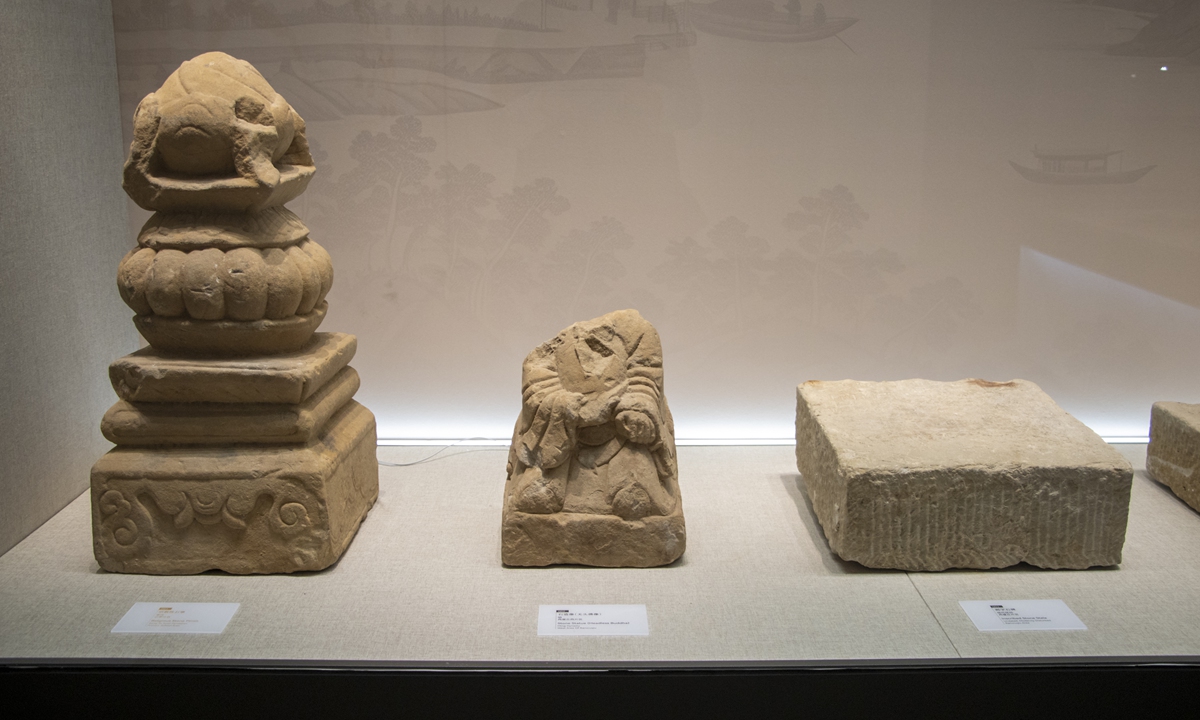
Excavated artifacts on display at the Huanghuacheng archaeological exhibition center in Chongqing
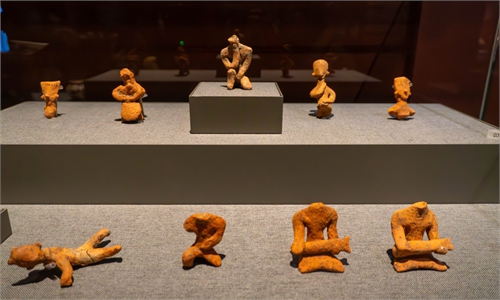
Beyond displaysIncluding the iron bomb, nearly 400 relics found on the island are now on display at the new exhibition center. The remnants of the original academy site have been creatively incorporated into the center's brand-new building.
Going beyond traditional displays, digital projections, alongside naked-eye 3D and surround sound, reconstruct the academy's full panorama, immersing visitors in the world of Huanghuacheng.
"Only through such creative approaches can Huanghuacheng 'step out' of its archaeological history and integrate with contemporary cultural and social life," Zeng remarked.
Although it has been open for less than a month, the center has already begun planning a Huanghuacheng-branded study tour program involving not only young people but also adults interested in China's ancient military history.
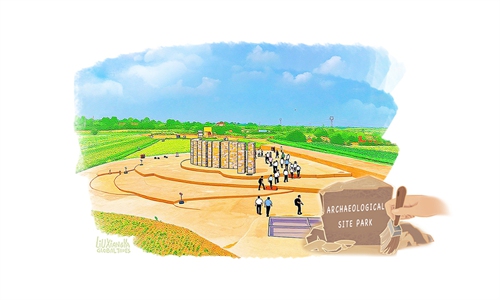
The Huanghuacheng Archaeological Site Park was officially opened in 2023, but at that time, it still lacked a space for cultural displays and exchanges.
The founding of the center will not only take on these previously missing functions but will also "update the positioning of the site park," Zeng said.
"The completion of the center actually turns the archaeological site park into a more systematic and more engaging heritage preservation solution."
So far, the site has been officially inscribed on China's World Cultural Heritage tentative list.
The nomination reflects a recognition of "not only its archaeological legacy but also the unique qualities of its natural environment," said Li Xiangyang, the head of the Zhongxian County Wetland Protection and Management Station.
Including the new center, an upcoming task is the creation of a detailed protection plan addressing issues such as "micro-wetland construction" and "rare species protection," including the expansion of nationally protected first-class plants like the lotus-leaved maidenhair fern and metasequoia, a tree species unique to China.
"Rather than visitors who swarm the site or some quick photos, we hope to attract more people who will truly engage with the site's history and contribute to the protection of its environment," Zeng noted.
RELATED ARTICLES