Illustration: Xia Qing/GT
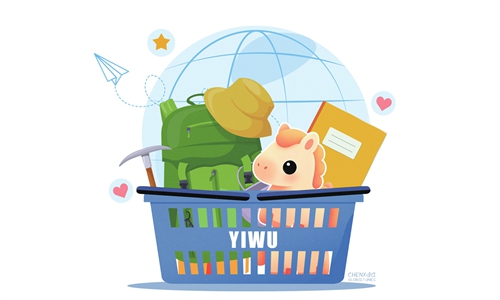
China's annual "618" shopping festival season has kicked off, with spending on children emerging as a notable driver of online sales. Against the backdrop of broader consumption upgrades, demand for child-focused products continues to show vitality, offering international businesses a window into evolving household spending patterns.Recent figures reported by the People's Daily illustrate how child-focused spending in China is evolving. During the early stages of this year's "618" shopping festival, e-commerce platform Kuaishou recorded sharp year-on-year growth across several categories. The transaction value of early education and learning products tripled, children's nutrition and health items quadrupled, and cultural and creative products for children rose ninefold.
According to data from e-commerce platform JD, coinciding with the overlap of International Children's Day and the "618" shopping festival, sales of children's plant-growing mystery boxes on the platform surged 520 percent year-on-year, while sales of children's styling and dress-up products increased 385 percent from a year earlier.
Rather than being driven by routine stockpiling, spending on child-related goods is increasingly oriented toward children's development, parent-child engagement and cultural experiences, reflecting broader changes in household consumption patterns.
Child-focused consumption, in many ways, highlights two noteworthy dimensions. The first is parental spending. Today's parents - whether in their 20s, 30s, or 40s - have largely come of age in a rapidly digitizing economy, and they are highly comfortable with online platforms and e-commerce. Compared with previous generations, they tend to place greater emphasis on their quality of life, health, education and experiential spending, representing an important and evolving segment of Chinese consumer behavior.
The second dimension relates to the children themselves. Those born in the 2010s and 2020s are shaping demand in new ways, showing strong interest in emerging trends such as collectible blind boxes and other novelty products. This cohort captures some of the most dynamic and trend-sensitive aspects of Chinese consumption, offering insight into how spending patterns may develop as they grow older.
What makes child-focused consumption particularly revealing is the interaction between these two dimensions: parental habits and children's interests. Together, they reveal a segment of the market that is not only highly active, but also rich with potential for both domestic and international businesses attuned to its evolving dynamics.
At a time when some external observers continue to question the scale and resilience of China's consumer market, child-focused spending offers a more tangible indication of its dynamics. Many Chinese parents today are willing to invest in their children, prioritizing safety, healthy nutrition, social-emotional development and broader developmental needs. These priorities have supported the growth of a range of niche segments, some of which, while narrowly defined, are far from marginal in scale.
Nutritional supplements offer a clear example. Parents are paying closer attention to product composition and functional benefits. According to a recent report released by iiMedia Research, young parents are increasingly embracing more refined approaches to children's nutrition.
Nutrition is only a narrow entry point into a much larger trend, illustrating the broader growth potential of child-focused spending. This potential is visible across a range of emerging sub-segments, reflecting wider shifts in consumer behavior. For instance, data from the JD Consumption and Industry Development Research Institute, cited by the Economic Daily, shows that children's household products have performed particularly well during this year's Children's Day shopping season.
For example, sales of swaddle surged 250.8 percent, reflecting parents' growing focus on comfort and quality in children's daily lives. Behind these figures lies a more fundamental upgrading of consumer demand, as households seek higher-quality, more sophisticated products and experiences for their children.
The upgrading of child-focused consumption also points to opportunities for imported goods. As parents increasingly prioritize quality, safety and specialized products for their children, demand is emerging for higher-quality imported products. International brands offering trusted options - ranging from nutritional supplements to educational toys and specialized household products - may find a receptive audience among these families. The trend illustrates how evolving parental expectations are gradually reshaping the domestic market while creating space for foreign suppliers attuned to the needs of China's child-focused consumers.
Turning back to this year's "618" shopping festival, one notable feature is the way foreign suppliers seek to reach China's child-focused consumers. They may need to take account of changes in how products are discovered and purchased, particularly the growing role of online channels. New digital-economy business models, including short-video platforms and livestreaming, have helped drive growth in children's consumption. Increasingly, young parents are turning to short videos and livestreams for parenting advice, product information, and purchasing decisions.
In sum, child-related consumption in China is evolving at a relatively fast pace, reflecting a more grounded and observable dimension of the country's broader consumer landscape. The trends emerging in this segment are varied, suggesting areas of potential interest for both domestic and international businesses.
The author is a reporter with the Global Times. bizopinion@globaltimes.com.cn
RELATED ARTICLES